

Yoga: The Complete Body-Mind Practice
Quick Navigation: Breathwork and Pranayama · Interoception and Body Awareness · Mobility, Flexibility, and Recovery · Mindfulness in Movement · Yoga and the Nervous System · The Evidence Base · Poses and Practice
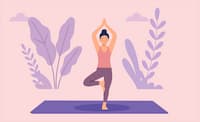
Yoga has a special place in the Connection section — and on this site more broadly. Few practices bring together physical training, breathwork, mindfulness, body awareness, and stress regulation so deliberately in a single practice. Most of the other topics in this section cover one or two of these. Yoga combines them all — and a growing body of research supports many of its benefits.
That isn’t a claim that yoga is mystical or that you need to accept its traditional framework. These pages describe what yoga does — and what the research does and doesn’t show about how its postures, breathing, and attention practices affect body and mind — in the same evidence-based language used throughout this site.
The wellness industry has done yoga a disservice in some ways: packaging it as a lifestyle brand, softening its physical demands, and associating it more with expensive leggings and social-media aesthetics than with a serious practice. But it has also brought yoga to people who might never have tried it. The aim here is to restore the substance — covering yoga as a serious, evidence-supported body-mind practice, with an honest view of its strengths and limits, for anyone who trains and wants the full picture.
What Yoga Is
Yoga originated in ancient India as a spiritual discipline — in its classical form, a path toward stilling the mind and achieving spiritual liberation. In the Yoga Sutras, compiled by Patanjali around 400 CE, physical posture (asana) was one of eight interconnected “limbs” of practice, and the word mainly referred to a steady, comfortable seated position for meditation.
The posture-focused yoga most people practice today developed much more recently. Historians such as Mark Singleton have shown that many of today’s postures and flowing sequences took shape in India in the late 19th and 20th centuries — blending older hatha yoga techniques with influences from gymnastics and physical culture — before spreading worldwide. Modern yoga is practiced mainly as a physical and mindfulness discipline combining postures, breathing techniques, and meditation or present-moment awareness. It’s a partial expression of the classical tradition, but it’s the form most people encounter and the one most research studies.
The major modern styles differ mainly in their emphasis and intensity:
Hatha yoga is the broad term for physical yoga that combines postures and breathing. In everyday use, “hatha” usually means a slower, more instructional class that holds poses longer and emphasizes alignment and breath.
Vinyasa yoga links movement to breath in flowing sequences, with each inhale and exhale cueing a transition. It’s a form of moving meditation that raises the heart rate more than slower styles — typically to a light-to-moderate exercise intensity — and builds strength and endurance.
Ashtanga yoga follows a set sequence of poses in the same order every session — demanding, physically rigorous, and traditionally practiced six days a week. It’s the basis of much contemporary flowing yoga.
Yin yoga holds passive poses for three to five minutes or longer, letting you relax deeply into each stretch. Its long, still holds make it a calming, inward-focused practice.
Restorative yoga uses props to support the body in completely passive positions, removing muscular effort so the body and mind can fully relax. It’s one of the most directly calming styles for recovering from stress.
Kundalini yoga combines movement with intensive breathing exercises, chanting, and meditation, and is the most explicitly spiritual of the mainstream styles. Some of its techniques, such as rapid “breath of fire” breathing, are powerful and need some care — see the safety guidance on our breathwork and pranayama page.
In the end, the style you choose matters less than practicing consistently and with genuine attention. Any style practiced with present-moment awareness and deliberate attention to breath and sensation offers yoga’s body-mind benefits. The style shapes the balance — of physical challenge, breathwork, and stillness — so it’s worth choosing one that suits your goals and that you enjoy.
Why Yoga Belongs in Connection
Yoga sits in our Connection section, rather than in Body or Mind, because its effects span both — working where the physical and psychological meet.
Its physical practice builds flexibility, strength, and balance, but it’s also designed to calm the nervous system and train attention. Its breathing practices — pranayama — work through the same slow-breathing physiology covered on our breathwork and the nervous system page, in the context of movement. And its mindful approach to movement trains present-moment attention in a form many people find more accessible than seated meditation, reducing the mind-wandering and rumination that keep stress going.
Yoga also cultivates body awareness — interoception, the sense of what’s happening inside your body. That awareness sits right at the meeting point of body and mind: noticing the physical signals of stress, emotion, and fatigue makes it easier to respond to them well.
Breathwork and Pranayama
The yoga tradition has developed one of the most elaborate systems of breathwork anywhere — pranayama, the practice of regulating the breath. It includes many specific techniques, each with its own traditional purpose: from calming alternate nostril breathing, to rapid, energizing kapalabhati, to the breath holds of kumbhaka.
Its slow, calming techniques work through the same physiology covered on our breathwork and the nervous system page — a longer exhale engaging the vagus nerve’s calming effect on the heart, and slow breathing increasing heart rate variability while you practice. What yoga adds is the integration of breath with movement and attention, and a systematic way of developing breath awareness and control. Its energizing techniques and long breath holds are powerful, and they deserve real care: combining rapid breathing with breath holds carries a risk of fainting.
The breathwork and pranayama page covers the major techniques, how they work, what the evidence shows, and how to practice them safely.
Interoception and Body Awareness
Interoception — the sense of what’s happening inside your body — is one of yoga’s most important and least-discussed contributions. The sustained attention yoga asks you to pay to internal sensations — your breath moving through your body, the feel of each pose, shifts between tension and ease — is repeated practice in noticing your body’s signals.
A key brain region for this sense is the insula. Some imaging studies have found that experienced yoga practitioners have more gray matter in the insula than non-practitioners, but these studies are small and compare different groups of people, so they can’t show that yoga caused the difference. What’s more consistently found is that yoga practitioners report greater body awareness.
Body awareness matters well beyond the mat. Noticing the physical signals of rising stress, building anxiety, or fatigue gives you a chance to respond earlier — as long as you notice them calmly and with curiosity, rather than with alarm. For people prone to anxiety, constant body-monitoring can make things worse; accurate, calm awareness is the goal.
The interoception and body awareness page covers the science of interoception, what yoga does and doesn’t change, and how body awareness connects with emotions, stress, and self-awareness.
Mobility, Flexibility, and Recovery
Yoga’s physical benefits — better flexibility, mobility, and balance — are among its most immediately useful for anyone who trains. Contrary to a common belief, lifting weights through a full range of motion doesn’t make you less flexible — it improves flexibility about as much as stretching does. But many people who train still feel tight in certain positions, often because of long hours of sitting or training through limited ranges, and yoga can help.
Yoga works on two fronts. Dynamic, flowing practice builds mobility — range of motion you can actively control. Passive practice — the long holds of yin and the supported positions of restorative yoga — improves flexibility, mainly by helping your nervous system become more comfortable with stretch, so you can move further before discomfort stops you.
The distinction between flexibility (passive range of motion) and mobility (active control through range) matters. Range you can’t control has limited use in training — what helps performance and joint health is range you can be strong and stable in. Combining dynamic and passive practice develops both.
Gentle recovery yoga — slow movement, long holds, relaxed breathing, and calm attention — is a pleasant and effective way to unwind after hard training or a stressful day, and to wind down before sleep.
The mobility, flexibility, and recovery page covers how yoga improves mobility and supports recovery, how to fit it into a training program, and what it can and can’t do for injury prevention.
Mindfulness in Movement
Yoga is, among other things, a moving meditation — mindfulness practice that uses movement and physical sensation as its focus, rather than the breath alone. That makes it especially accessible for people who find seated meditation difficult: the physical demands of the poses hold your attention, and the rhythm of breath and movement helps quiet the mind-wandering and rumination that keep stress going.
Mindful yoga trains the same core skill as seated mindfulness — noticing when your attention has wandered and bringing it back — with an added challenge: staying present while your body is working. Holding a challenging pose, moving through a demanding sequence, or managing your breath while under physical effort gives you practice in staying focused and calm under demand.
That skill is valuable in training too. Skills tend to improve most in the setting where they’re practiced, so the most direct way to train better focus in the gym is to practice it there — but yoga is a good place to learn the habit of full, calm attention to what your body is doing.
The mindfulness in movement page covers how moving meditation works, how it compares with and complements seated mindfulness, and how to bring the same quality of attention into your training.
Yoga and the Nervous System
Yoga’s effects on the nervous system are central to its benefits for stress, recovery, and emotional balance.
Research has found that regular yoga practice can modestly lower blood pressure and resting heart rate and reduce stress and anxiety, and a 2017 meta-analysis of randomized trials found reductions in physiological stress markers including cortisol. Slow breathing during practice reliably increases heart rate variability while you practice, though evidence for lasting increases in resting heart rate variability is less consistent.
The immediate effects of a session — a calmer state that begins during practice and lasts for some time afterwards — are what most people notice first. Several studies have found that cortisol falls after a gentle yoga session, and some have found larger reductions in stress markers than after an equivalent period of rest, although results vary between studies.
The yoga and the nervous system page covers how yoga affects the nervous system and stress hormones, what different poses are thought to do, the popular — but contested — polyvagal theory, and how the effects build with regular practice.
The Evidence Base
Yoga has been studied across a remarkably wide range of conditions and outcomes — anxiety, depression, chronic pain, high blood pressure, sleep, cancer-related fatigue, cognitive performance, and immune function, among others. The quality of that evidence varies a great deal: some areas have several well-designed randomized trials; others rely mainly on small, poorly controlled studies.
An honest look at the evidence — what’s well supported, what’s promising but preliminary, and what’s overstated — is more useful than either uncritical enthusiasm or blanket skepticism. The evidence is strongest for flexibility and balance, stress and everyday anxiety, blood pressure, and low back pain, with consistent support for sleep and mood. More sweeping claims — that yoga produces spiritual transformation, that specific poses act on specific organs, or that pranayama purifies the blood — range from unproven to biologically implausible. So do some scientific-sounding claims, such as that yoga reliably grows particular brain regions.
The evidence base page gives an honest assessment of the research — where it’s strong, where it’s preliminary, how safe yoga is, and how to evaluate the claims made about it.
Poses and Practice
All seven pages of this yoga section rest on a practical foundation: the poses themselves, organized by what they do. Understanding poses as tools with specific effects — rather than as positions to copy — connects the practice to the science and helps you choose what you need.
The poses and practice page covers foundational poses in four categories: strength and stability poses that build control through a range of motion; flexibility and opening poses for the positions many active people feel as tight; balance and focus poses that develop single-leg stability, body awareness, and attention; and recovery and restoration poses that help you wind down — along with guidance on practicing safely and building a personal routine.
The Thread That Connects It All
What makes yoga more than a collection of stretches, breathing exercises, and relaxation techniques is how it combines them. The breath sets the rhythm of the movement. Paying close attention to the body while moving builds body awareness. Present-moment attention quiets the mind-wandering and rumination that keep stress going. And together, they encourage the nervous system’s ability to shift from activation to recovery.
To be honest about the evidence, studies often find that yoga produces benefits similar to other forms of exercise for outcomes such as mood and back pain, and researchers haven’t yet shown that the combination produces effects beyond what its parts would. But the integration has real practical value: it brings movement, breathing, relaxation, and mindfulness into one practice that many people enjoy and stick with — and the practice you keep doing is the one that works. That’s what earns yoga its place at the center of the Connection section.