
Whole Wheat Pasta
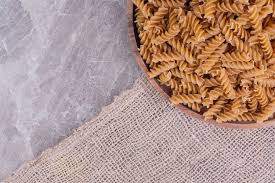
Whole Wheat Pasta – Nutrition Facts (per 100 grams)
Calories: 124 kcal
Protein: 5.4 g
Fat: 0.9 g
- Saturated Fat: 0.2 g
- Monounsaturated Fat: 0.1 g
- Polyunsaturated Fat: 0.3 g
Carbohydrates: 25.0 g - Sugars: 0.4 g
- Fiber: 3.9 g
Cholesterol: 0 mg
Sodium: 3 mg
Vitamins in Whole Wheat Pasta
- Vitamin A: 0 IU (0% DV)
- Vitamin B1 (Thiamine): 0.1 mg (7% DV)
- Vitamin B2 (Riboflavin): 0.1 mg (6% DV)
- Vitamin B3 (Niacin): 1.3 mg (8% DV)
- Vitamin B5 (Pantothenic Acid): 0.2 mg (4% DV)
- Vitamin B6: 0.1 mg (6% DV)
- Vitamin B9 (Folate): 18 µg (5% DV)
- Vitamin B12: 0 µg (0% DV)
- Vitamin D: 0 IU (0% DV)
- Vitamin E: 0.2 mg (1% DV)
- Vitamin K: 0.8 µg (1% DV)
Minerals in Whole Wheat Pasta
- Calcium: 14 mg (1% DV)
- Phosphorus: 108 mg (15% DV)
- Magnesium: 44 mg (11% DV)
- Potassium: 124 mg (3% DV)
- Iron: 1.1 mg (6% DV)
- Zinc: 1.0 mg (9% DV)
- Selenium: 35.5 µg (65% DV)
- Copper: 0.2 mg (17% DV)
- Manganese: 1.0 mg (43% DV)
Note:
- Percent Daily Values (DV) are based on a 2,000-calorie diet.
- Whole wheat pasta is a great source of complex carbohydrates, providing long-lasting energy and more fiber than regular pasta, which aids digestion.
- It contains higher protein content compared to refined pasta, making it a good option for those looking to increase their protein intake.
- Whole wheat pasta is rich in manganese, selenium, magnesium, and phosphorus, which contribute to bone health, metabolism, and antioxidant functions.
- It’s naturally low in fat and cholesterol-free, making it a heart-friendly choice.