

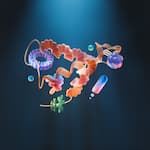
Every time you eat, breathe, move, or think, thousands of chemical reactions are happening inside your cells. Proteins are built, energy is released, waste is cleared, signals are sent. None of it happens at a speed your body can use without help. Left to run on their own, most of these reactions would take hours, days, or longer. Enzymes are what make them happen in milliseconds.
They are, in the most literal sense, the machinery of life. Without enzymes, the food you eat would sit undigested, the oxygen you breathe would go unused, and the muscles you train would have no way to contract. Understanding what they are, how they work, and how to support them is one of the more useful things you can learn about your own biology — not because it requires dramatic action, but because so many everyday choices quietly affect how well your enzymatic systems function.
What Enzymes Are
Enzymes are proteins — specifically, biological catalysts. A catalyst is a substance that speeds up a chemical reaction without being consumed by it. Enzymes bind to specific molecules called substrates, facilitate the reaction, and are then released unchanged and ready to work again. A single enzyme molecule can facilitate thousands of reactions per second.
What makes enzymes remarkable is their specificity. Each enzyme is shaped precisely to bind one substrate or a narrow class of substrates — a lock-and-key relationship where the enzyme’s active site is the lock and the substrate is the key. This specificity means the body can run thousands of different chemical reactions simultaneously, each governed by its own enzyme, without them interfering with each other. It’s an extraordinarily precise system operating continuously without conscious input.
Your body produces thousands of different enzymes, each assigned to a specific job. Some break molecules apart; others build them. Some transfer chemical groups between molecules; others rearrange the structure of a single molecule. Collectively they manage virtually every biochemical process in the body.
Digestive Enzymes: The Ones You Feel Most Directly
The enzymes most people encounter in a health context are digestive enzymes — the ones produced by the salivary glands, stomach, pancreas, and small intestine to break down food into absorbable nutrients. Without them, the macronutrients in your food would pass through without being absorbed.
Amylases break down carbohydrates — starting in the mouth, where salivary amylase begins the process of converting starch into simpler sugars, and continuing in the small intestine with pancreatic amylase. This is why a piece of bread tastes slightly sweeter the longer you chew it: amylase is already working.
Proteases (also called peptidases) break protein chains down into individual amino acids and smaller peptides. Pepsin in the stomach starts the process in the acidic environment there; pancreatic proteases including trypsin and chymotrypsin continue it in the small intestine. Without adequate protease activity, even a high-protein diet fails to deliver its full amino acid payload.
Lipases break down dietary fat into fatty acids and glycerol for absorption. Pancreatic lipase is the primary enzyme here, and it requires bile from the liver to work effectively — another example of systems that depend on each other rather than operating independently.
Lactase is the enzyme that breaks down lactose, the sugar in dairy. Adults who produce insufficient lactase — a very common condition, particularly outside Northern European populations — experience the bloating, cramping, and digestive discomfort that characterizes lactose intolerance. This is one of the clearest examples of how enzyme function directly shapes everyday dietary experience.
Cellulase is notable for what humans lack: the ability to produce it. Cellulase breaks down cellulose, the main structural component of plant cell walls. Humans don’t produce it, which is why dietary fiber passes through the digestive tract largely intact — and why that intact passage is beneficial, as the fiber feeds gut bacteria and adds bulk that supports digestive health. Some gut bacteria do produce cellulase, another example of the microbiome earning its keep.
Metabolic Enzymes: Running Everything Else
Beyond digestion, metabolic enzymes govern the biochemical processes that happen inside every cell. ATP synthase produces the ATP your muscles run on. Kinases transfer phosphate groups to activate or deactivate other proteins. DNA polymerase replicates genetic material. Antioxidant enzymes including superoxide dismutase and catalase neutralize free radicals before they damage cellular structures.
For anyone who trains, a few metabolic enzymes are particularly relevant. Creatine kinase regenerates ATP from creatine phosphate during high-intensity, short-duration efforts — the mechanism that makes creatine supplementation effective is fundamentally an enzyme-dependent process. Citrate synthase is a key enzyme in the aerobic energy pathway and a marker of aerobic capacity — endurance training upregulates it, which is part of how the body adapts to sustained aerobic work. Lactate dehydrogenase converts pyruvate to lactate during intense anaerobic work, allowing energy production to continue briefly beyond what aerobic metabolism can sustain.
What Affects Enzyme Function
Enzymes are proteins, and like all proteins they’re sensitive to their environment. Several factors meaningfully affect how well they work.
Temperature matters more than most people realize. Enzymes have an optimal operating temperature — for human enzymes, close to normal body temperature. A moderate fever slightly speeds up many enzymatic reactions initially, which is part of the immune response. Very high temperatures denature enzymes — permanently altering their shape so they can no longer bind their substrate. This is why extreme hyperthermia is medically dangerous.
pH is equally critical. Different enzymes are optimized for different pH environments. Pepsin, the stomach protease, works best at the stomach’s strongly acidic pH of around 1.5 to 2. Pancreatic enzymes work best in the slightly alkaline environment of the small intestine. This is why stomach acid matters — not only for killing pathogens but for activating the enzymes that protein digestion depends on. Chronically suppressed stomach acid (from long-term antacid or proton pump inhibitor use) can meaningfully impair protein digestion.
Micronutrients act as enzyme cofactors — helper molecules without which many enzymes cannot function. Magnesium is a cofactor for over 300 enzymatic reactions, including those involved in ATP production, protein synthesis, and DNA repair. Zinc is required for hundreds of enzymes including those governing immune function and antioxidant defense. Iron is central to the haemoglobin and cytochrome enzymes involved in oxygen transport and cellular respiration. B vitamins — particularly B1, B2, B3, B6, and B12 — are cofactors for enzymes throughout the energy metabolism pathways. A diet that’s deficient in these micronutrients doesn’t just cause nutrient deficiencies in the classical sense; it impairs the enzymatic machinery those nutrients support, with effects that ripple through multiple systems simultaneously.
Gut health directly affects digestive enzyme function. The gut lining cells (enterocytes) produce several digestive enzymes themselves, and a damaged or inflamed gut lining produces fewer of them. This is one of the mechanisms by which chronic poor gut health impairs nutrient absorption even when someone is eating a sound diet — the enzymes needed to process and absorb nutrients are simply not being produced at full capacity.
How Enzymes Affect the Mind
The brain is the most metabolically demanding organ in the body relative to its size, and it runs almost entirely on glucose — which means the enzymatic processes of energy metabolism and glucose regulation have a direct bearing on how clearly you think, how stable your mood is, and how well you concentrate.
Neurotransmitter synthesis is entirely enzyme-dependent. Serotonin is produced from tryptophan via an enzyme called tryptophan hydroxylase. Dopamine is synthesized from tyrosine through a series of enzyme-catalysed steps. GABA, the brain’s primary inhibitory neurotransmitter, is produced by an enzyme called glutamic acid decarboxylase, which requires vitamin B6 as a cofactor. This is not abstract biochemistry — it means that the micronutrient status of your diet directly shapes how efficiently your brain makes the chemicals that govern your mood, motivation, focus, and stress response.
Antioxidant enzymes matter here too. The brain is highly vulnerable to oxidative stress because of its high metabolic activity and its high concentration of polyunsaturated fats, which are particularly susceptible to free radical damage. Superoxide dismutase, catalase, and glutathione peroxidase — all enzyme-based antioxidant defenses — are the primary protection against this damage. Supporting these systems through adequate micronutrient intake is one of the quieter ways diet underpins long-term brain health.
The General Health Picture
The theme that runs through all of enzyme biology is cofactor dependency — the fact that most enzymatic systems require specific vitamins and minerals to operate at full capacity. This gives the general health implications a specific, actionable shape: they’re not abstract claims about “supporting your enzymes” but a concrete argument for adequate micronutrient intake across the board.
Magnesium deficiency impairs hundreds of enzymatic reactions simultaneously, with effects on energy production, muscle function, blood sugar regulation, and neurological health that can persist for years without being clearly identified as a single deficiency. Zinc insufficiency compromises immune enzymes, antioxidant enzymes, and the enzymes governing DNA repair — a trio of effects that directly impacts resilience, recovery, and long-term cellular health. B vitamin deficiencies disrupt the entire energy metabolism pathway, producing fatigue and cognitive fog that don’t respond to rest because the machinery for producing energy is impaired at the enzymatic level.
Digestive enzyme function also has a broader health implication that’s underappreciated: poor enzyme activity means poor nutrient absorption, which means nutrient deficiencies can develop even in people eating adequate diets. This is particularly relevant for older adults, whose digestive enzyme production tends to decline with age, and for anyone with a history of digestive inflammation or chronic gut issues.
Supporting Your Enzymatic Systems
You don’t need to do anything exotic. The conditions that support enzyme function are the same conditions that support health broadly:
- Eat a varied, micronutrient-rich diet. The B vitamins, magnesium, zinc, and iron that enzyme systems depend on come from whole grains, leafy greens, legumes, nuts, seeds, and quality animal proteins. A varied diet based on whole foods covers most of this without tracking.
- Support gut health. A healthy gut lining produces digestive enzymes efficiently and absorbs the nutrients that other enzyme systems need. The fiber, fermented foods, and dietary variety that benefit the microbiome also support the enterocytes that line the gut and produce digestive enzymes.
- Chew properly. It sounds trivial but it’s real: chewing thoroughly gives salivary amylase time to begin carbohydrate digestion and signals the rest of the digestive system to prepare. Eating quickly and insufficiently chewed food places more load on downstream digestive enzymes.
- Manage chronic stress. Prolonged stress elevates cortisol, which suppresses digestive function — including enzyme secretion — as part of the body’s fight-or-flight prioritization. Chronic stress is one of the more underrecognised causes of digestive enzyme insufficiency.
- Consider digestive enzymes if relevant. Digestive enzyme supplements are available and have legitimate uses — for lactose intolerance, for people with diagnosed pancreatic insufficiency, and for older adults with declining digestive capacity. For healthy adults eating a whole food diet, they’re generally unnecessary. But for someone experiencing consistent bloating, gas, or digestive discomfort after meals, a trial of digestive enzymes is a reasonable investigation.
The Bottom Line
Enzymes are not a supplement category or a wellness trend — they’re the fundamental machinery of your biology, governing every reaction from digestion to DNA repair to the firing of neurons. You can’t take a pill to meaningfully increase their numbers, and you don’t need to. What you can do is support the conditions they need to work well: adequate micronutrients, a healthy gut, a varied whole food diet, and the basics of a lifestyle that doesn’t chronically suppress the systems they’re part of. Get those things right and your enzymatic systems take care of the rest, as they have every second of your entire life.