
Best Forearm Exercises: Build Grip Strength, Size, and Functional Power
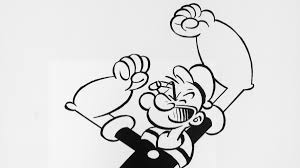
Forearms are one of the most neglected muscle groups in training — and one of the most impactful. Your forearms and grip are involved in virtually every upper body exercise you do. Deadlifts, rows, pull-ups, curls, farmer’s carries — all of them are limited by your grip before your back or biceps give out. Weak forearms are a hidden bottleneck that holds back performance across your entire training program.
Beyond performance, well-developed forearms also complete the look of a muscular physique. Thick, defined forearms are visible every time your arms are uncovered and are one of the most noticeable signs of serious training.
This guide covers the best forearm exercises, how to structure your forearm training, and everything you need to know about building grip strength and forearm size.
Understanding Your Forearm Muscles
The forearm contains more muscles than most people realise — over twenty in total. For training purposes, the most important ones are:
Wrist flexors — the muscles on the underside of the forearm, responsible for curling the wrist downward (wrist flexion). These are the primary muscles targeted by wrist curls performed with a palms-up grip and are the largest and most visible forearm muscles.
Wrist extensors — the muscles on the top of the forearm, responsible for lifting the wrist upward (wrist extension). Often undertrained compared to the flexors, which can create imbalances and contribute to elbow issues like tennis elbow over time.
Brachioradialis — the large muscle running along the outside of the forearm from the elbow to the wrist. It’s heavily involved in hammer curls and neutral grip pulling movements and is responsible for much of the forearm’s visible thickness. Check out our Alternate Hammer Curl page for the best exercise to target it.
Pronators and supinators — muscles responsible for rotating the forearm palm-down (pronation) and palm-up (supination). Involved in almost every gripping movement.
The Two Pillars of Forearm Training
Direct forearm isolation work — wrist curls, reverse wrist curls, and wrist roller exercises that directly target the flexors and extensors through their primary movement (wrist flexion and extension).
Grip-focused training — farmer’s carries, dead hangs, thick bar work, and heavy pulling movements that develop the crushing grip strength of the entire forearm as a functional unit.
Both types are important and complement each other. Isolation work builds muscle size and addresses imbalances. Grip work builds the functional strength that carries over to every other exercise.
The Best Forearm Exercises
1. Wrist Curl Over Flat Bench
The wrist curl over a flat bench is the most direct isolation exercise for the wrist flexors — the largest and most visible muscles on the underside of the forearm. By resting your forearms flat on the bench with your wrists hanging over the edge, you isolate the movement entirely to the wrist joint and remove all possibility of using your upper arm to assist.
How to perform:
- Sit on a flat bench and rest both forearms along the top of it, palms facing upward, with your wrists and hands hanging freely over the edge.
- Hold a barbell or dumbbell with an underhand grip.
- Let your wrists drop as far as comfortable to get a full stretch in the wrist flexors at the bottom.
- Curl your wrists upward as high as possible, squeezing the forearm flexors at the top.
- Slowly lower back to the starting position over 2 seconds.
- Repeat for your desired reps.
Sets & reps: 3–4 sets of 15–20 reps. Forearm muscles are dense and respond well to higher rep ranges.
Tip: Use a lighter weight than you think you need — the range of motion is small and the wrist joint is delicate. Controlled form with a genuine squeeze at the top beats heavy weight with poor range of motion every time.
2. Seated Palm-Up Wrist Curls
The seated palm-up wrist curl is very similar to the bench version but performed with your forearms resting on your thighs instead of a bench. This is a more accessible version that can be done anywhere you can sit down and allows a slightly more natural forearm angle for many people.
How to perform:
- Sit on a bench with your feet flat on the floor. Rest both forearms on your thighs with your palms facing upward and your wrists hanging over your knees.
- Hold a barbell or pair of dumbbells.
- Let your wrists drop to a fully extended position at the bottom.
- Curl your wrists upward as high as possible, squeezing your forearm flexors at the top.
- Lower slowly back to the starting position.
- Repeat for your desired reps.
Sets & reps: 3–4 sets of 15–20 reps.
Tip: Keep your forearms completely stationary on your thighs throughout — only your wrists should move. If your forearms are lifting off your thighs to help complete the movement, the weight is too heavy.
3. Reverse Wrist Curl
The reverse wrist curl is the essential counterpart to the regular wrist curl — it targets the wrist extensors on the top of the forearm. Most people only do palms-up wrist curls and never train their extensors, which creates a significant imbalance around the wrist and elbow joint that can contribute to forearm pain and tennis elbow over time. Training both sides equally keeps the forearm balanced and healthy.
How to perform:
- Sit on a bench with your forearms resting on your thighs or a bench, palms facing downward this time.
- Hold a barbell or dumbbells with an overhand grip, wrists hanging over the edge.
- Let your wrists drop toward the floor for a full stretch.
- Raise your wrists upward as high as possible, squeezing the top of the forearm at the top.
- Lower slowly and repeat.
Sets & reps: 3–4 sets of 15–20 reps.
Tip: The wrist extensors are significantly weaker than the flexors — use a lighter weight than your regular wrist curls and focus on the contraction at the top of each rep.
4. Farmer’s Carry
The farmer’s carry is one of the most effective grip and forearm exercises in existence — and one of the most functional. Simply pick up a heavy dumbbell or kettlebell in each hand and walk for a set distance or time. The sustained gripping force required to hold heavy weights while walking loads the entire forearm — flexors, extensors, brachioradialis, and the smaller stabilising muscles — simultaneously and continuously.
How to perform:
- Stand with a heavy dumbbell or kettlebell in each hand at your sides.
- Stand tall — chest up, shoulders back, core braced.
- Walk forward in a controlled, steady stride for your chosen distance or time.
- Keep your grip firm and your wrists neutral throughout — don’t let the dumbbells roll in your hands.
- Set them down, rest, and repeat.
Sets & reps: 3–4 sets of 20–40 metres or 30–60 seconds per set.
Tip: Go heavier than feels comfortable. The farmer’s carry is supposed to be a challenge to your grip — if the weight feels easy, it’s too light. Your forearms should be burning by the end of each set.
5. Dead Hang
The dead hang is the simplest grip exercise you can do and one of the most effective for building hand and forearm endurance. Simply hang from a pull-up bar for as long as possible. It builds the crushing and supporting grip strength needed for pull-ups, deadlifts, and rows, and also decompresses the spine as a bonus. It’s excellent as a warm-up before back or bicep training and as a standalone grip challenge.
How to perform:
- Grab a pull-up bar with both hands, slightly wider than shoulder width, overhand grip.
- Hang with your arms fully extended and your feet off the floor.
- Keep your shoulders active — pulled down and back slightly — rather than completely passive.
- Hold for as long as possible.
- Rest and repeat.
Sets & reps: 3–5 sets of maximum hang time. Work toward sets of 60+ seconds.
Tip: Once you can hang for 60 seconds consistently, add grip challenges — use a towel draped over the bar instead of the bar itself, or grip one side with just your fingers rather than your full hand.
6. Wrist Roller
The wrist roller is one of the most thorough forearm exercises available — it works both the flexors and extensors alternately through a rolling motion that loads the forearms through their full range of rotation. It’s simple, brutal, and highly effective. You can make your own wrist roller with a short stick or piece of pipe, a rope, and a weight plate.
How to perform:
- Hold the roller with both hands, arms extended straight in front of you at shoulder height.
- Alternately rotate your wrists — one forward, one back — to wind the rope up and raise the weight plate hanging from the end.
- Once the weight reaches the top, reverse the rotation to slowly lower it back down.
- One complete up-and-down cycle is one set.
Sets & reps: 3–5 complete up-and-down cycles. Your forearms will be on fire by the third.
7. Plate Pinch
The plate pinch directly trains pinch grip — the strength between your thumb and fingers — which is a different and often undertrained aspect of grip strength compared to crushing or supporting grip. It’s simple to set up and remarkably challenging.
How to perform:
- Stand and hold two smooth weight plates together with one hand — pinching them between your thumb on one side and your four fingers on the other. Smooth sides facing out.
- Hold for as long as possible with your arm at your side.
- Switch hands and repeat.
Sets & reps: 3–4 sets of maximum hold time per hand, or 30–45 seconds per side.
Tip: Start with two 5kg or 10kg plates. The smooth sides facing outward make this significantly harder than it sounds.
How to Structure Your Forearm Training
After your main upper body work — always train forearms at the end of your session. If you fatigue your forearms before your back or bicep work, your grip will give out during your main exercises and limit everything else.
2–3 times per week — forearms respond well to frequency since they’re used constantly in daily life and recover relatively quickly. Two to three short sessions per week delivers excellent results.
Mix isolation and grip work — include at least one wrist curl variation for flexor/extensor development and at least one grip-focused exercise (farmer’s carry, dead hang, or wrist roller) per session for complete forearm development.
Example Forearm Workouts
Quick forearm finisher (10 minutes):
- Seated Palm-Up Wrist Curls — 3 sets x 20 reps
- Reverse Wrist Curl — 3 sets x 15 reps
- Dead Hang — 3 sets x max time
Complete forearm session (20 minutes):
- Wrist Curl Over Flat Bench — 4 sets x 20 reps
- Reverse Wrist Curl — 3 sets x 15 reps
- Farmer’s Carry — 4 sets x 30 metres
- Plate Pinch — 3 sets x 30 seconds per hand
Grip strength focus:
- Dead Hang — 5 sets x max time
- Farmer’s Carry — 4 sets x 40 metres
- Wrist Roller — 4 complete cycles
- Plate Pinch — 3 sets x 30 seconds per hand
Forearm Exercises – Training Tips for Maximum Forearm Development
Train through a full range of motion. Wrist curls done with a tiny range of motion are far less effective than ones where the wrist drops fully at the bottom and curls fully at the top. The stretch at the bottom is where the growth stimulus comes from.
Train both sides equally. Always pair wrist curls (flexors) with reverse wrist curls (extensors). The extensor muscles are smaller and weaker but training them protects the elbow joint and prevents the imbalances that lead to forearm and elbow pain.
Use higher rep ranges. The forearm muscles are dense, slow-twitch dominant muscles used to sustained work all day long. They respond best to higher rep ranges — 15–25 reps — rather than the low rep ranges used for larger muscle groups.
Don’t rely on lifting straps for everything. Straps are a useful tool for heavy back training when grip would otherwise limit your lat stimulus — but using them for everything removes the grip training benefit from your pulling exercises. Let your grip work on lighter sets and save straps for your heaviest sets.
Be consistent. Forearms are notoriously slow to develop for most people — they’re dense, used to constant activity, and don’t respond to occasional training. Consistency over months is what builds impressive forearms. Add a short forearm finisher to two or three sessions per week and stick with it.
Forearm Exercises – Common Mistakes to Avoid
Only training wrist flexors. Doing only palms-up wrist curls and never training the extensors creates a strength imbalance around the wrist and elbow that frequently leads to forearm tightness, wrist pain, and conditions like tennis elbow. Always train both sides.
Going too heavy on wrist curls. The wrist joint is relatively delicate and the range of motion in wrist curls is small. Heavy weight typically means a tiny, jerky range of motion that barely works the forearms. Use a lighter weight and focus on a full, controlled range of motion with a genuine squeeze at the top.
Skipping grip training. Isolation wrist curls alone won’t build the functional grip strength needed for heavy deadlifts, rows, and pull-ups. Include farmer’s carries, dead hangs, or wrist roller work regularly to build grip strength that actually carries over to your main lifts.
Training forearms before your main upper body work. Pre-fatigued forearms and grip before rows, deadlifts, or pull-ups will limit everything else you do in that session. Always leave forearm work for last.
Expecting fast results. Forearms are slow to develop. They’re dense, highly trained through daily activities, and resistant to change. Consistent, patient training over several months is the path to genuinely impressive forearm development — not a few sessions here and there.