

Yoga: The Complete Body-Mind Practice
Quick Navigation: Breathwork and Pranayama · Interoception and Body Awareness · Mobility, Flexibility, and Recovery · Mindfulness in Movement · Yoga and the Nervous System · The Evidence Base · Poses and Practice
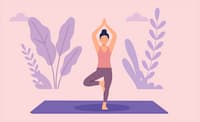
Yoga occupies a unique position in the Connection section — and in this site more broadly. It is the only practice covered here that simultaneously and deliberately integrates physical training, breathwork, mindfulness, interoception, and nervous system regulation into a single coherent practice. Every other section covers one or two of these dimensions. Yoga brings all of them together, in a form that has been refined across millennia and that modern neuroscience and physiology have increasingly validated at the mechanistic level.
This is not a claim that yoga is mystical or that its traditional framework requires acceptance. It is a description of what yoga actually does — the specific biological mechanisms through which its physical postures, breathwork, and attentional practices produce their effects on the body and mind — presented in the evidence-based language that the rest of this site uses throughout.
The wellness industry has done yoga a disservice in some respects: packaging it as a lifestyle brand, softening its physical demands, and associating it more with expensive leggings and Instagram aesthetics than with the genuine psychophysiological practice it is. But it has also expanded its reach to populations who would not otherwise have encountered it. The task here is to restore the substance — to cover yoga as the serious, evidence-supported body-mind practice it is, accessible to anyone who trains seriously and interested in the full picture of what it offers.
What Yoga Is
Yoga is a systematic practice originating in ancient India, traditionally understood as a path toward the union of individual consciousness with universal awareness. In its classical formulation — described by Patanjali in the Yoga Sutras around 400 CE — physical postures (asanas) were one of eight interconnected limbs, intended to prepare the body for meditation rather than as an end in themselves.
In its modern Western form, yoga is primarily practiced as a physical and mindfulness discipline — a combination of physical postures, breathing techniques, and meditation or present-moment awareness practice. This is a partial expression of the classical tradition, but it is the form that most practitioners will encounter and the form that most of the research covers.
The major modern yoga styles differ primarily in their emphasis and physical intensity:
Hatha yoga is the broad category encompassing most physical yoga styles — any yoga that combines asana and pranayama. In common usage, “hatha” often refers to a slower, more instructional style that holds poses longer and emphasizes alignment and breath.
Vinyasa yoga links movement to breath in flowing sequences — the inhale and exhale cue the transitions between poses, creating a moving meditation that elevates heart rate and builds the cardiovascular and strength dimensions of fitness more than slower styles.
Ashtanga yoga is a specific, fixed sequence of poses practiced in the same order in every session — demanding, physically rigorous, and traditionally practiced six days a week. It forms the basis of much contemporary vinyasa-based yoga.
Yin yoga holds passive poses for three to five minutes or longer, targeting the connective tissue — fascia, ligaments, and joint capsules — that dynamic movement practices do not access. It is a parasympathetic practice by design, producing the stillness and internal attention that its long holds require.
Restorative yoga uses props to support the body in completely passive positions, removing all muscular effort and allowing the nervous system to fully downregulate. It is among the most directly therapeutic yoga styles for stress recovery.
Kundalini yoga combines physical practice with intensive breathwork, chanting, and meditation — the most explicitly psychophysiological of the mainstream styles, deliberately targeting the nervous system and the energetic body alongside the physical one.
The choice of style is ultimately less important than the consistency of practice and the quality of attention brought to it. Any style, practiced with genuine present-moment awareness and deliberate engagement with breath and sensation, produces the body-mind integration effects that yoga offers. The specific style determines the emphasis — the balance of physical challenge, breathwork intensity, and meditative depth — but the fundamental mechanism is the same across all of them.
Why Yoga Belongs in Connection
Yoga belongs in our Connection section rather than in Body or Mind because its effects operate specifically at the interface between physical and psychological dimensions — through mechanisms that neither section alone covers.
The physical postures of yoga produce specific nervous system effects through their effects on the vagus nerve, the baroreceptors, the interoceptive system, and the proprioceptive circuits — effects that are more relevant to the psychophysiology of the body-mind interface than to the muscle building or cardiovascular fitness of the Body section. The breathwork integrated into yoga practice — pranayama — operates through the same vagal mechanisms covered on the breathwork and the nervous system page, and produces the same autonomic regulatory effects in the context of movement practice that it produces in isolation. The mindfulness in movement that yoga cultivates — the present-moment attentional engagement with physical sensation during practice — produces the same prefrontal cortex development and default mode network quieting that seated mindfulness produces, in a form that many people find more accessible.
And yoga’s most distinctive contribution — the development of interoception, the awareness of internal body states — is a capacity that sits precisely at the body-mind interface: the bridge between the physical signals the body generates and the psychological awareness of those signals that emotional regulation, stress detection, and the self-regulation of physiological state depends on.
Breathwork and Pranayama
The yoga tradition has developed one of the most sophisticated systems of breathwork available — pranayama, the yogic science of breath regulation. Pranayama encompasses dozens of specific breathing techniques, each with its own physiological profile and traditional application, from the gentle alternate nostril breathing that balances the two hemispheres of the autonomic nervous system to the rapid, forceful Kapalabhati breathing that generates heat and activates the sympathetic system, to the extended breath holds of Kumbhaka that build CO2 tolerance and deepen the stillness of advanced practice.
The physiological mechanisms of pranayama overlap directly with the breathwork science covered in the breathwork and the nervous system page — vagal activation through slow, diaphragmatic breathing, HRV improvement through resonance frequency patterns, and CO2 tolerance development through breath holds. What yoga adds to the breathwork science is the integration of breath with physical movement and attentional practice, and the systematic, progressive development of breath awareness and control across a wide range of techniques.
The breathwork and pranayama page covers the major pranayama techniques, their physiological mechanisms, the evidence base for their effects, and how to integrate them into both yoga practice and the broader breathwork toolkit.
Interoception and Body Awareness
Interoception — the perception of internal body states — is one of yoga’s most significant and least-discussed contributions to body-mind integration. The sustained, deliberate attention to internal physical sensation that yoga requires — the awareness of breath movement in the body, the proprioceptive signals of each pose, the subtle shifts in tension and ease as the body moves and holds — develops the interoceptive sensitivity that emotional regulation, stress detection, and the self-regulation of physiological state depends on.
Interoception operates through a specific neural pathway — the insular cortex, the brain region that processes bodily sensations and integrates them into the emotional and cognitive awareness that constitutes the felt sense of the body. Yoga practice consistently increases insular cortex activation and thickness in neuroimaging studies of experienced practitioners — a structural change that reflects the enhanced interoceptive processing that yoga’s internal attention develops.
This matters for far more than yoga performance. The insular cortex’s interoceptive function is directly involved in emotional awareness — the ability to notice the bodily signals that precede and constitute emotional states before they have been consciously labelled. The person with well-developed interoception can detect the subtle physiological changes that signal rising stress, building anxiety, or the onset of fatigue — and respond to them earlier, more specifically, and more effectively than someone with poor interoceptive sensitivity. This is body-mind integration in its most literal form: the mind’s awareness of the body’s state, precise enough to act as a real-time monitoring system for the psychological states that are rooted in physiology.
The interoception and body awareness page covers the neuroscience of interoception, how yoga develops it, and how enhanced interoceptive sensitivity translates into better emotional regulation, stress management, and the self-awareness that both the Mind section’s frameworks and the Connection section’s mechanisms depend on.
Mobility, Flexibility, and Recovery
The physical benefits of yoga — improved flexibility, mobility, and joint health — are among its most immediately accessible and most practically relevant for anyone engaged in serious physical training. The physical demands of resistance training and high-intensity exercise create muscular tension, connective tissue tightness, and movement pattern restrictions that, over time, limit the range of motion available for effective training and increase injury risk.
Yoga addresses these restrictions through two distinct mechanisms. Dynamic practice — the flowing movement sequences of vinyasa and ashtanga yoga — develops functional mobility: the active range of motion that joints can move through under muscular control. Passive practice — the long holds of yin yoga and the supported positions of restorative yoga — targets the connective tissue adaptations that static stretching alone produces slowly, through the mechanical creep of fascia and ligament under sustained, low-force loading.
The distinction between flexibility (passive range of motion) and mobility (active control through range of motion) is practically important. Flexibility without mobility is limited in its training application — a joint that can be passively moved through a large range is not the same as one that can generate force and maintain stability through that range. Yoga that combines both — dynamic practices that develop strength and control through range, and passive practices that extend the range available — produces the complete mobility picture that physical training requires.
Recovery yoga — gentle, parasympathetic-dominant practice focused on reducing muscular tension and promoting nervous system downregulation — is among the most effective active recovery modalities available. The combination of slow movement, extended holds, diaphragmatic breathing, and meditative attention produces a state of active parasympathetic recovery that passive rest alone does not fully replicate.
The mobility, flexibility, and recovery page covers the specific mechanisms of yoga-based mobility and recovery, how to integrate them into a training program, and the evidence for yoga’s physical recovery benefits.
Mindfulness in Movement
Yoga is, among other things, a moving meditation — a form of mindfulness practice that uses physical movement and sensation as the object of present-moment attention rather than the breath alone. This makes it uniquely accessible for people who find seated meditation difficult — the physical demands of the poses provide a natural anchor for attention that the restless mind has difficulty abandoning, while the integration of movement and breath creates a rhythmic, absorbing flow that naturally quiets the default mode network’s ruminative activity.
The mindfulness in movement that yoga cultivates produces the same prefrontal cortex development and amygdala regulation effects that seated mindfulness produces — with the additional benefit of doing so in the context of physical challenge. Maintaining present-moment attentional engagement with physical sensation while the body is under load — while holding a challenging pose, while transitioning through a demanding sequence, while the breath requires deliberate management — develops a quality of attentional robustness that seated mindfulness in comfortable conditions does not specifically train.
This attentional robustness is directly applicable to physical training: the capacity to maintain present-moment focus on execution quality while under the physical stress of demanding training is precisely the attentional quality that separates practitioners who get the most out of their training from those whose minds are elsewhere during sessions.
The mindfulness in movement page covers the neuroscience of moving meditation, how yoga’s attentional practices compare to and complement seated mindfulness, and how the mindfulness in movement cultivated through yoga transfers to training quality and everyday attentional performance.
Yoga and the Nervous System
Of all the mechanisms through which yoga produces its health benefits, its effects on the autonomic nervous system are the most comprehensively studied and the most directly relevant to the stress resilience, recovery capacity, and emotional regulation themes of the Connection section.
Yoga practice — particularly slower, parasympathetic-dominant styles — consistently produces increases in HRV, reductions in resting heart rate, reductions in blood pressure, and improvements in the heart rate recovery after exercise that measure autonomic flexibility. These are the same markers of autonomic health that the breathwork and the nervous system page identifies as the targets of breathwork practice — and yoga produces them through the combination of breathwork, movement-induced relaxation response, and attentional practice that the isolated practices produce individually.
The acute effects of a yoga session — the shift toward parasympathetic dominance that begins during practice and persists for hours afterward — are among the most robust findings in yoga physiology research. A single session of slow-paced yoga produces measurable reductions in cortisol, salivary alpha-amylase (a sympathetic nervous system marker), and self-reported stress that exceed those produced by equivalent periods of seated rest. The combination of breathwork, physical relaxation response, and attentional stillness produces an autonomic effect that is more than the sum of its parts.
The yoga and the nervous system page covers the specific mechanisms through which yoga modulates the autonomic nervous system — vagal activation, baroreceptor stimulation, HPA axis regulation — and the cumulative structural changes in autonomic regulation that consistent yoga practice produces.
The Evidence Base
Yoga has been studied in controlled research across a remarkably wide range of conditions and outcomes — anxiety, depression, chronic pain, PTSD, hypertension, cardiac rehabilitation, cancer-related fatigue, metabolic syndrome, cognitive performance, and immune function, among others. The evidence quality varies substantially: some areas have multiple well-controlled randomized trials with replication; others have primarily observational data or small, poorly controlled trials whose conclusions require qualification.
Honest engagement with this evidence base — acknowledging what is well-supported, what is suggestive but preliminary, and what is overstated in popular yoga advocacy — is more useful than either uncritical endorsement or blanket scepticism. Yoga produces real, specific effects through the mechanisms described in this section. Those effects are most robustly supported for stress and anxiety reduction, HRV improvement, blood pressure reduction, flexibility and mobility, and chronic pain management. The more expansive claims — that yoga produces spiritual transformation, that specific poses influence specific organs, that pranayama purifies the blood — range from the plausible-but-not-yet-evidenced to the biologically implausible.
The evidence base page provides an honest assessment of the yoga research — what the controlled trials have established, where the evidence is strong, where it is preliminary, and how to evaluate the claims that the wellness industry makes about yoga’s benefits.
Poses and Practice
The seven pages of this yoga section are grounded in a practical foundation: the poses that constitute the physical practice, organized by their primary function and body-mind mechanism. Understanding the poses as expressions of specific mechanisms — rather than as arbitrary positions to be assumed — connects the practice to the science and makes the physical practice an intelligent application of the principles the other pages cover.
The poses and practice page covers the foundational poses across four functional categories: strength and stability poses that build the active mobility and muscular control that training transfers from, flexibility and opening poses that address the restrictions that training creates, balance and focus poses that develop the proprioceptive and attentional capacities that the interoception and mindfulness pages describe, and recovery and restoration poses that directly activate the parasympathetic state that the nervous system and breathwork pages identify as the primary recovery mode.
The Thread That Connects It All
What makes yoga more than the sum of its parts — more than a collection of stretches, breathing exercises, and relaxation practices — is the integration. The breath cues the movement. The movement develops the interoceptive sensitivity that the breath awareness requires. The interoceptive sensitivity supports the present-moment attentional engagement that quiets the default mode network. The attentional engagement with physical sensation develops the mindfulness capacity that stress regulation depends on. And all of it together produces the autonomic regulatory capacity — the high vagal tone, the balanced HPA axis, the flexible autonomic response — that the nervous system section identifies as the physiological signature of resilience.
No single component produces this integration on its own. The breathwork without the movement produces autonomic regulation without the interoceptive development. The movement without the breath loses the primary autonomic mechanism. The physical practice without the attentional engagement is exercise with relaxation effects but without the mindfulness development. The integration is what makes yoga the most complete body-mind practice available — and what earns it its place at the center of the Connection section.