

Barbell Bench Press: How To, Muscles Worked & Common Mistakes
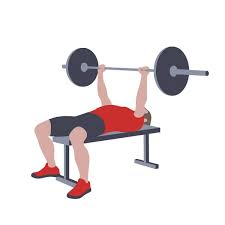
The barbell bench press is the king of chest exercises — and honestly, one of the most well-known exercises in the entire gym. It’s a compound movement, meaning it works multiple muscle groups at once, which is why it’s been a staple of strength and muscle building programs for decades.
If you want a bigger, stronger chest, this exercise needs to be in your routine.
Bench Press – Muscles Worked
The barbell bench press primarily targets:
- Pectoralis major — the main chest muscle, doing the bulk of the work
- Anterior deltoid — the front of your shoulders assist throughout the press
- Triceps brachii — your triceps kick in to lock out the movement at the top
Secondary muscles involved:
- Serratus anterior — helps stabilize the shoulder blade
- Core and legs — act as a base and stabilizer throughout the lift
How to Perform the Barbell Bench Press
- Lie flat on the bench with your feet firmly planted on the floor — don’t let them float up.
- Grip the barbell slightly wider than shoulder width. At the bottom of the movement your forearms should be roughly vertical.
- Before unracking, retract your shoulder blades — squeeze them together and push them down into the bench. This protects your shoulders and gives you a more stable pressing base.
- Unrack the bar and hold it directly above your chest with arms fully extended.
- Lower the bar slowly toward your mid-chest, keeping your elbows at roughly a 45–75 degree angle from your body (not flared out to 90 degrees).
- Lightly touch your chest — don’t bounce the bar off it.
- Press the bar back up in a slight arc back to the starting position, exhaling as you push.
- Repeat for your desired reps.
Pro tip: Think about “pushing yourself into the bench” rather than pushing the bar up. It sounds subtle but it helps keep your shoulder blades retracted and your form tight throughout the set.
Bench Press – Sets & Reps
| Goal | Sets | Reps | Rest |
|---|---|---|---|
| Muscle building | 3–4 | 6–12 | 90 sec – 2 min |
| Strength | 4–5 | 3–5 | 3–5 min |
| Endurance / Tone | 3 | 15–20 | 60 sec |
Common Mistakes to Avoid
1. Flaring your elbows out to 90 degrees This puts a lot of unnecessary stress on your shoulder joints. Keep your elbows angled at roughly 45–75 degrees from your torso — it feels a little tucked at first but your shoulders will thank you.
2. Bouncing the bar off your chest Using a bounce to help get the weight up removes tension from the muscles and can hurt your sternum over time. Lower the bar under control and use your chest to press it back up.
3. Lifting your hips off the bench A slight natural arch in your lower back is fine and actually normal — but if your hips are completely rising off the bench, you’re compensating with your lower back. Keep your glutes on the bench at all times.
4. Gripping the bar too wide or too narrow Too wide puts strain on your shoulders and wrists. Too narrow shifts more work to your triceps. A grip just outside shoulder width is the sweet spot for most people.
5. Unracking with bent arms Always unrack the bar with your arms fully extended, directly above your chest. Unracking at an angle or with bent elbows is how accidents happen.
Where the Bench Press Fits in Your Workout
The bench press is a compound movement, so it should always come first in your chest workout — before any isolation exercises like flys or cable crossovers. Start heavy while your energy is fresh, then move to isolation work afterward.
A classic chest day might look like: Bench Press → Incline Bench Press → Dumbbell Flys → Cable Crossovers.
Bench Press Variations
The flat barbell bench press is the foundation, but there are two important variations that shift the focus to different parts of your chest:
Decline Barbell Bench Press — bench angled downward, targets the lower chest
Incline Barbell Bench Press — bench set to 30–45 degrees, targets the upper chest