Good Morning: How To, Muscles Worked & Common Mistakes
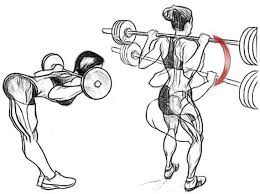
The good morning is one of those exercises that doesn’t get nearly enough attention — but serious lifters swear by it. It’s a barbell hip hinge movement that directly strengthens the lower back, hamstrings, and glutes, and it closely mimics the bottom position of a deadlift. In fact, many powerlifters use it specifically to strengthen their deadlift and squat lockout.
The name comes from the bowing motion — like nodding good morning to someone — but don’t let that fool you. Done correctly with progressive weight, this is a serious strength exercise.
Good Morning – Muscles Worked
Primary muscles:
- Erector spinae — the lower back muscles work hard to control the descent and drive the return to standing
- Hamstrings — heavily stretched and loaded as you hinge forward
- Glutes — powerfully engaged as you drive your hips forward to stand back up
Secondary muscles:
- Adductors — assist with hip stability throughout the movement
- Core — braces to protect your spine under the barbell
- Upper back and traps — work isometrically to hold the bar in position across your back
How to Perform the Good Morning
- Set a barbell in a squat rack at about shoulder height. Step under it and position it across your upper traps — the same position as a back squat.
- Unrack the bar, step back, and stand with your feet shoulder-width apart, toes pointing slightly outward.
- Take a deep breath, brace your core, and keep your chest up.
- Push your hips back and hinge forward, lowering your torso toward the floor. Keep a soft bend in your knees throughout — don’t lock them out.
- Lower until your torso is roughly parallel to the floor, or until you feel a strong stretch in your hamstrings — whichever comes first. Your back must stay flat the entire time.
- Drive your hips forward and squeeze your glutes to return to the upright starting position.
- Exhale at the top and repeat.
Pro tip: Start very light — much lighter than you think you need to. The good morning looks deceptively simple but places the barbell in a long lever position that makes even modest weights feel very heavy. Master the movement pattern first, then add weight gradually.
Good Morning – Sets & Reps
| Goal | Sets | Reps | Rest |
|---|---|---|---|
| Strength & muscle | 3–4 | 6–10 | 90 sec – 2 min |
| Posterior chain endurance | 3 | 12–15 | 60–90 sec |
| Deadlift/squat assistance | 3–4 | 8–12 | 90 sec |
Good Morning – Common Mistakes to Avoid
1. Going too heavy too soon This is by far the most common mistake with good mornings. The barbell sitting on your back creates a very long moment arm, meaning even light weight puts significant load on your spine. Always start lighter than you think necessary and build up slowly over weeks.
2. Rounding your lower back Your spine must stay neutral throughout the entire movement. If your lower back rounds as you hinge forward, you’re either going too heavy or hinging too far down. Stop at the point where you can maintain a flat back.
3. Locking your knees Straight legs put enormous stress on your hamstrings and knee joints. Keep a consistent soft bend in the knees throughout — this also helps shift more of the load onto your hamstrings and glutes where it belongs.
4. Looking up too much Craning your neck upward to look forward hyperextends your cervical spine. Keep your neck neutral — your gaze should be a few feet ahead on the floor as you hinge down.
5. Bar position too high on the neck Having the bar sitting on your neck rather than across your upper traps is both uncomfortable and unsafe. Make sure it’s resting solidly on your traps before you unrack.
Good Morning vs. Deadlift
Both exercises train the same hip hinge pattern and work the same primary muscles, but they feel very different:
- Deadlift — bar is in your hands, load starts from the floor, allows heavier loading overall
- Good morning — bar is on your back, load starts from standing, places more direct emphasis on the lower back and hamstrings through the hinge
Many lifters and coaches use good mornings as an assistance exercise to strengthen the hip hinge pattern and bring up weaknesses that carry over directly to the deadlift and squat.
Where It Fits in Your Workout
Good mornings work best as an assistance movement after your main compound lifts like deadlifts or squats. They’re not typically used as a primary exercise but rather as targeted posterior chain work to build the muscles that support your bigger lifts. They also work well on leg day as a hamstring-focused exercise.