

Seated Cable Row: How To, Muscles Worked & Common Mistakes
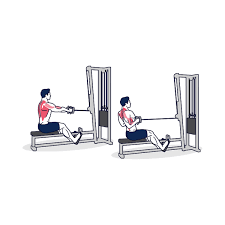
The seated cable row is a back day staple for good reason. It builds mid-back thickness, improves posture, and keeps constant tension on your muscles throughout the entire movement — something free weights can’t always do. Whether you’re a beginner or an experienced lifter, this exercise delivers consistent, reliable results.
It’s also one of the most joint-friendly rowing exercises you can do, since your lower back isn’t fighting gravity the way it does during bent-over rows.
Seated Cable Row – Muscles Worked
- Latissimus dorsi — the primary mover, pulling your elbows back and down
- Rhomboids — squeezed hard together at the peak of each rep
- Trapezius (mid and lower) — heavily involved in retracting the shoulder blades
- Rear deltoids — assist throughout the pulling motion
- Biceps brachii — help pull the handle toward your body
- Erector spinae — work to keep your torso upright and stable throughout
How to Perform the Seated Cable Row
- Sit on the cable row machine with your feet flat against the footplate and knees slightly bent — don’t lock them out.
- Reach forward and grab the handle with both hands. Your back should be straight and your chest up before you even start pulling.
- Lean back very slightly to an upright position — your torso should stay mostly still throughout the movement, around 90 degrees or just slightly past vertical.
- Pull the handle toward your lower abdomen by driving your elbows straight back, keeping them close to your sides.
- Squeeze your shoulder blades together hard at the top — hold for a brief moment.
- Slowly extend your arms back to the starting position, allowing a slight forward lean at the hips to get a good lat stretch at the end of each rep.
- Repeat for your desired reps.
Pro tip: The slight forward lean at the end of each rep isn’t a mistake — it’s intentional. Reaching forward adds a full stretch to your lats before the next pull, increasing the range of motion and the muscle stimulus. Just don’t overdo it or let your lower back round.
Seated Cable Row – Sets & Reps
| Goal | Sets | Reps | Rest |
|---|---|---|---|
| Muscle building | 3–4 | 8–12 | 60–90 sec |
| Strength | 4–5 | 5–8 | 2–3 min |
| Endurance | 3 | 15–20 | 45–60 sec |
Seated Cable Row – Common Mistakes to Avoid
1. Leaning too far back A slight backward lean is fine, but rocking your torso back aggressively to help pull the weight turns this into a lower back exercise rather than a back exercise. Keep your torso controlled and relatively upright.
2. Shrugging your shoulders As the weight gets heavier it’s tempting to let your shoulders rise up toward your ears. Keep them pulled down and back throughout — shrugging reduces lat activation and puts unnecessary strain on your neck and upper traps.
3. Letting the weight stack touch between reps Allowing the plates to rest between every rep removes the tension from your muscles entirely. Keep the movement controlled and stop just short of the stack touching so your back stays under load throughout the set.
4. Pulling to the wrong spot The handle should come to your lower abdomen — not your chest. Pulling too high shifts the work away from your lats and more onto your upper back and rear delts.
5. Using momentum Jerking the handle back instead of pulling it in a smooth, controlled arc means your back muscles aren’t doing the work. Slow down and feel the contraction.
Seated Cable Row – Attachment Variations
The seated cable row can be done with several different handle attachments, each slightly changing the feel and emphasis:
- Close grip V-bar Pulldown— the most common, neutral grip, great all-round lat and mid-back activation
- Wide bar — wider grip, shifts slightly more emphasis to the upper back and rear delts
- Single handle — allows unilateral rowing, useful for addressing imbalances
Where It Fits in Your Workout
The seated cable row works well as a mid-session compound movement on back day, typically after your heavier free weight rowing (bent-over rows, dumbbell rows) and before your isolation or finishing exercises. It’s also great as a superset partner with lat pulldowns for a high-volume back session.