
Barbell Curl: How To, Muscles Worked & Common Mistakes
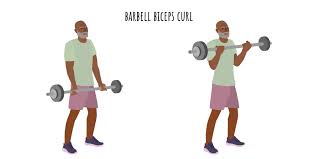
The barbell curl is the go-to exercise for building biceps mass and strength. It’s been a staple of arm training forever — and for good reason. The straight bar allows you to load heavier than dumbbells, both arms work simultaneously, and the fixed grip creates a consistent supinated position that keeps maximum tension on the biceps throughout the movement.
If bigger, stronger arms are a goal, the barbell curl deserves a permanent spot in your routine.
Barbell Curl – Muscles Worked
Primary muscles:
- Biceps brachii — the main muscle on the front of your upper arm, both the long head (outer) and short head (inner) are heavily targeted
- Brachialis — sits underneath the biceps, adds thickness to the upper arm and is heavily worked during the curl
Secondary muscles:
- Brachioradialis — a forearm muscle that assists throughout the curl
- Forearm flexors — work to maintain the underhand grip throughout the set
- Core — stabilizes your torso throughout the standing movement
How to Perform the Barbell Curl
- Stand with your feet shoulder-width apart and grip the barbell with an underhand grip (palms facing up), hands about shoulder-width apart.
- Let the bar hang at arm’s length in front of your thighs — arms fully extended. This is your starting position.
- Keep your elbows pinned close to your sides throughout — they should not drift forward or flare outward.
- Curl the bar upward in a smooth arc by bending your elbows, exhaling as you lift.
- Curl until the bar reaches about chin or upper chest height and squeeze your biceps hard at the top.
- Slowly lower the bar back to the starting position over 2–3 seconds, inhaling on the way down. Don’t just drop it.
- Repeat for your desired reps.
Pro tip: At the top of the movement, try rotating your wrists very slightly outward — a small supination beyond neutral. This extra rotation squeezes the biceps harder at the peak contraction and can make a noticeable difference in the quality of each rep.
Barbell Curl – Sets & Reps
| Goal | Sets | Reps | Rest |
|---|---|---|---|
| Muscle building | 3–4 | 8–12 | 60–90 sec |
| Strength | 4–5 | 4–6 | 2–3 min |
| Endurance / pump | 3 | 15–20 | 45 sec |
Barbell Curl – Common Mistakes to Avoid
1. Swinging your body This is the most common barbell curl mistake. Using momentum to rock your torso back and swing the bar up takes most of the work away from your biceps. If you’re swinging, the weight is too heavy — drop it down and use strict form.
2. Elbows drifting forward Your elbows should stay pinned to your sides throughout the entire movement. Letting them shoot forward as you curl reduces the range of motion and shifts the work away from the biceps. Think of your elbows as a fixed pivot point.
3. Not fully extending at the bottom Stopping short of full arm extension at the bottom cuts your range of motion and reduces the stretch on the biceps. Lower the bar all the way down each rep for maximum muscle activation.
4. Gripping too wide or too narrow Grip width affects which part of the bicep is emphasized. A shoulder-width grip is the neutral sweet spot that works both heads evenly. A narrower grip slightly emphasizes the long head (outer bicep), while a wider grip shifts more to the short head (inner bicep).
5. Rushing the lowering phase The slow lowering phase — the eccentric — is one of the most important parts of the curl for building muscle. Lower the bar over 2–3 seconds every rep rather than letting it drop under gravity.
Straight Bar vs. EZ Bar
You’ll often see both a straight barbell and an EZ curl bar used for curls. They both work the biceps but feel different:
- Straight barbell curl — fully supinated grip, maximum biceps activation, but can cause wrist and elbow discomfort for some people
- EZ curl bar — angled grips that put your wrists in a more neutral position, reduces joint stress, slightly less bicep activation but much more comfortable for many lifters
If the straight bar causes wrist pain, the EZ bar is an excellent alternative that still delivers great bicep results. Try both and use whichever feels better for your joints long term.
Barbell Curl – Variations
You have several biceps exercises on your site that complement the barbell curl well:
- Preacher Curl — eliminates body momentum completely by bracing your arms on a pad.
- Dumbbell Curls — unilateral version that helps address strength imbalances.
- Standing Biceps Cable Curl — cable version for constant tension throughout.
Where It Fits in Your Workout
The barbell curl is a primary biceps exercise and works best at the start of your arm or biceps session when your muscles are fresh. It’s the exercise where you can handle the most weight and generate the most overall bicep stimulus — so get it done first before moving to isolation variations like preacher curls or cable curls.