

Cable Crossover: How To, Muscles Worked & Common Mistakes
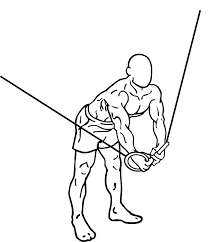
The cable crossover is one of the best exercises you can do for chest definition and inner chest development. Unlike free weights, the cable machine keeps constant tension on your chest throughout the entire movement — meaning your muscles are working hard from start to finish, not just at certain points in the rep.
It’s a great finishing exercise at the end of a chest day, and works well for all experience levels.
Cable Crossover – Muscles Worked
The cable crossover primarily targets:
- Pectoralis major — the main chest muscle, especially the inner portion
- Anterior deltoid — the front of your shoulder assists throughout the movement
- Serratus anterior — helps stabilize your shoulder blade during the motion
The angle you set the cables at determines which part of your chest gets emphasized most — more on that in the variations below.
How to Perform Cable Crossovers
- Set both pulleys to the highest position on the cable machine.
- Stand in the middle, grab a handle in each hand, and take one foot slightly forward for balance.
- Lean forward very slightly at the hips — this keeps the tension on your chest rather than your shoulders.
- With a slight bend in your elbows (keep that bend throughout — don’t straighten or over-bend), bring both handles down and together in a wide arc in front of you.
- Squeeze your chest hard when the handles meet — think about trying to hug a giant tree.
- Slowly return to the starting position, feeling the stretch across your chest.
- Repeat for your desired reps.
Pro tip: Keep your chest up and shoulders back the whole time. If your shoulders are rounding forward, you’re letting them take over the work.
Cable Crossover – Sets & Reps
| Goal | Sets | Reps | Rest |
|---|---|---|---|
| Muscle building | 3–4 | 10–15 | 60–90 sec |
| Definition / pump | 3–4 | 15–20 | 30–60 sec |
| Strength endurance | 2–3 | 20+ | 30 sec |
Note: Cable crossovers are an isolation exercise, so they’re generally better suited for higher rep ranges rather than heavy low-rep work.
Cable Crossover – Common Mistakes to Avoid
1. Using too much weight This is the most common one. Too much weight forces you to use momentum and your shoulders take over. You should feel this in your chest — if you don’t, lower the weight and focus on the squeeze.
2. Straightening your arms completely Locking out your elbows puts unnecessary stress on your elbow joints. Keep a soft, consistent bend throughout every rep.
3. Standing too upright Without a slight forward lean, the cable angle pulls more on your shoulders than your chest. A small lean makes a big difference in where you feel the exercise.
4. Rushing through reps Cable crossovers shine when done slowly and with control. Take 2 seconds on the way down, squeeze for a moment at the bottom, and 2–3 seconds on the return. That constant tension is the whole point.
Cable Crossover – Variations
The beauty of the cable crossover is that changing the pulley height completely shifts which part of your chest you’re hitting:
- High-to-low crossover (what we covered above) — emphasizes the lower and inner chest
- Low-to-high crossover — set pulleys at the bottom, bring handles upward — targets the upper chest
- Mid-cable crossover — pulleys at shoulder height — hits the middle chest
When to Use Cable Crossovers in Your Workout
Cable crossovers are an isolation exercise, so they work best toward the end of your chest workout after your heavier compound lifts like bench press or push-ups. They’re perfect for finishing off your chest with a good pump and really squeezing out the last bit of effort from those muscles.