

Dumbbell Flys: How To, Muscles Worked & Common Mistakes
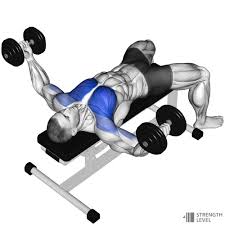
Dumbbell flys are a classic chest exercise that focuses on stretching and squeezing the chest through a wide range of motion. What makes them unique compared to pressing movements is that they isolate the chest much more directly — your triceps barely get involved, so almost all the work goes straight to your pecs.
They’re a fantastic complement to the bench press and a staple on any chest day.
Dumbbell Flys – Muscles Worked
Dumbbell flys primarily target:
- Pectoralis major — the main chest muscle, stretched and contracted through a wide arc
- Anterior deltoid — the front of your shoulder assists throughout the movement
- Pectoralis minor — the smaller chest muscle underneath gets worked as a stabilizer
Important: Because the shoulder joint is under a lot of stress during this movement, proper form matters more here than in most chest exercises.
How to Perform Dumbbell Flys
- Lie flat on a bench with a dumbbell in each hand, held directly above your chest, palms facing each other.
- Keep a soft bend in your elbows throughout — this is essential and never changes.
- Slowly lower both dumbbells out to the sides in a wide arc, as if you’re opening your arms for a big hug.
- Lower until you feel a deep stretch across your chest — for most people this is when your arms are roughly parallel to the floor or just slightly below.
- Reverse the motion and bring the dumbbells back together above your chest, squeezing your pecs at the top.
- Repeat for your desired reps.
Pro tip: Think of it as a hugging motion, not a pressing motion. If you find yourself bending your elbows more to lift the weight, it’s too heavy — drop down and focus on the stretch and squeeze.
Sets & Reps
| Goal | Sets | Reps | Rest |
|---|---|---|---|
| Muscle building | 3–4 | 10–15 | 60–90 sec |
| Definition / stretch | 3–4 | 12–15 | 60 sec |
| Warm-up / activation | 2 | 15–20 | 45 sec |
Dumbbell flys are an isolation movement, so like cable crossovers they work best in moderate-to-higher rep ranges rather than going super heavy.
Common Mistakes to Avoid
1. Going too heavy This is by far the most common mistake with flys. Too much weight forces you to bend your elbows and turn it into a pressing movement — at that point you’re basically doing a chest press, not a fly. Use a weight where you can truly feel the stretch.
2. Locking your elbows straight The opposite problem — fully straight arms puts enormous strain on your elbow joints and increases injury risk. That soft bend in the elbow is non-negotiable.
3. Lowering too far More stretch isn’t always better. Dropping the dumbbells too far below the bench puts your shoulder joint in a vulnerable position. Stop when you feel a good stretch — you don’t need to go further.
4. Bouncing out of the stretch Some people use a little bounce at the bottom to help swing the weight back up. This is hard on the shoulder joints and removes the muscle tension right where it matters most. Control the movement all the way through.
Dumbbell Flys – Variations
Want to hit your chest from a different angle or switch things up?
- Incline Dumbbell Flys — bench set to 30–45 degrees, shifts the emphasis to the upper chest
- Decline Dumbbell Flys — bench tilted down, targets the lower chest
- Cable Flys — similar movement using cables for constant tension throughout.
Where Dumbbell Flys Fit in Your Workout
Just like cable crossovers, dumbbell flys are an isolation exercise best placed toward the end of your chest session. Do your heavy compound work first (bench press, push-ups), then finish with dumbbell flys to really isolate and stretch the chest. Many lifters superset flys with a pressing exercise for an extra intense chest pump.