

Push-Ups: How To, Muscles Worked & Common Mistakes
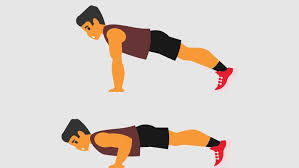
Push-ups might be the most underrated exercise out there. No equipment, no gym membership, no excuses — just you and the floor. But don’t let the simplicity fool you. Done correctly, push-ups build real chest, shoulder, and tricep strength, and they scale to any fitness level from complete beginner to advanced athlete.
If you’re only doing them as a warm-up, you’re leaving a lot on the table.
Push-Ups – Muscles Worked
Push-ups are a compound movement that hit multiple muscles at once:
- Pectoralis major — the main chest muscle, doing the bulk of the pushing work
- Anterior deltoid — the front of your shoulders assist throughout
- Triceps brachii — your triceps work hard to extend your arms on the way up
- Serratus anterior — stabilizes your shoulder blades throughout the movement
- Core — your abs and lower back work continuously to keep your body in a straight line
How to Perform Push-Ups
- Start in a high plank position — hands slightly wider than shoulder width, arms straight, body forming a straight line from head to heels.
- Engage your core and squeeze your glutes — your hips should not sag or pike up.
- Lower your chest toward the floor by bending your elbows, keeping them at roughly a 45-degree angle from your body (not flared out to the sides).
- Lower until your chest is just above the floor or lightly touches it.
- Press through your palms and push yourself back up to the starting position, fully extending your arms at the top.
- Repeat for your desired reps.
Pro tip: Think of your body as a plank of wood — completely rigid from head to heels. The moment your hips sag or your lower back arches excessively, your core has switched off and your form has broken down.
Push-ups – Sets & Reps
| Level | Sets | Reps | Rest |
|---|---|---|---|
| Beginner | 2–3 | 5–10 | 60–90 sec |
| Intermediate | 3–4 | 15–20 | 60 sec |
| Advanced | 4–5 | 25–30+ | 45–60 sec |
Can’t do a full push-up yet? Start with knee push-ups (same movement, knees on the floor) and build up from there. There’s no shame in it — everyone starts somewhere.
Common Mistakes to Avoid
1. Sagging hips This is the most common push-up mistake. When your hips drop, your lower back takes the strain instead of your chest and core. Squeeze your glutes and brace your abs before every single rep.
2. Flaring elbows out to 90 degrees Elbows pointing straight out puts a lot of stress on your shoulder joints. Keep them at roughly 45 degrees from your torso — it feels more natural once you get used to it and is much safer long term.
3. Partial range of motion Half reps mean half the results. Lower your chest all the way down and fully extend your arms at the top. Full range of motion = full muscle activation.
4. Head drooping forward Your neck should be neutral — in line with your spine. Looking too far forward or letting your chin drop puts unnecessary strain on your neck.
5. Holding your breath Breathe in on the way down, breathe out as you push up. It sounds basic but a lot of people hold their breath through sets without realizing it.
Variations
One of the best things about push-ups is how many ways you can modify them to make them easier, harder, or to target different areas:
- Knee push-ups — hands and knees on the floor, great for beginners building up strength
- Wide grip push-ups — hands wider than normal, places more emphasis on the chest
- Close grip / Diamond push-ups — hands close together, shifts more work to the triceps
- Incline push-ups — hands elevated on a bench or surface, targets the lower chest
- Decline push-ups — feet elevated on a bench, targets the upper chest
- Pike push-ups — hips raised in a V shape, shifts emphasis to the shoulders
Where Push-Ups Fit in Your Workout
Push-ups work great as a warm-up before heavier chest work like the bench press, but they’re also effective as a standalone exercise or as a finisher at the end of a chest session. For bodyweight training specifically, push-up progressions can replace pressing movements entirely and still deliver excellent results.