

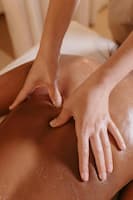
Massage has been practiced across cultures for thousands of years, but it’s not just tradition keeping it around. Research on what massage does at a physiological and psychological level has expanded considerably, and the picture that emerges is more nuanced than “it relaxes your muscles.” Understanding what massage actually does — and what it doesn’t do — helps you decide if and when it makes sense for you.
What Happens to Your Body During a Massage
When soft tissue is manipulated through pressure, compression, and movement, a number of things happen simultaneously:
- Blood and lymph circulation increases in the area being worked, improving the local exchange of oxygen, nutrients, and metabolic waste products
- The nervous system shifts — mechanical stimulation of the skin and muscle activates the parasympathetic nervous system, which governs rest and recovery functions and is associated with reduced cortisol and increased serotonin levels
- Muscle tension decreases through direct pressure on muscle tissue and fascial layers, which can temporarily reduce perceived tightness and restricted range of motion
- Pain signals are modulated — massage stimulates sensory receptors that effectively compete with pain signals traveling to the brain, which is part of why it can reduce the perception of soreness and chronic pain
These aren’t independent effects. They feed into each other, which is why the benefits of massage tend to be felt across physical and mental dimensions at the same time.
Evidence-Backed Benefits of Massage
Reduced Muscle Soreness and Faster Recovery
Of all the performance-related claims about massage, this one has the strongest research support. Multiple meta-analyses have found that massage after exercise meaningfully reduces delayed onset muscle soreness (DOMS) — that familiar ache in the 24–72 hours after a hard training session. The effect appears most pronounced within the first 24–72 hours post-exercise, and the mechanism is thought to involve reduced inflammation markers and improved tissue circulation.
Sports massage in particular is used by many athletes specifically for this window of recovery, timed around competitions or demanding training blocks.
Stress and Anxiety Reduction
Massage consistently shows measurable effects on the body’s stress response. Studies have documented reductions in cortisol (the primary stress hormone) and increases in serotonin and dopamine following massage sessions. These aren’t just subjective impressions — the changes show up in blood and saliva markers.
For people dealing with chronic stress or anxiety, regular massage appears to have a cumulative effect, with benefits building over multiple sessions rather than being limited to the immediate post-massage window.
Improved Sleep Quality
Improved sleep is one of the more commonly reported outcomes in massage research, and it tracks mechanically: lower cortisol, higher serotonin, and greater parasympathetic activation all create conditions conducive to sleep onset and quality. Some studies specifically examining massage and sleep have found improvements in sleep duration and efficiency, including in populations dealing with chronic pain or high stress.
Pain Reduction — Chronic and Acute
Both chronic pain conditions (lower back pain, neck pain, fibromyalgia) and acute musculoskeletal pain have been studied in relation to massage, with generally positive results. The pain-modulating effects are thought to come from sensory stimulation (the gate control mechanism), reduced muscle guarding, and the psychological aspects of relaxation.
Massage is most effective for pain when used as part of a broader approach rather than a standalone cure, particularly for chronic conditions where structural or movement issues also need addressing.
Improved Range of Motion
Regular massage can improve flexibility and joint range of motion, particularly in areas with chronic tightness or adhesions in connective tissue. The effect is partly direct — working the tissue mechanically — and partly indirect, through reducing neural tension and muscle guarding around a joint.
Main Types of Massage and When Each Makes Sense
Not all massage is the same. The type that makes sense depends on your goals:
Swedish Massage — the most common form in general wellness settings. Uses long strokes, kneading, and circular movements at moderate pressure. Best for general relaxation, stress reduction, and mild muscle tension. A strong starting point if you’re new to massage.
Deep Tissue Massage — uses more sustained, focused pressure to reach deeper layers of muscle and connective tissue. Useful for chronic muscle tension, adhesions, and injury recovery. Can be uncomfortable during the session, particularly over tighter areas, and some post-session soreness is normal.
Sports Massage — tailored to athletes, combining techniques from Swedish and deep tissue massage with stretching. Often used pre-event (lighter, activating work) or post-event (recovery-focused). Timing and pressure differ significantly depending on whether it’s pre- or post-training.
Trigger Point Therapy — applies concentrated pressure to specific “knots” or trigger points in muscle tissue that refer pain to other areas. Often integrated into sports and deep tissue sessions rather than used standalone.
Foam Rolling / Self-Myofascial Release — not a professional massage modality, but a widely accessible self-applied technique using a foam roller or lacrosse ball. The research on foam rolling suggests it reduces DOMS and improves short-term range of motion, though effects are generally smaller in magnitude than professional massage. A practical tool between proper massage sessions.
How Often Should You Get a Massage?
There’s no universal answer — it depends on training load, stress levels, and budget. A few practical frameworks:
- Maintenance (general wellbeing and stress): Once or twice a month tends to show cumulative benefits in the stress and sleep research
- During heavy training blocks: More frequent sessions — weekly if possible — particularly in the 24–72 hour post-training window for recovery
- Dealing with a specific issue: A concentrated period (weekly or biweekly) targeting the problem, then spacing out as it resolves
Cost is a real barrier for frequent professional massage. Self-myofascial release tools (foam rollers, massage guns, lacrosse balls) fill the gap reasonably well for daily maintenance between sessions.
Common Questions About Massage
Does massage “flush out toxins”? This is one of the most repeated claims in massage marketing and one of the weakest. The body’s lymphatic and detoxification systems are not in need of manual flushing, and there’s no good evidence that massage meaningfully accelerates toxin removal. The circulation and metabolic benefits of massage are real — the “toxin flush” narrative around them isn’t.
Should I drink water after a massage? The advice to “drink lots of water” after massage is widespread but not strongly evidence-based. Staying normally hydrated is always sensible, and muscle soreness after a deep tissue session is common — hydration won’t change that outcome significantly, though it doesn’t hurt.
Can massage replace stretching or strength work for flexibility? Massage can complement both, but not replace either. Improving structural flexibility and joint health long-term involves active work — movement, loading, and stretching. Massage is more effective at reducing temporary tightness and improving the conditions under which movement happens.
The Bottom Line
Massage earns its place in a wellbeing routine through real, documented mechanisms — not just because it feels good in the moment. Reduced muscle soreness, lower stress hormones, better sleep, and pain relief are all backed by reasonable evidence, and the effects compound with consistent use. The type that makes sense depends on your goals: Swedish massage for relaxation and stress, sports and deep tissue for recovery and tension, trigger point work for specific muscular issues. Used alongside good training, sleep, and nutrition, massage is one of the more evidence-supported recovery and wellbeing tools available.