

Dumbbell Rear Lateral Raise: How To, Muscles Worked & Common Mistakes
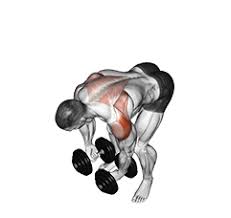
The dumbbell rear lateral raise is one of the most important — and most neglected — exercises for complete shoulder development. While most people focus on the front and side of their shoulders, the rear deltoids are often underdeveloped, leading to rounded shoulders and a flat-looking back from behind.
Training your rear delts isn’t just about aesthetics either. Strong rear deltoids improve posture, protect your shoulder joints, and create a balanced look that separates serious lifters from casual ones.
Dumbbell Rear Lateral Raise – Muscles Worked
Primary muscles:
- Posterior deltoid (rear delt) — the back portion of your shoulder, the primary target of this exercise
Secondary muscles:
- Rhomboids — assist with the squeezing motion at the top of each rep
- Trapezius (mid and lower) — help stabilize and retract the shoulder blades
- Infraspinatus and teres minor — rotator cuff muscles that assist with the raising motion
- Core — stabilizes your torso in the hinged position throughout the set
How to Perform the Dumbbell Rear Lateral Raise
- Stand with a dumbbell in each hand and hinge forward at your hips until your torso is roughly parallel to the floor — or at least at a 45-degree angle. The more horizontal your torso, the more directly you target the rear delts.
- Let the dumbbells hang directly below your chest, arms nearly straight with a soft bend in the elbows. Palms facing each other.
- With that slight bend locked in your elbows, raise both dumbbells out to the sides in a wide arc until your arms are roughly parallel to the floor.
- At the top, think about squeezing your shoulder blades together and leading with your elbows — not your hands.
- Slowly lower the dumbbells back to the starting position under control.
- Repeat for your desired reps.
Dumbbell Rear Lateral Raise Pro tip: Tilt the front of the dumbbell very slightly downward as you raise — as if you’re pouring water out of a jug. This small external rotation cue helps isolate the rear delt more effectively and prevents your traps from taking over.
Dumbbell Rear Lateral Raise – Sets & Reps
| Goal | Sets | Reps | Rest |
|---|---|---|---|
| Muscle building | 3–4 | 12–15 | 60 sec |
| Definition / endurance | 3–4 | 15–20 | 45 sec |
| Superset finisher | 2–3 | 20+ | Minimal |
Note: The rear delt is a relatively small muscle and responds well to higher rep ranges. Don’t be afraid to go lighter and focus on the squeeze rather than loading up heavy.
Dumbbell Rear Lateral Raise – Common Mistakes to Avoid
1. Not hinging forward enough This is the most important setup cue. If you’re standing too upright, gravity pulls the dumbbells straight down and your rear delts barely have to work. The more horizontal your torso, the more directly the rear delts are challenged. Aim for at least 45 degrees — parallel to the floor is even better.
2. Using too much weight Heavy rear lateral raises almost always result in your traps and rhomboids taking over. The rear delt is a small muscle — use a weight where you can genuinely feel it contracting, not just a weight that looks impressive. Most people use far less weight here than on other exercises, and that’s completely normal.
3. Bending your elbows too much A slight soft bend is correct — but dramatically bending your elbows turns this into more of a row and shifts the work to your back. Keep the bend minimal and consistent throughout every rep.
4. Swinging the dumbbells with momentum Using body momentum to swing the weights up takes the load off your rear delts entirely. Keep your torso still and raise the dumbbells with a slow, controlled arc — 2 seconds up, 2–3 seconds down.
5. Raising too high You only need to bring your arms to parallel with the floor. Going higher than that brings your traps into play and reduces rear delt isolation.
Dumbbell Rear Lateral Raise – Variations
You have several other exercises on your site that target the rear delts from slightly different angles:
- Reverse Fly — very similar movement, sometimes performed on an incline bench for extra stability.
- Bent-Over Low Pulley Raise — cable version that provides constant tension throughout the movement.
Rotating between these variations is a great way to hit the rear delts from slightly different angles and avoid adaptation.
Where It Fits in Your Workout
The dumbbell rear lateral raise is an isolation exercise and belongs toward the end of your shoulder session, after your compound pressing and upright rowing work. Many lifters pair it with side lateral raises in a superset to hit both the lateral and rear delts back to back for an efficient shoulder finishing circuit.