
Reverse Fly: How To, Muscles Worked & Common MistakesReverse Fly
The reverse fly is one of the best exercises for targeting the rear deltoids and upper back — and it’s one that deserves a dedicated spot in every serious training program. While it targets the same muscles as the dumbbell rear lateral raise, the reverse fly is typically performed lying face down on an incline bench or on a pec deck machine, which removes body momentum from the equation entirely and forces your rear delts to do all the work.
If you struggle to feel your rear delts working during standing variations, the incline bench version is often the fix.
How the Reverse Fly Differs from the Rear Lateral Raise
Both exercises target the rear deltoids but the setup changes things meaningfully:
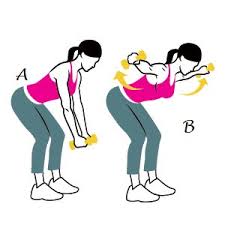
- Dumbbell rear lateral raise — performed standing with a hip hinge, requires core stability to maintain position, slight risk of using body momentum
- Reverse fly on incline bench — chest supported on the bench, eliminates torso movement completely, pure rear delt isolation with no momentum possible
- Reverse fly on pec deck machine — seated, fixed arc of motion, very consistent resistance throughout
The incline bench and machine versions are particularly useful for people who find it hard to isolate their rear delts in the standing variation.
Reverse Fly – Muscles Worked
Primary muscles:
- Posterior deltoid (rear delt) — the primary target, isolated even more directly than in the standing version
- Rhomboids — heavily involved as your shoulder blades squeeze together at the top
Secondary muscles:
- Trapezius (mid and lower) — assists with shoulder blade retraction throughout
- Infraspinatus and teres minor — rotator cuff muscles that assist the movement
- Rear deltoid stabilizers — the incline position means these work harder than in standing variations
How to Perform the Reverse Fly
Incline bench version (recommended for beginners):
- Set a bench to around 30–45 degrees and lie face down with your chest against the pad, a dumbbell in each hand hanging below you.
- Let your arms hang straight down, palms facing each other, with a soft bend in your elbows.
- Raise both dumbbells out to the sides in a wide arc until your arms are roughly parallel to the floor, squeezing your shoulder blades together at the top.
- Hold the squeeze for a brief moment, then lower the dumbbells back down slowly and under control.
- Repeat for your desired reps.
Pec deck machine version:
- Sit facing the machine and grip the handles with your arms out in front of you, elbows slightly bent.
- Pull the handles back and out to the sides in a wide arc, squeezing your rear delts and shoulder blades together at the end of the movement.
- Slowly return to the starting position under control.
- Repeat for your desired reps.
Pro tip: Whether using dumbbells or the machine, think about leading with your elbows rather than your hands. This shifts the focus away from your traps and keeps the tension directly on your rear delts where it belongs.
Reverse Fly – Sets & Reps
| Goal | Sets | Reps | Rest |
|---|---|---|---|
| Muscle building | 3–4 | 12–15 | 60 sec |
| Definition / endurance | 3–4 | 15–20 | 45 sec |
| Superset finisher | 2–3 | 20+ | Minimal |
Reverse Fly – Common Mistakes to Avoid
1. Using too much weight This is the number one mistake with any rear delt exercise. The rear delt is a small muscle — going too heavy means your traps and rhomboids take over completely and your rear delts barely work. Use a weight where you genuinely feel the rear delt contracting, not just a weight that moves the dumbbells.
2. Raising too high You only need to bring your arms to parallel with the floor. Raising higher than that brings your traps into dominant play and reduces rear delt isolation.
3. Bending your elbows too much A soft bend is correct and protects your elbow joints — but dramatically bending your elbows turns this into more of a row. Keep the bend slight and consistent throughout.
4. Rushing the lowering phase The slow, controlled return is where a lot of the rear delt stimulus comes from. Lower the dumbbells over 2–3 seconds every rep and feel the muscle lengthen under load.
5. Lifting your chest off the bench On the incline version, your chest should stay in contact with the pad throughout the entire set. If it’s rising off the bench, you’re using body momentum — reduce the weight.
Where It Fits in Your Workout
The reverse fly is an isolation exercise for the rear delts and belongs toward the end of your shoulder or back session. It pairs especially well with side lateral raises for a complete shoulder finishing superset — lateral raises for the side delts, reverse fly for the rear delts, back to back with minimal rest for a thorough shoulder burnout.