

Dumbbell Row: How To, Muscles Worked & Common Mistakes
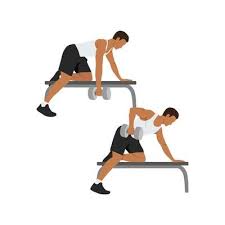
The dumbbell row — also known as the single arm dumbbell row — is one of the most effective exercises for building a thick, strong back. What makes it special is that it’s a unilateral exercise, meaning you work one side at a time. This allows you to really focus on each side individually, use a full range of motion, and correct any strength imbalances between your left and right side.
It’s also much more forgiving on your lower back than barbell rows, making it a great option for anyone who finds bent-over rowing uncomfortable.
Dumbbell Row – Muscles Worked
- Latissimus dorsi — the primary target, responsible for the width and thickness of your back
- Rhomboids — squeezed hard at the top of each rep
- Trapezius (mid and lower) — assists throughout the pulling motion
- Rear deltoids — secondary involvement throughout
- Biceps brachii — assist with pulling the dumbbell up
- Core — works to stabilize your torso and prevent rotation throughout the movement
How to Perform the Dumbbell Row
- Place your right knee and right hand flat on a bench for support. Your back should be flat and roughly parallel to the floor.
- Hold the dumbbell in your left hand, arm fully extended toward the floor — this is your starting position.
- Pull the dumbbell upward toward your hip by driving your elbow straight back. Keep your elbow close to your body throughout.
- Squeeze your lat and shoulder blade hard at the top — your elbow should be above the level of your back at peak contraction.
- Lower the dumbbell back down slowly and under control until your arm is fully extended again.
- Complete all reps on one side, then switch.
Pro tip: Think about pulling your elbow to the ceiling rather than pulling the dumbbell to your hip. This mental cue keeps the focus on your back muscles and stops your biceps from taking over.
Dumbbell Row – Sets & Reps
| Goal | Sets | Reps | Rest |
|---|---|---|---|
| Muscle building | 3–4 | 8–12 per side | 60–90 sec |
| Strength | 4–5 | 5–8 per side | 2–3 min |
| Endurance | 3 | 15–20 per side | 45–60 sec |
Dumbbell Row – Common Mistakes to Avoid
1. Rotating your torso Twisting your body to help swing the dumbbell up is one of the most common mistakes. It reduces the work your back does and puts unnecessary strain on your spine. Keep your torso completely still — only your arm should move.
2. Not using a full range of motion Let your arm fully extend at the bottom of each rep to get the full lat stretch. Cutting the range of motion short means you’re missing out on a big part of what makes this exercise effective.
3. Pulling toward your chest instead of your hip The dumbbell should travel toward your hip, not up toward your shoulder or chest. Pulling toward your hip keeps your elbow tracking correctly and maximizes lat engagement.
4. Rushing through reps Fast, sloppy reps with heavy weight build less muscle than slow, controlled reps with a moderate weight. Aim for 2 seconds up, a brief squeeze at the top, and 2–3 seconds on the way back down.
5. Letting your back round Your back should stay flat and parallel to the floor throughout the entire set. If it’s rounding or your hips are twisting, your core has switched off. Reset between sets if needed.
Dumbbell Row vs. Barbell Row
Both exercises build a strong, thick back but they each have their advantages:
- Dumbbell row — unilateral, easier on the lower back, greater range of motion, better for fixing imbalances
- Barbell row — bilateral, allows heavier loading, better for overall strength
They complement each other really well — many lifters include both in their back training. Check out our Bent-Over Barbell Row page for the full breakdown.
Where It Fits in Your Workout
The dumbbell row is a compound movement so it works best early in your back session, either as your main exercise or as a second movement after barbell rows. Because it’s unilateral it takes a little longer than bilateral exercises, so factor that into your workout timing.