

Reverse Grip Bent-Over Rows: How To, Muscles Worked & Common Mistakes
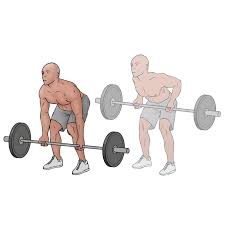
The reverse grip bent-over row is a variation of the classic bent-over barbell row — but flipping your grip from overhand to underhand makes a bigger difference than most people expect. It changes the angle of your elbows, shifts the muscle emphasis, and for many people actually feels more natural and easier on the wrists and shoulders.
If you’ve been doing standard bent-over rows for a while and want to add variety or target your lower lats more specifically, this is a great exercise to add to your back day.
How The Reverse Grip Bent-Over Row Differs from the Standard Bent-Over Row
The movement pattern is almost identical, but the underhand grip changes a few key things:
- Your elbows naturally stay closer to your body throughout the pull
- More emphasis shifts to the lower lats and biceps
- The range of motion is slightly longer for most people, meaning a deeper contraction
- It tends to be easier on the wrists and shoulders for people who find the overhand version uncomfortable
Check out our Bent-Over Barbell Row page for the overhand variation and a full comparison of both grips.
Reverse Grip Bent-Over Row – Muscles Worked
- Latissimus dorsi (lower portion) — the primary target, especially the lower lat region
- Biceps brachii — significantly more involved than in the overhand version due to the supinated grip
- Rhomboids — squeezed together at the top of each rep
- Trapezius (mid and lower) — assists throughout the pulling motion
- Rear deltoids — secondary involvement throughout
Secondary muscles:
- Erector spinae — works isometrically to keep your back flat
- Core — braces to stabilize your torso in the hinged position
How to Perform the Reverse Grip Bent-Over Row
- Stand with your feet shoulder-width apart and the barbell in front of you.
- Grip the barbell with an underhand grip (palms facing up), hands just inside or at shoulder width.
- Hinge at your hips and push them back, keeping your back straight, chest up, and core braced. Your torso should be around 45 degrees or more parallel to the floor.
- Let the bar hang at arm’s length — this is your starting position.
- Pull the bar toward your lower abdomen by driving your elbows straight back, keeping them tight to your sides throughout.
- Squeeze your lats and shoulder blades hard at the top.
- Lower the bar back down slowly and under control.
- Repeat for your desired reps.
Pro tip: Because the underhand grip naturally involves your biceps more, it can be tempting to let them do too much of the work. Focus on initiating the pull with your elbows and feeling the contraction in your lats — your biceps are just along for the ride.
Reverse Grip Bent-Over Row – Sets & Reps
| Goal | Sets | Reps | Rest |
|---|---|---|---|
| Muscle building | 3–4 | 6–12 | 90 sec – 2 min |
| Strength | 4–5 | 3–6 | 3–5 min |
| Endurance | 3 | 15–20 | 60 sec |
Reverse Grip Bent-Over Row – Common Mistakes to Avoid
1. Rounding your lower back Same as the overhand version — this is the most important thing to get right. Brace your core, chest up, neutral spine before every set. If your back rounds when you pull, drop the weight.
2. Grip width too wide The reverse grip works best with a shoulder-width or slightly narrower grip. Going too wide limits your range of motion and reduces the lat stretch at the bottom.
3. Letting your elbows flare out One of the main advantages of the reverse grip is that your elbows naturally stay closer to your body — don’t fight this. Keeping them tucked is what drives the lower lat emphasis.
4. Using too much bicep Because the supinated grip puts your biceps in a strong position, it’s easy to accidentally turn this into a bicep exercise. Drive the movement from your elbows and back, not your arms.
5. Rushing the lowering phase Controlling the bar on the way down keeps tension on your lats throughout the full range of motion. Lower it slowly — 2 to 3 seconds — for maximum muscle stimulus.
Reverse Grip Bent-Over Row – Where It Fits in Your Workout
Like the standard bent-over row, the reverse grip bent-over row is a compound movement and belongs near the start of your back session. Many lifters rotate between overhand and underhand rows across different training sessions to hit the back from slightly different angles and avoid overuse patterns. Both variations complement each other really well.