

Reverse Grip Lat Pulldown: How To, Muscles Worked & Common Mistakes
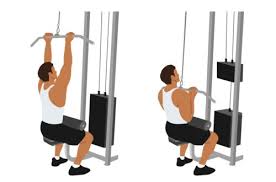
The reverse grip lat pulldown is the underhand variation of the classic lat pulldown — and it’s one that often gets overlooked in favor of the wide grip version. That’s a mistake. Flipping your grip to an underhand position changes the mechanics enough to hit your lower lats from a noticeably different angle, while also giving your biceps a much more active role in the movement.
For anyone who struggles to feel their lats working on the wide-grip version, the reverse grip is often the fix — the underhand position naturally keeps your elbows closer to your body and makes the lat contraction easier to feel.
How The Reverse Grip Lat Pulldown Differs from the Other Pulldown Variations
All three pulldown variations on this site train the same primary muscles, but the grip changes where the emphasis falls:
- Wide-grip lat pulldown — overhand wide grip, best for outer lat width, shorter range of motion.
- V-bar pulldown — narrow neutral grip, hits the lower lats with a longer range of motion.
- Reverse grip pulldown (this page) — underhand shoulder-width grip, greatest bicep involvement, strong lower lat emphasis, very natural elbow path
Reverse Grip Lat Pulldown – Muscles Worked
Primary muscles:
- Latissimus dorsi (lower portion) — the underhand grip naturally keeps elbows tight to the body, placing strong emphasis on the lower lats
- Teres major — assists throughout the movement
Secondary muscles:
- Biceps brachii — more heavily involved than in any other pulldown variation due to the supinated grip
- Rhomboids and mid trapezius — squeezed at the bottom of each rep
- Rear deltoids — secondary involvement throughout
- Core — stabilizes your torso throughout
How to Perform the Reverse Grip Lat Pulldown
- Sit at the lat pulldown machine and secure your thighs under the knee pad firmly.
- Reach up and grip the straight bar with an underhand grip (palms facing you), hands about shoulder-width apart.
- Sit tall, chest up, with a slight backward lean of around 10–15 degrees.
- Pull the bar down toward your upper chest by driving your elbows straight down and keeping them close to your sides throughout the movement.
- Squeeze your lats hard at the bottom — hold the contraction for a brief moment before releasing.
- Slowly let the bar rise back to the starting position, allowing your lats to fully stretch at the top.
- Repeat for your desired reps.
Reverse Grip Lat Pulldown Pro tip: Because the underhand grip puts your biceps in a mechanically strong position, they tend to fatigue before your lats do. If you feel your biceps giving out before your back is properly worked, try using lifting straps to take grip out of the equation and keep the focus on your lats.
Reverse Grip Lat Pulldown – Sets & Reps
| Goal | Sets | Reps | Rest |
|---|---|---|---|
| Muscle building | 3–4 | 8–12 | 60–90 sec |
| Strength | 4–5 | 5–8 | 2–3 min |
| Endurance | 3 | 15–20 | 45–60 sec |
Reverse Grip Lat Pulldown – Common Mistakes to Avoid
1. Gripping too wide The reverse grip works best at around shoulder width. Going wider with an underhand grip puts your wrists in an awkward, rotated position that feels uncomfortable and can lead to wrist strain over time. Keep it at shoulder width or slightly inside.
2. Letting elbows flare out The reverse grip naturally encourages your elbows to stay close to your body — work with that, not against it. Flaring your elbows outward reduces lower lat activation and shifts the exercise toward an upper back movement.
3. Pulling with your biceps instead of your back This is the most common mistake with any underhand pulling movement. Your biceps will want to take over. Initiate every rep by depressing your shoulder blades first, then pull with your elbows — your biceps follow, they don’t lead.
4. Leaning back excessively A small lean is fine, but rocking your torso backward to help swing the bar down removes the load from your lats and puts it on your lower back. Keep the movement strict and controlled.
5. Not fully extending at the top Let your arms extend fully at the top of every rep to get the complete lat stretch. Cutting the range of motion short reduces the effectiveness of the exercise significantly.
A Note on Grip Comfort
Some people find the reverse grip uncomfortable on their wrists, especially at heavier weights. If that’s the case, try a slightly narrower grip or use wrist wraps for support. If discomfort persists, the V-bar pulldown with its neutral grip is an excellent alternative that delivers very similar results with less wrist stress.
Where It Fits in Your Workout
Like the other pulldown variations, the reverse grip lat pulldown works best as a compound pulling movement in the early-to-mid portion of your back session. Many lifters use it as a second pulldown exercise after the wide-grip version, or rotate between the three variations across different training sessions to hit their lats from every angle.