

Wide-Grip Lat Pulldown: How To, Muscles Worked & Common Mistakes
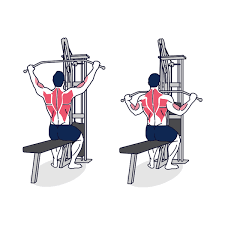
The wide-grip lat pulldown is one of the most popular exercises in the gym for building back width. It mimics the pulling pattern of a pull-up but on a cable machine, making it accessible for all fitness levels and easy to progress with precise weight increments. If you want that wide, V-shaped back, this exercise is one of your best tools for getting there.
Wide-Grip Lat Pulldown – Muscles Worked
Primary muscles:
- Latissimus dorsi — the large wing-shaped muscles on either side of your back, the main driver of back width
- Teres major — sits just above the lat and assists throughout the pulling motion
Secondary muscles:
- Rhomboids — squeezed together as you pull the bar down
- Trapezius (mid and lower) — assists with shoulder blade retraction and depression
- Rear deltoids — involved throughout the pulling arc
- Biceps brachii — assist with elbow flexion on every rep
- Core — stabilizes your torso throughout the movement
How to Perform the Wide-Grip Lat Pulldown
- Sit at the lat pulldown machine and adjust the knee pad so your thighs are locked in firmly — this stops you from being pulled upward during heavy sets.
- Reach up and grip the bar with a wide overhand grip, hands significantly wider than shoulder width. Your palms should be facing away from you.
- Sit tall with your chest up and shoulders back. Lean back very slightly — around 10–15 degrees — this is your starting position.
- Pull the bar down toward your upper chest by driving your elbows down and back. Think about trying to put your elbows in your back pockets.
- Squeeze your lats hard when the bar reaches your upper chest — hold for a brief moment.
- Slowly let the bar rise back to the starting position, allowing your shoulder blades to spread and your lats to fully stretch at the top.
- Repeat for your desired reps.
Wide-Grip Lat Pulldown Pro tip: Focus on leading with your elbows, not your hands. If you think about pulling with your hands, your biceps tend to take over. Driving your elbows downward keeps the focus squarely on your lats.
Wide-Grip Lat Pulldown – Sets & Reps
| Goal | Sets | Reps | Rest |
|---|---|---|---|
| Muscle building | 3–4 | 8–12 | 60–90 sec |
| Strength | 4–5 | 5–8 | 2–3 min |
| Endurance | 3 | 15–20 | 45–60 sec |
Wide-Grip Lat Pulldown – Common Mistakes to Avoid
1. Leaning back too far A slight lean is fine and actually helpful, but rocking your torso backward aggressively to help pull the bar down turns this into a rowing movement rather than a pulldown. Keep the lean controlled and consistent throughout every rep.
2. Pulling to your stomach instead of your chest The bar should come to your upper chest — not your lower chest or abdomen. Pulling too low changes the angle of pull and reduces lat activation at the bottom of the movement.
3. Not fully extending at the top Letting your arms fully extend at the top of each rep gives your lats a complete stretch — which is a big part of what makes this exercise effective for building width. Don’t cut the range of motion short.
4. Using momentum Swinging the bar down rather than pulling it in a controlled arc removes most of the work from your lats. Slow down, especially on the way back up, and feel the muscle working throughout.
5. Gripping too wide Going extremely wide actually reduces your range of motion and limits how far you can pull your elbows down. A grip that’s about 1.5 times shoulder width is wide enough to get the full lat stretch without compromising your range of motion.
6. Shrugging your shoulders Keep your shoulders down and back throughout the movement. Letting them rise up reduces lat engagement and puts unnecessary strain on your neck and upper traps.
How The Wide-Grip Lat Pulldown Compares to Other Pulldown Variations
You have dedicated pages for each pulldown variation — here’s a quick overview of how they differ:
- Wide-grip lat pulldown (this page) — widest grip, greatest emphasis on lat width and the outer lats
- V-bar pulldown — narrow neutral grip, shifts more emphasis to the lower lats and allows a longer range of motion.
- Reverse grip lat pulldown — underhand grip, involves the biceps more and emphasizes the lower lats differently.
Rotating between these variations across different sessions is a great way to hit your lats from multiple angles.
Wide-Grip Pulldown vs. Pull-Ups
The wide-grip pulldown and the pull-up train the same muscles through the same movement pattern. The main difference is that the pulldown lets you control the exact weight, making it great for beginners or for higher rep hypertrophy work. Pull-ups are a bodyweight challenge that builds real functional strength.
Where It Fits in Your Workout
The wide-grip lat pulldown is a compound pulling movement and works best near the beginning of your back session, after any heavy barbell work like deadlifts or bent-over rows. It pairs especially well with rowing movements since rows target back thickness while pulldowns target back width — together they cover the full picture.