
Overhead Cable Curl: How To, Muscles Worked & Common Mistakes
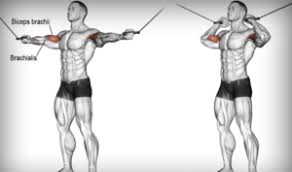
The overhead cable curl is one of the most unique biceps exercises you can do — and one of the most underutilized. By setting the pulley high and curling with your arm extended overhead, you place the long head of the biceps in a fully stretched position before you even start the movement. This combination of a stretched starting position and constant cable tension creates a stimulus that no other curl variation on this list can replicate.
It’s a favourite among advanced bodybuilders specifically for developing the long head of the biceps — the head responsible for that high, peaked look when you flex.
What Makes This Exercise Unique
Every other curl variation on this site starts with your arm either at your side or braced forward. The overhead cable curl starts with your arm fully extended overhead — and this position is significant:
- The long head of the biceps crosses the shoulder joint and is put under maximum stretch when your arm is raised overhead
- The cable pulling from behind keeps tension on the biceps throughout the entire curl — from that full overhead stretch all the way to the contraction at the end
- This combination of peak stretch at the start and constant cable tension throughout creates a unique stimulus for the long head that standard curls simply don’t provide
Think of it as the incline dumbbell curl’s cable-powered cousin — both emphasize the long head through a stretched position, but the overhead cable version adds constant tension on top of that stretch. Check out our Incline Dumbbell Curl page for the dumbbell equivalent.
Overhead Cable Curl – Muscles Worked
Primary muscles:
- Biceps brachii (long head) — the outer head of the bicep, maximally stretched at the starting position and under constant tension throughout the curl. This is the head most responsible for biceps peak and length.
- Biceps brachii (short head) — also worked throughout the curl
Secondary muscles:
- Brachialis — assists throughout the curl
- Brachioradialis — forearm muscle that assists with the movement
- Core and shoulder stabilizers — work to keep your arm position stable throughout
How to Perform the Overhead Cable Curl
- Set a single handle attachment to a high pulley on the cable machine.
- Stand facing away from the machine and grip the handle with one hand, palm facing up (underhand grip).
- Raise your working arm so your upper arm is roughly parallel to the floor and pointing away from the machine — your elbow should be at approximately head height, arm extended toward the cable behind you. This is your starting position — feel the stretch in your bicep here.
- Keep your upper arm completely still and curl the handle toward your head by bending your elbow.
- Curl until your forearm is roughly vertical and squeeze your bicep hard at the peak contraction.
- Slowly extend your arm back to the starting position over 2–3 seconds, feeling the long head stretch as your arm returns to fully extended.
- Complete all reps on one side, then switch arms.
Overhead Cable Curl Pro tip: Pause briefly at the starting position before each rep and consciously feel the stretch in your bicep before you begin the curl. This mind-muscle connection at the stretched position enhances long head activation and makes the exercise significantly more effective than rushing straight into the curl.
Overhead Cable Curl – Sets & Reps
| Goal | Sets | Reps | Rest |
|---|---|---|---|
| Muscle building | 3–4 | 10–15 per side | 60–90 sec |
| Long head focus | 3–4 | 12–15 per side | 60 sec |
| Finishing isolation | 2–3 | 15–20 per side | 45 sec |
Overhead Cable Curl – Common Mistakes to Avoid
1. Upper arm dropping during the curl Your upper arm should stay fixed and parallel to the floor throughout the entire movement — only your forearm moves. If your elbow drops down as you curl, you’ve changed the exercise entirely and lost the overhead stretch advantage. Keep the upper arm locked in position.
2. Rushing past the starting position The fully extended overhead starting position is where the long head stretch happens — this is the most valuable part of the exercise. Don’t rush into the curl. Let your arm fully extend, feel the stretch, then curl. Taking that extra second makes a real difference.
3. Using too much weight The overhead position makes this exercise much more technically demanding than standard curls. Too much weight causes your upper arm to drop, your torso to twist, and your shoulder to compensate. Use a light to moderate weight where you can maintain strict form throughout.
4. Letting the cable snap your arm back The slow return to the stretched position is where the long head gets loaded eccentrically — one of the most powerful stimuli for muscle growth. Resist the cable over 2–3 seconds on the way back rather than letting it pull your arm back quickly.
5. Twisting your torso Keep your body facing away from the machine with your torso square throughout. Twisting to help complete the curl means your core and shoulder are compensating rather than your bicep working through its full range.
Where It Fits in Your Workout
The overhead cable curl is a stretch-focused isolation exercise and works best toward the end of your biceps session after heavier compound curling work. Because of the unique long head emphasis, it’s particularly valuable for lifters who are trying to develop biceps peak and length — qualities that respond very well to this kind of stretched, constant-tension training. It pairs well with concentration curls as a finishing superset — one targeting the long head through a stretch, the other targeting the short head through a contraction.