

Upright Barbell Row: How To, Muscles Worked & Common Mistakes
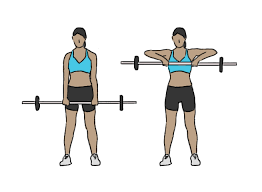
The upright barbell row is one of the most effective exercises for building wide, powerful shoulders and thick traps. It’s a compound pulling movement that works multiple muscles simultaneously and allows you to load up progressively over time — making it a solid addition to any shoulder or upper body day.
That said, it’s also one of the exercises that requires the most attention to technique. Done correctly it’s highly effective. Done with poor form or too much weight, it can put your shoulder joints in an uncomfortable position. The good news is that with the right cues, it’s straightforward to do safely.
Upright Barbell Row – Muscles Worked
Primary muscles:
- Lateral deltoid — the side of your shoulder, responsible for that wide shoulder look
- Trapezius (upper) — the muscles running from your neck to your shoulders, heavily loaded throughout
Secondary muscles:
- Anterior deltoid — the front of your shoulder assists throughout the pull
- Rear deltoid — involved as a stabilizer
- Biceps brachii — assist with elbow flexion during the pull
- Brachialis and brachioradialis — forearm muscles that assist with the pulling motion
How to Perform the Upright Barbell Row
- Stand with your feet shoulder-width apart and hold the barbell with an overhand grip, hands about shoulder-width apart — not narrow.
- Let the bar hang at arm’s length in front of your thighs, arms fully extended.
- Pull the bar straight up along your body by leading with your elbows — your elbows should always be higher than your hands throughout the movement.
- Pull until the bar reaches your upper chest or chin height — no higher.
- Pause briefly at the top, then lower the bar back down slowly and under control.
- Repeat for your desired reps.
Upright Barbell Row Pro tip: Keep the bar as close to your body as possible throughout the entire movement. Letting it drift forward reduces your leverage and increases the strain on your shoulder joints.
Upright Barbell Row – Sets & Reps
| Goal | Sets | Reps | Rest |
|---|---|---|---|
| Muscle building | 3–4 | 8–12 | 60–90 sec |
| Strength | 4–5 | 5–8 | 2–3 min |
| Endurance | 3 | 15–20 | 45–60 sec |
Upright Barbell Row – Common Mistakes to Avoid
1. Using a grip that’s too narrow A narrow grip forces your elbows to flare out to the sides in a way that internally rotates your shoulders and puts the shoulder joint in a compromised position — this is where most upright row injuries come from. Keep your hands at or just inside shoulder width to allow your elbows to travel in a more natural path.
2. Pulling too high Pulling the bar above chin height pushes your shoulder joints into impingement territory. Stop at upper chest or chin height — that’s where the deltoids and traps are maximally activated without stressing the joint.
3. Leaning back to help lift Using your lower back to swing the bar up reduces the work your shoulders do and adds unnecessary spinal stress. Keep your torso upright and the movement strict.
4. Letting your elbows drop below your hands Your elbows must stay above your hands throughout the pull. The moment your elbows drop below your hands, the exercise loses its effectiveness — your biceps take over rather than your deltoids and traps.
5. Using momentum Jerking the bar up with a quick hip extension turns this into a power movement rather than a shoulder exercise. Use a controlled tempo — 2 seconds up, 2 seconds down — to keep the tension where it belongs.
A Note on Shoulder Safety
The upright row gets a bad reputation in some circles due to its potential for shoulder impingement. The risk is real but largely avoidable with proper form. The two biggest risk factors are a narrow grip and pulling too high — both of which we’ve covered above. If you follow those two rules and use a moderate weight with controlled form, the upright row is a safe and very effective exercise. If you have a pre-existing shoulder issue, however, it’s worth consulting a professional before including it in your routine.
Upright Barbell Row – Alternatives
If the barbell upright row doesn’t feel right for your shoulders, these exercises train the same muscles with less joint stress:
- Side Lateral Raises — isolates the lateral deltoid with a more shoulder-friendly movement pattern.
- Standing Low Pulley Delt Raise — cable version that provides constant tension with a smoother resistance curve.
Where It Fits in Your Workout
The upright barbell row is a compound movement so it works best early in your shoulder session, after your main overhead pressing work. It’s a great bridge between pressing and isolation exercises — heavier than lateral raises but less demanding than the shoulder press.