
Pumpkin Seeds: Nutrition Facts, Health Benefits, and One of the Most Mineral-Dense Foods Available
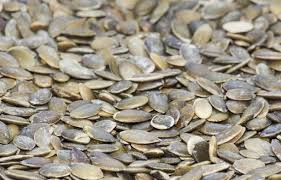
Table of Contents
Pumpkin seeds — also called pepitas when hulled — hold a genuinely extraordinary position in plant-based nutrition. The mineral figures alone are remarkable: 179% of daily manganese, 137% of copper, 119% of magnesium, 92% of phosphorus, 58% of zinc, and 46% of iron per 100g. Combined with 29.9g of protein, 31% of niacin, 15% of Vitamin E, and a meaningful tryptophan content that has been specifically researched for sleep quality, pumpkin seeds are one of the most comprehensively mineral-dense small foods available from any source, plant or animal.
They also come with the same calorie density caveat as all seeds and nuts — at 515 kcal per 100g, the extraordinary mineral figures scale dramatically downward at realistic serving sizes. This page covers both the genuine nutritional excellence and the practical portion context.
Pumpkin Seeds Nutrition Facts (per 100g)
| Nutrient | Amount |
|---|---|
| Calories | 515 kcal |
| Protein | 29.9g |
| Fat | 40.0g |
| — Saturated Fat* | 7.1g |
| — Monounsaturated Fat* | 13.2g |
| — Polyunsaturated Fat* | 17.2g |
| Carbohydrates | 18.7g |
| — Sugars* | 1.4g |
| — Fiber | 5.1g |
| Cholesterol* | 0mg |
| Sodium | 0mg |
* From USDA’s SR Legacy data for pumpkin seed kernels, used where the newer Foundation Foods data has no value, with the fat breakdown scaled to the Foundation Foods total fat. Everything else is from Foundation Foods. Full sources are at the end of the page.
Pumpkin Seeds Nutrition Facts (per 28g serving — approximately 2 tablespoons)
A standard serving of pumpkin seeds is approximately 28g:
| Nutrient | Per 28g Serving |
|---|---|
| Calories | 144 kcal |
| Protein | 8.4g |
| Fat | 11.2g |
| — Monounsaturated Fat* | 3.7g |
| — Polyunsaturated Fat* | 4.8g |
| Carbohydrates | 5.2g |
| — Fiber | 1.4g |
| — Net carbs | 3.8g |
| Sodium | 0mg |
| Magnesium | 140mg (33% DV) |
| Phosphorus | 322mg (26% DV) |
| Zinc | 1.8mg (16% DV) |
| Iron | 2.3mg (13% DV) |
Even at a modest 28g serving, pumpkin seeds provide 33% of daily magnesium and 26% of daily phosphorus — extraordinary figures from a small snack portion.
Vitamins in Pumpkin Seeds (per 100g)
| Vitamin | Amount | % Daily Value |
|---|---|---|
| Vitamin A (RAE)* | 1µg | 0% |
| Vitamin B1 (Thiamine)* | 0.27mg | 23% |
| Vitamin B2 (Riboflavin)* | 0.15mg | 12% |
| Vitamin B3 (Niacin)* | 5.0mg | 31% |
| Vitamin B5 (Pantothenic Acid)* | 0.75mg | 15% |
| Vitamin B6* | 0.14mg | 8% |
| Vitamin B9 (Folate)* | 58µg | 15% |
| Vitamin B12* | 0µg | 0% |
| Vitamin C* | 1.9mg | 2% |
| Vitamin D* | 0µg | 0% |
| Vitamin E* | 2.2mg | 15% |
| Vitamin K* | 7.3µg | 6% |
* From USDA’s SR Legacy data for pumpkin seed kernels. % Daily Values use the FDA’s current Daily Values.
Standout: Pumpkin seeds’ niacin content (31% DV per 100g) is particularly meaningful given their high protein content — niacin is central to NAD production involved in amino acid catabolism and energy metabolism. Vitamin E at 15% DV provides antioxidant protection specifically suited to pumpkin seeds’ substantial polyunsaturated fat content. Thiamine at 23% DV, folate at 15% DV, and riboflavin at 12% DV round out a meaningful B vitamin spread.
Minerals in Pumpkin Seeds (per 100g)
| Mineral | Amount | % Daily Value |
|---|---|---|
| Calcium | 37.4mg | 3% |
| Phosphorus | 1,150mg | 92% |
| Magnesium | 500mg | 119% |
| Potassium | 691mg | 15% |
| Iron | 8.4mg | 46% |
| Zinc | 6.3mg | 58% |
| Copper | 1.2mg | 137% |
| Manganese | 4.1mg | 179% |
| Selenium | 20.5µg | 37% |
Multiple extraordinary standouts: Pumpkin seeds’ mineral profile is among the most concentrated of any food in this collection. Magnesium at 119% DV, manganese at 179%, and copper at 137% all exceed the full daily requirement in 100g, with phosphorus close behind at 92% DV — figures that approach hemp seeds‘ remarkable mineral density. Zinc at 58% DV makes pumpkin seeds one of the best plant-based zinc sources available — particularly important given zinc’s role in testosterone production and immune function, and the difficulty of achieving adequate zinc from plant foods alone. Iron at 46% DV (non-haem form) provides a substantial contribution for plant-based eaters when paired with Vitamin C-rich foods. Potassium at 691mg per 100g (15% DV) adds a useful contribution.
The Magnesium Story: 119% in One Food
Pumpkin seeds’ magnesium content rivals hemp seeds (167% DV) as one of the most concentrated whole-food magnesium sources available — and magnesium deserves specific attention because it’s both critically important and one of the most commonly under-consumed minerals in modern diets.
Magnesium is involved in over 300 enzymatic reactions — but the ones most directly relevant to active people include:
ATP production — every ATP molecule in the body must be bound to magnesium to be biologically active. Without adequate magnesium, cellular energy production is compromised regardless of calorie intake, which is why low magnesium status matters for athletes.
Muscle contraction and relaxation — magnesium regulates calcium channel function in muscle cells, controlling both the contraction (calcium entry) and relaxation (calcium exit) phases. Genuine deficiency can cause cramps and spasms, though magnesium supplements haven’t been shown to prevent ordinary muscle cramps in people who aren’t deficient.
Nervous system regulation — magnesium modulates NMDA receptor activity, regulates the HPA axis stress response, and has a calming influence on neuronal excitability. Magnesium supplements are widely used for sleep and anxiety, though the trial evidence for both is limited and mixed.
Protein synthesis — magnesium is required for ribosome function — the cellular machinery that translates genetic code into protein. Without adequate magnesium, protein synthesis itself is impaired.
Insulin sensitivity — magnesium is a cofactor for insulin receptor activation, meaning adequate magnesium status supports the efficiency of glucose uptake into cells.
A single 28g serving of pumpkin seeds provides 33% of daily magnesium — making them one of the most practical and pleasant ways to meaningfully boost magnesium intake in a typical diet.
The Zinc Story: 58% From a Plant Food
At 58% DV per 100g, pumpkin seeds are one of the best plant-based zinc sources of any food — an important distinction because zinc is generally less well absorbed from plant foods than from meat, making high-concentration plant zinc foods genuinely valuable.
The main obstacle is phytic acid, which binds zinc and reduces how much is absorbed. Soaking and roasting reduce phytate only modestly — but even at reduced absorption efficiency, 58% DV per 100g provides a substantial zinc contribution.
Why Zinc Matters for Athletes
Zinc is directly required for testosterone synthesis in Leydig cells — zinc deficiency lowers testosterone, and correcting a deficiency restores it (though extra zinc doesn’t raise testosterone in people who already get enough). Athletes also lose zinc through sweat during training, and heavy training blocks can deplete zinc status over time. Pumpkin seeds’ 58% DV per 100g (16% DV per 28g serving) makes them one of the most practical plant-based zinc sources for maintaining the status that testosterone production depends on.
Zinc additionally supports immune cell production (particularly T-cell function), wound healing, and the enzymatic processes involved in protein synthesis and cell division — all directly relevant to training adaptation and recovery.
Tryptophan and Sleep: The Research Connection
This is one of the more genuinely interesting and most searched questions about pumpkin seeds — and the research behind it is worth explaining clearly.
Pumpkin seeds are one of the richer dietary tryptophan sources available from any plant food. Tryptophan is an essential amino acid that serves as the precursor to serotonin (a neurotransmitter regulating mood and sleep readiness) and melatonin (the hormone that regulates the circadian sleep-wake cycle). The serotonin-to-melatonin pathway is tryptophan-dependent, meaning dietary tryptophan availability can influence melatonin production.
A small number of clinical studies have examined pumpkin seed protein or tryptophan-rich foods on sleep outcomes, finding modest improvements in sleep onset and quality in people with mild sleep difficulties. A notable small study published in Nutritional Neuroscience found that tryptophan-rich pumpkin seed protein combined with a carbohydrate (which promotes tryptophan crossing the blood-brain barrier by reducing competing amino acids in the bloodstream) improved sleep in people with insomnia compared to placebo.
The honest qualification: the effect sizes are modest and most relevant to people with marginal tryptophan status or mild sleep difficulties rather than those with serious sleep disorders. Pumpkin seeds are not a pharmaceutical sleep aid — they are a tryptophan-rich whole food that contributes to the dietary supply of a sleep-relevant nutrient.
Practical application: a small amount of pumpkin seeds with a carbohydrate source (such as a small amount of fruit or oatmeal) in the evening is a reasonable, low-risk dietary strategy for supporting natural melatonin production — though the evidence is limited — with no meaningful downside given pumpkin seeds’ broader nutritional value.
Health Benefits of Pumpkin Seeds
Extraordinary Magnesium for Energy and Stress Resilience
As detailed above, 119% DV magnesium per 100g makes pumpkin seeds one of the single most concentrated magnesium foods available. If your diet runs low in magnesium, pumpkin seeds are one of the easiest and most nutritionally complete ways to raise it from a whole food — though symptoms like fatigue, cramps, poor sleep, or anxiety have many possible causes besides magnesium.
Outstanding Zinc for Immunity and Hormonal Health
At 58% DV per 100g, pumpkin seeds stand out as a genuinely useful plant-based zinc source for the immune function, testosterone production, and protein synthesis that active people depend on.
Strong Plant Protein
At 29.9g of protein per 100g, pumpkin seeds have one of the higher protein contents of any seed, with all 9 essential amino acids present. They are not a complete protein in the strict sense — lysine is the limiting amino acid (unlike legumes, where it’s methionine) — but their protein contribution per gram is genuinely exceptional for a seed food.
Prostate Health Research
Pumpkin seeds and pumpkin seed oil have been specifically researched for benign prostatic hyperplasia (BPH) — the non-cancerous prostate enlargement that affects most older men and causes urinary symptoms. The largest trial, GRANU (1,431 men followed for 12 months), found that 10g of pumpkin seeds a day helped more men than placebo — 58.5% had a meaningful symptom improvement against 47.3% on placebo — while a pumpkin seed extract did no better than placebo. Smaller trials of pumpkin seed oil have also reported benefits.
The mechanisms are not established but may involve zinc (the prostate has one of the highest zinc concentrations of any tissue in the body) and phytosterols that may inhibit dihydrotestosterone (DHT) production.
This is one of the more specific clinically studied traditional food applications in this collection — a modest but reasonable reason for older men to include pumpkin seeds regularly.
Heart Health
Pumpkin seeds support cardiovascular health through multiple pathways — magnesium for blood pressure regulation, potassium (691mg per 100g) counteracting sodium’s pressor effects, polyunsaturated fat improving the blood lipid profile, phytosterols that reduce cholesterol absorption in the digestive tract, and their virtually zero sodium content in unsalted form.
Blood Sugar Management
Despite their calorie density, pumpkin seeds have a low glycaemic impact and contribute modest digestible carbohydrate (18.7g total carbohydrate per 100g, of which 5.1g is fiber). The magnesium content additionally supports insulin sensitivity through magnesium’s role as a cofactor for insulin receptor activation.
Antioxidant Properties
Pumpkin seeds contain carotenoids, Vitamin E, and phenolic antioxidants concentrated in the seed coat and oil fraction. These compounds help neutralize free radicals and support the antioxidant environment relevant to both general health and exercise recovery.
Pumpkin Seeds for Athletes and Active People
Magnesium: The Most Critical Training Mineral From This Food
As covered above — magnesium losses through sweat add to the dietary shortfalls that are common in active people. Pumpkin seeds’ 119% DV per 100g (33% DV per 28g serving) makes them one of the most concentrated practical magnesium snack foods available, surpassing most nuts and seeds except hemp seeds.
Zinc for Testosterone and Recovery
For male athletes specifically, maintaining zinc status through regular pumpkin seed consumption is a practical strategy for supporting the testosterone levels that heavy training can suppress over time. The 58% DV per 100g (16% per 28g serving) makes this one of the most zinc-efficient plant-based snacks available.
Iron for Oxygen Transport
At 46% DV per 100g (13% per 28g serving) in non-haem form, pumpkin seeds make a meaningful iron contribution for plant-based athletes managing iron status — particularly effective when consumed alongside Vitamin C-rich foods at the same meal, which can substantially increase non-haem iron absorption.
Tryptophan for Sleep and Recovery
As covered above — quality sleep is perhaps the most undervalued component of athletic recovery. Including pumpkin seeds in an evening snack provides tryptophan alongside magnesium, both of which support the natural sleep processes that enable overnight recovery and adaptation.
Protein for Daily Targets
At 29.9g of protein per 100g (8.4g per 28g serving), pumpkin seeds contribute meaningfully to daily protein targets as a snack or topping, particularly for plant-based athletes assembling protein across multiple whole-food sources throughout the day.
Hulled Pepitas vs Whole Pumpkin Seeds: What’s the Difference?
Whole pumpkin seeds — the flat, white-shelled seeds from inside a pumpkin. The outer shell is edible but fibrous and chewy, with a tougher texture. Slightly higher total fiber due to the outer hull. Not as commonly sold commercially.
Pepitas — the hulled interior seed, dark green in color, flat and oval-shaped. The form most commonly sold commercially as “pumpkin seeds.” Easier to eat, more concentrated nutritionally per gram since the lower-nutrient hull is removed. The data on this page reflects raw hulled pepitas — the most widely available and consumed form.
Practical Ways to Include Pumpkin Seeds in Your Diet
As a snack — a 28g handful provides 33% of daily magnesium and 8.4g of protein at 144 calories, one of the most mineral-rich small snacks available.
As a salad topping — pumpkin seeds add crunch, protein, and extraordinary mineral density to any salad with virtually no preparation effort.
Blended into smoothies — adds protein and magnesium seamlessly without significantly altering flavour or texture.
Stirred into oatmeal — combining pumpkin seeds with oats creates a breakfast that covers magnesium, zinc, manganese, and protein alongside oatmeal’s beta-glucan and carbohydrate energy.
Pumpkin seed butter — similar in nutritional profile to whole seeds, spreadable, and a practical alternative to other nut butters for anyone wanting to vary their fat and mineral sources.
In trail mix — combined with dark chocolate and dried fruit for a portable, mineral-rich snack with complementary nutrition from each component.
As a breadcrumb substitute — ground pumpkin seeds used as a coating for baked proteins adds protein and mineral density to any preparation where breadcrumbs would otherwise be used.
Evening snack for sleep support — a small amount of pumpkin seeds with a piece of fruit (providing carbohydrate to assist tryptophan transport across the blood-brain barrier) is a reasonable, low-risk sleep-supporting ritual.
Potential Considerations
Calorie density — at 515 kcal per 100g, portion awareness is important for anyone managing total calorie intake. The extraordinary mineral figures scale to useful but more modest contributions at realistic 28g serving sizes.
Phytic acid and mineral bioavailability — like all seeds, pumpkin seeds contain phytic acid that reduces mineral absorption efficiency. Soaking and roasting reduce it only modestly.
Prostate research is modest — the largest trial used 10g of whole pumpkin seeds a day (less than a handful) and found a modest benefit; pumpkin seeds aren’t a substitute for medical assessment of urinary symptoms.
Seed allergy — pumpkin seed allergy is uncommon but documented. People with known seed sensitivities should introduce pumpkin seeds cautiously.
Sodium in salted varieties — unsalted raw pumpkin seeds contain virtually no sodium, but salted roasted varieties can carry several hundred milligrams per 100g. Choosing unsalted or lightly salted varieties is worthwhile for anyone monitoring sodium intake.
Nutrient data: USDA FoodData Central, Foundation Foods (FDC ID 2515380); values marked * from SR Legacy (FDC ID 170556), with the fat breakdown scaled to the Foundation Foods total. % Daily Values use the FDA’s current Daily Values.