

Vitamin B2 – Riboflavin
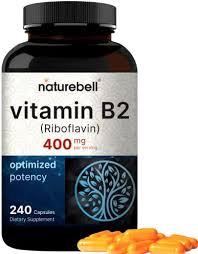
Table of Contents
Vitamin B2, also known as riboflavin, is a water-soluble B vitamin with an unusually visible signature: it’s what turns urine bright, almost fluorescent yellow after you take a B-complex or multivitamin. (Urine’s normal everyday yellow comes mainly from a different pigment, urobilin.) That color reflects the nature of the molecule itself — riboflavin is a bright orange-yellow pigment, also used as a food coloring (E101).
Its color is linked to its function: riboflavin’s active forms carry electrons, accepting and donating them in the reactions they drive. That makes vitamin B2 biochemically different from vitamin B1: thiamine’s coenzyme (TPP) helps break and form carbon–carbon bonds, while riboflavin’s coenzymes, FAD and FMN, are themselves oxidized and reduced in each reaction cycle.
Vitamin B2 – Key Mechanisms
Vitamin B2 is converted in the body into two active coenzyme forms:
- Flavin mononucleotide (FMN): riboflavin with a phosphate group attached
- Flavin adenine dinucleotide (FAD): FMN with an adenosine monophosphate unit added
Both FMN and FAD carry electrons — they accept electrons from metabolic reactions (becoming FMNH₂ and FADH₂) and pass them on to the next acceptor. This cycle of reduction and oxidation is riboflavin’s core biochemical role.
Electron transport chain: FMN is a required part of Complex I (NADH dehydrogenase), and FAD is part of Complex II (succinate dehydrogenase) — the enzyme that directly links the citric acid (TCA) cycle to the electron transport chain. Without enough vitamin B2, both complexes work less well, and aerobic ATP production suffers.
Fat breakdown (beta-oxidation): FAD is needed for the first enzyme step in each round of fatty acid breakdown — acyl-CoA dehydrogenase — and for the flavoprotein that passes those electrons on. Without FAD, fat can’t be efficiently burned for energy, which makes vitamin B2 essential for fat metabolism in a direct, enzymatic sense.
Glutathione reductase: an FAD-dependent enzyme that regenerates reduced glutathione (GSH) from its oxidized form (GSSG). Glutathione is one of the body’s main antioxidants inside cells, and without FAD-powered glutathione reductase, the glutathione recycling system slows down. This is the direct link between riboflavin and antioxidant defense — and the activity of this enzyme in red blood cells is the standard laboratory test for riboflavin status.
Activating other B vitamins: riboflavin is needed to activate vitamin B6 (the enzyme that forms its active form, pyridoxal 5′-phosphate, depends on FMN), for a key enzyme in the folate cycle (MTHFR, which uses FAD), and for making niacin from the amino acid tryptophan. That makes riboflavin a “gateway” vitamin — a deficiency can impair B6 and folate function at the same time, producing overlapping symptoms that make the true cause harder to spot.
Iron metabolism: riboflavin is involved in iron absorption and in mobilizing iron from storage. Low riboflavin status can contribute to anemia, and in some studies, correcting riboflavin status improved the response to iron.
Light sensitivity: riboflavin breaks down when exposed to light, both ultraviolet and visible. Milk stored in clear containers in bright light can lose a significant share of its riboflavin within hours — one reason milk is usually sold in opaque or light-blocking packaging, and why riboflavin-containing supplements often come in dark bottles.
Vitamin B2 – RDA (Recommended Dietary Allowance)
| Age | Males | Females |
|---|---|---|
| 0-6 months* | 0.3mg | 0.3mg |
| 7-12 months* | 0.4mg | 0.4mg |
| 1-3 | 0.5mg | 0.5mg |
| 4-8 | 0.6mg | 0.6mg |
| 9-13 | 0.9mg | 0.9mg |
| 14-18 | 1.3mg | 1.0mg |
| 19+ | 1.3mg | 1.1mg |
| Pregnant | — | 1.4mg |
| Breastfeeding | — | 1.6mg |
* Adequate Intake (AI) for infants. Source: US National Academies, via the NIH Office of Dietary Supplements. The daily value used on food labels is 1.3mg.
Vitamin B2 – ODA (Optimal Daily Allowance)
Meet the RDA — 1.1–1.3mg a day for adults — which is easy with a varied diet including dairy, eggs, meat, or fortified foods. Very active people may need slightly more, and intakes somewhat above the RDA are harmless (no upper limit has been set), but there’s no good evidence that taking more improves health or performance. The 400mg a day used for migraine prevention is a separate, therapeutic dose with its own evidence, covered below.
Vitamin B2 is Found In (per 100g)
| Food | Riboflavin | % Daily Value |
|---|---|---|
| Lamb liver (braised) | 4.03mg | 310% |
| Lamb kidneys (braised) | 2.07mg | 159% |
| Maple syrup | 1.27mg | 98% |
| Almonds (raw)* | 1.14mg | 88% |
| Egg (hard-boiled) | 0.51mg | 39% |
| Cheddar cheese | 0.44mg | 34% |
| Tempeh | 0.36mg | 28% |
| Mushrooms (white, boiled) | 0.3mg | 23% |
| Greek yogurt (plain, nonfat) | 0.28mg | 22% |
| Spinach (boiled) | 0.24mg | 18% |
| Chicken breast | 0.19mg | 15% |
| Ground beef (cooked) | 0.18mg | 14% |
| Edamame | 0.16mg | 12% |
| Salmon (Atlantic, farmed, cooked) | 0.14mg | 11% |
* Value from USDA’s SR Legacy data, where the Foundation Foods entry doesn’t include it.
Organ meats — particularly liver and kidney — are the outstanding sources of vitamin B2. Among everyday foods, almonds, eggs, cheese, and yogurt are reliable contributors, and tempeh and mushrooms are useful plant sources. Maple syrup is a surprising one: USDA lists it as very high in riboflavin per 100g, though a typical tablespoon provides about 20% of the daily value. Fortified cereals and nutritional yeast can be very high, depending on the product — check the label.
Vitamin B2 Helps With
- Aerobic energy production, through Complexes I and II of the electron transport chain
- Fat burning — every round of fatty acid breakdown requires FAD
- Recycling glutathione, a key part of the body’s antioxidant defenses
- Activating vitamin B6 and supporting the folate cycle
- Iron absorption and use
- Maintaining healthy skin and mucous membranes
- Normal vision — deficiency causes light sensitivity and eye inflammation
- Red blood cell production
- Migraine prevention, at high therapeutic doses
Vitamin B2 – For Athletes and Active People
Vitamin B2’s central role in fat burning and the electron transport chain makes it relevant to endurance exercise, where fat supplies a growing share of energy as sessions get longer.
Fat oxidation: the first step of each round of fat breakdown requires FAD, so athletes doing long aerobic sessions — where fat is a major fuel — rely heavily on this pathway. Adequate riboflavin keeps it working; there’s no evidence that extra riboflavin increases fat burning beyond that.
Oxidative stress and recovery: intense training generates reactive oxygen species, and the FAD-powered glutathione reductase helps keep the body’s glutathione in its active, reduced form to deal with them. Adequate riboflavin supports this system.
B6 activation: many athletes pay attention to vitamin B6 for its roles in protein metabolism, neurotransmitter production, and releasing stored glycogen. Riboflavin is needed to convert B6 into its active form, so low riboflavin status can limit the benefit of B6.
Exercise and riboflavin status: small studies in the 1980s found that riboflavin status can dip when people start or step up an exercise program, suggesting active people may need slightly more. Athletes with marginal intakes are most at risk — particularly vegans and others who eat little or no dairy, which is one of the main sources.
Sweat losses: small amounts of riboflavin are lost in sweat — minor per session, but it adds up over high-volume training weeks.
Vitamin B2 – Insufficient Doses
Deficiency risk is higher in:
- Vegans and people who consume little dairy — milk and dairy products are major riboflavin sources in many diets
- Vegan and vegetarian athletes — lower intake combined with higher needs
- People with heavy alcohol use — alcohol impairs riboflavin absorption and use
- People taking certain medications — some antidepressants (tricyclics), antipsychotics (phenothiazines), and possibly oral contraceptives can lower riboflavin status
- People with hypothyroidism or adrenal insufficiency — both reduce the conversion of riboflavin into FMN and FAD
- Older adults — often due to less varied diets
- Pregnant and breastfeeding women — whose needs are higher
- People with riboflavin transporter deficiency — a rare genetic disorder (formerly called Brown-Vialetto-Van Laere syndrome) that causes nerve damage and is treated with high-dose riboflavin
Ariboflavinosis — the deficiency syndrome:
The symptoms of vitamin B2 deficiency mainly affect fast-renewing tissues — the linings of the mouth and throat, the skin, and the eyes:
- Angular cheilitis and stomatitis: cracks and painful sores at the corners of the mouth — one of the most characteristic signs
- Glossitis: a sore, swollen tongue that can take on a distinctive magenta color
- Sore throat: redness and swelling of the lining of the mouth and throat
- Seborrheic dermatitis: greasy, scaly, inflamed skin around the nose, ears, eyebrows, and scalp
- Eye inflammation and light sensitivity: red, irritated eyes that are sensitive to light, often with excess tearing
- Corneal vascularization: new blood vessels growing into the normally blood-vessel-free cornea — a sign of advanced deficiency
- Normocytic anemia: from impaired iron use and red blood cell production
- Fatigue and weakness
Ariboflavinosis rarely occurs on its own — because riboflavin is needed to activate B6 and support folate, and because the diets that lack riboflavin usually lack other B vitamins too, it often comes with signs of several B vitamin deficiencies at once.
Vitamin B2 – Excessive Doses
No upper limit (UL) has been set for vitamin B2, because no harm has been found from high intakes from food or supplements. Absorption is limited, and any excess is quickly excreted in urine — which is what produces the bright yellow color. It’s harmless.
Very high doses, such as 400mg a day, occasionally cause mild side effects such as diarrhea or more frequent urination.
Migraine prevention at 400mg: a few randomized trials, including a well-known 1998 study, found that riboflavin at 400mg a day reduced migraine frequency, and US neurology guidelines rate it as “probably effective” for preventing migraines in adults. The proposed mechanism is improved energy production in brain cells, since some people with migraines appear to have reduced mitochondrial energy reserves. Benefits typically take at least two to three months of daily use to appear. 400mg is about 300 times the RDA, but it’s generally well tolerated. Riboflavin sits alongside magnesium and CoQ10 as one of the better-supported nutritional options for migraine prevention — worth discussing with a doctor alongside other treatments.
Different Types of Vitamin B2
FMN and FAD are the active coenzyme forms the body makes from vitamin B2, rather than separate supplement choices. In practice, the supplement options are simple:
- Riboflavin: the standard supplement form, well absorbed with food and available in everything from basic multivitamins to 400mg migraine products. The default choice.
- Riboflavin 5′-phosphate (FMN): the phosphorylated form, used in some premium B-complex products and marketed as “active” riboflavin. There’s little evidence it works better than standard riboflavin for most people, since the phosphate is removed during absorption anyway.
FAD isn’t practically available as a standalone supplement — the body makes it from riboflavin, and there’s no evidence that supplementing FAD itself offers any advantage.
A medical use worth knowing: riboflavin eye drops combined with ultraviolet light are used in “corneal cross-linking,” an approved treatment that stiffens the cornea in keratoconus, a condition in which the cornea thins and bulges.
Which form for your goal:
| Goal | Best form |
|---|---|
| General needs | Food first; if supplementing, standard riboflavin in a multivitamin or B-complex |
| Migraine prevention | Riboflavin, 400mg a day, for at least 3 months — ideally with a doctor’s input |
| Older adults or digestive conditions | Standard riboflavin or riboflavin 5′-phosphate — either is fine |
| As part of a B-complex | Either form |
Vitamin B2 – How to Take It
Vitamin B2 is best absorbed with food. Absorption is limited: research suggests the body absorbs at most about 27mg from a single dose, so very high single doses aren’t absorbed proportionally better. For the 400mg migraine dose, splitting it into two 200mg doses with meals is a common approach.
Store supplements and riboflavin-rich foods away from bright light — milk left in sunlight loses riboflavin, and so do supplements left on a bright windowsill.
Vitamin B2 is water-soluble and the body stores only small amounts, so regular daily intake from food matters more than occasional large doses.
The bright yellow urine after taking riboflavin isn’t a warning sign — it’s simply unabsorbed and excess riboflavin being excreted, and it fades a few hours after each dose.
Vitamin B2 – Interactions
Alcohol reduces vitamin B2 absorption and its conversion into FMN and FAD. Tricyclic antidepressants and phenothiazine antipsychotics can interfere with riboflavin’s activation, and older research suggests oral contraceptives may lower riboflavin status. Probenecid, a gout medicine, can reduce riboflavin absorption and excretion — a minor consideration.
Vitamin B2 – Synergy
- Works with B1, B3, B5, and B6 in the shared enzyme systems of energy metabolism — the B vitamins work as a team.
- Activates B6 and supports folate metabolism through MTHFR. Interestingly, in people with a common MTHFR gene variant (the TT genotype), small trials found that low-dose riboflavin lowered blood pressure.
- Works with iron in red blood cell production — low riboflavin status can blunt the response to iron.
- Powers glutathione reductase, working alongside selenium (which powers glutathione peroxidase) in the glutathione antioxidant system.
- Supports vitamin E‘s antioxidant role indirectly, through the glutathione system.
Vitamin B2 – Antagonistic Interactions
Hypothyroidism and adrenal insufficiency reduce the conversion of riboflavin to its active forms.
Alcohol impairs riboflavin absorption and activation.
Light breaks down riboflavin in food and supplements.
Some antidepressants and antipsychotics can interfere with riboflavin activation.
Food values: USDA FoodData Central — lamb liver, braised (SR Legacy, FDC ID 172532); lamb kidneys, braised (SR Legacy, 174355); maple syrup (SR Legacy, 169661); almonds, raw (Foundation Foods, 2346393, riboflavin from SR Legacy); egg, hard-boiled (SR Legacy, 173424); cheddar cheese (Foundation Foods, 328637); tempeh (SR Legacy, 174272); white mushrooms, boiled (SR Legacy, 169252); plain nonfat Greek yogurt (Foundation Foods, 330137); spinach, boiled (SR Legacy, 168463); chicken breast, braised (Foundation Foods, 331960); ground beef, cooked (SR Legacy, 171797); edamame (SR Legacy, 168411); Atlantic salmon, farmed, cooked (SR Legacy, 175168). RDA values from the US National Academies, via the NIH Office of Dietary Supplements. % Daily Values use the FDA’s current Daily Value of 1.3mg.