

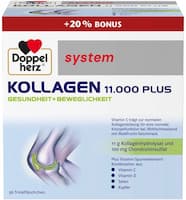
Collagen has gone from an obscure biochemistry term to one of the most marketed supplements in the wellness industry in a remarkably short time. Collagen powders, collagen-infused drinks, collagen capsules, collagen-boosting skincare — the word is everywhere, and the claims attached to it range from genuinely supported to wildly overstated.
The underlying biology, however, is real and worth understanding. Collagen is the most abundant protein in the human body, the structural backbone of skin, joints, bones, tendons, and connective tissue, and its production does decline with age in ways that matter for how you look, move, and feel. Whether that decline is something you can meaningfully address through supplementation is a more complicated question — and one the evidence has started to answer more clearly than it had a decade ago.
What Collagen Is
Collagen is a structural protein — its job is to provide tensile strength, elasticity, and framework to the tissues that make up the body’s architecture. It’s the main component of connective tissue and accounts for roughly 30 percent of the total protein in the human body. In skin it provides firmness and elasticity. In cartilage it provides the cushioning between joints. In bones it forms the flexible matrix that calcium and other minerals are deposited into, giving bone its combination of strength and resilience. In tendons and ligaments it’s the primary structural material connecting muscle to bone and bone to bone. In the gut lining it maintains the integrity of the intestinal wall.
There are at least 28 identified types of collagen, but three account for the vast majority in the human body. Type I is the most abundant — found in skin, bone, tendons, and organs. Type II is the primary collagen in cartilage. Type III is found alongside Type I in skin and in blood vessels and organs. Most collagen supplements target Type I and Type II, which cover the skin and joint applications most people are interested in.
Collagen is made from three amino acid chains wound together in a triple helix structure. The primary amino acids are glycine, proline, and hydroxyproline — a profile that’s notably different from muscle protein, which is why collagen is not a useful protein source for muscle building despite being a protein. It’s low in leucine, the amino acid that most directly triggers muscle protein synthesis, and it’s not a complete protein in the conventional sense.
How Collagen Production Changes Over Time
Your body produces collagen continuously, but production peaks in your mid-twenties and declines steadily from there — at roughly 1 percent per year after that point. By your forties, the cumulative decline is visible: skin loses some of its firmness and elasticity, joint cartilage begins to show wear, and recovery from connective tissue stress takes longer than it once did.
Several factors accelerate this decline beyond the baseline of ageing. Chronic sun exposure degrades skin collagen through UV-induced oxidative damage. Smoking impairs collagen synthesis directly and damages existing collagen. High sugar intake — through a process called glycation — causes collagen fibers to cross-link abnormally, making them stiffer and less functional. Chronic inflammation degrades collagen across multiple tissues. And vitamin C deficiency impairs collagen synthesis at the enzymatic level — collagen production requires vitamin C as a cofactor, which is why scurvy, the clinical vitamin C deficiency disease, manifests partly as connective tissue breakdown.
Collagen and Training
For anyone who trains seriously, the connective tissue angle is the most immediately relevant. Tendons, ligaments, and cartilage are largely avascular — they have limited blood supply compared to muscle — which is why connective tissue injuries heal more slowly than muscle injuries and why cartilage damage is particularly difficult to reverse. Keeping these tissues healthy through training and nutrition is considerably easier than trying to repair them after damage has occurred.
Progressive loading — gradually increasing the mechanical stress on tendons and ligaments through training — does stimulate connective tissue adaptation, making tendons stiffer and more resilient over time. This is one of the reasons consistent, progressive strength training supports joint health over the long term rather than damaging it, contrary to a persistent myth.
The amino acid profile of collagen — particularly glycine and proline — is specifically what tendons and cartilage are built from. This is different from the leucine-rich proteins that drive muscle growth, which is part of why the collagen supplementation research for joint and connective tissue applications is more credible than the muscle-building claims sometimes attached to it.
Collagen synthesis in tendons and cartilage also appears to peak in the period immediately following exercise — a window of roughly 30 to 60 minutes after training when blood flow to these tissues is elevated and the stimulus for repair is highest. Consuming collagen or collagen-stimulating nutrients around this window is the basis for the timing recommendations in the research on collagen and connective tissue adaptation.
The Supplement Question: Does Collagen Powder Actually Work?
This is where the marketing and the evidence diverge most dramatically — and where being precise about the claim being made matters a lot.
The sceptical position has a legitimate basis. When you consume collagen protein — from a supplement or from food — your digestive system breaks it down into individual amino acids and small peptides, just like any other protein. The amino acids don’t travel intact to your skin or joints and slot into place. Your body uses them as raw materials, but it directs them based on its own priorities, not based on where you want them to go.
This argument led many researchers to dismiss collagen supplementation as expensive glycine — you could get the same amino acids from any protein source or simply from eating glycine-rich foods like bone broth.
The more recent research complicates that dismissal. Several randomized controlled trials — the gold standard of evidence — have shown meaningful effects of collagen peptide supplementation on joint pain and function, and a credible body of work on skin elasticity and hydration. The proposed mechanism is that specific collagen peptides, absorbed intact from the gut, act as signalling molecules that stimulate fibroblasts (the cells that produce collagen) to increase their output. This is still being investigated but provides a plausible pathway that doesn’t require the amino acids to travel directly to target tissue.
The joint pain evidence is the strongest. Multiple trials in athletes and active adults show reduced joint discomfort and improved function with 10g of hydrolyzed collagen daily, particularly for knee joints. The skin evidence shows modest but real improvements in elasticity and hydration. The muscle-building claims attached to many collagen products are poorly supported — for muscle protein synthesis, whey or any complete protein is a far better choice.
The honest summary: collagen supplementation has a reasonable evidence base for joint health and a decent one for skin, particularly in people over 35 and those with active connective tissue stress from training. It is not a muscle-building supplement. The quality and type of collagen in supplements varies considerably, which makes product selection more important than with simpler supplements like creatine.
Food Sources That Support Collagen Production
Collagen itself comes from animal connective tissue — bone broth, slow-cooked tough cuts of meat, chicken skin, fish skin, and shellfish are all natural collagen sources. These foods provide the glycine and proline your body uses to build its own collagen.
More broadly, the nutrients that support collagen synthesis deserve attention:
Vitamin C is the most critical cofactor — collagen cannot be synthesized without it. Adequate vitamin C intake is a prerequisite for efficient collagen production, which is one more argument for a diet rich in fruit and vegetables.
Zinc is required for the enzymes that assemble collagen fibers. Deficiency impairs wound healing and tissue repair — both processes that depend heavily on collagen synthesis.
Copper is needed for an enzyme called lysyl oxidase, which cross-links collagen fibers to give them their tensile strength. Without adequate copper, collagen is structurally weaker than it should be.
Glycine and proline — the primary amino acids in collagen — come from animal protein sources and can be obtained from collagen-rich foods specifically. For people on plant-based diets, glycine in particular may be worth deliberate attention.
Antioxidants broadly — the bioflavonoids in berries and colorful vegetables, and the vitamin E in nuts and seeds — protect existing collagen from oxidative degradation. This is one of the more credible mechanisms behind the “eat more plants for better skin” advice.
How Collagen Affects the Mind
The direct cognitive connection to collagen is modest compared to some other nutrients, but not absent. Glycine — collagen’s most abundant amino acid — has an inhibitory effect in the central nervous system and has been studied for its effects on sleep quality. Several controlled trials have found that glycine supplementation (3g before bed) improves sleep onset, sleep quality, and next-day alertness. Since collagen protein is roughly 35 percent glycine by weight, a collagen supplement taken in the evening provides a meaningful glycine dose as a side effect of the connective tissue benefits.
There’s also the gut-brain axis connection. Collagen’s role in maintaining gut lining integrity is relevant here — a well-maintained intestinal barrier reduces the systemic inflammation that crosses into the brain’s environment and contributes to mood disruption and cognitive fog. This is not a direct cognitive effect of collagen, but it’s a real pathway through which supporting connective tissue health has downstream mental effects.
The General Health Picture
Collagen is not a targeted therapeutic — it’s a structural protein that supports the framework of the body, and its decline with age is one of the more tangible ways biology shows its hand. The health implications span several systems: skin integrity and wound healing, joint cushioning and cartilage preservation, bone matrix quality (distinct from bone mineral density — both matter for fracture resistance), gut lining health, and vascular integrity in blood vessel walls.
None of these applications have the same level of evidence as, say, the cardiovascular evidence for omega-3s or the muscle-building evidence for protein. Collagen research is younger and in some areas still preliminary. But the direction of the evidence — particularly for joints and skin — is consistent enough that dismissing collagen supplementation entirely is no longer the well-evidenced position it appeared to be a decade ago.
The most sensible approach sits in the middle: support collagen production through a diet that provides vitamin C, zinc, copper, and adequate protein from varied sources; take the connective tissue loading benefits of consistent strength training seriously; and consider supplementation with hydrolyzed collagen peptides if you have active joint issues, significant training stress on connective tissue, or are over 35 and interested in the skin and joint applications the evidence supports most clearly.
Choosing a Collagen Supplement
If you decide supplementation is worth trying, a few things to know:
Hydrolyzed collagen (collagen peptides) is the form used in most of the research and the most bioavailable form. The hydrolysis process breaks collagen into smaller peptides that are absorbed more efficiently than intact collagen protein.
Type I and III cover skin, bone, and connective tissue. Type II is the cartilage-specific form. Most general collagen supplements provide Type I and III from bovine (cow) or marine (fish) sources. Marine collagen is absorbed slightly more efficiently. For joint-specific applications, a product specifying Type II or undenatured Type II collagen (UC-II) may be more targeted.
Dose: the research on joint health consistently uses 10g daily. Skin research has used lower doses (2.5–5g) with positive results.
Timing: consume around training for connective tissue applications — the post-exercise window when blood flow to tendons and cartilage is elevated. Include a source of vitamin C at the same time, since collagen synthesis requires it.
What to avoid: products with proprietary blends that don’t disclose the collagen dose, products making muscle-building claims (collagen is not a muscle-building protein), and products combining collagen with large numbers of additional ingredients that cloud what’s actually working.
The Bottom Line
Collagen is the body’s most abundant protein and the structural material of your skin, joints, bones, and connective tissue. Its production declines with age, and that decline has real, visible consequences. The evidence for supplementation — particularly for joint health and skin elasticity — is more credible than the scepticism of a decade ago suggested, though it’s still not as definitive as the evidence for better-studied supplements. For most people, the priority is supporting collagen production through good nutrition and consistent training before reaching for a supplement. For those with active joint stress, significant training loads, or a specific interest in the skin and joint applications, hydrolyzed collagen peptides at 10g daily have a reasonable evidence base behind them.
Eat the collagen-supporting diet, train the connective tissue progressively, and supplement if the specific applications align with your goals. That order matters.