

Dumbbell Flys: How To, Muscles Worked & Common Mistakes
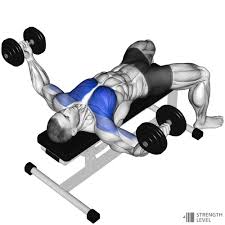
Table of Contents
Dumbbell flys are a classic chest exercise that stretches and works the chest through a wide range of motion. What makes them different from pressing movements is that they isolate the chest much more directly — your triceps barely get involved, so most of the work goes straight to your pecs.
They’re a fantastic complement to the bench press and a staple on any chest day.
Dumbbell Flys – Muscles Worked
Dumbbell flys mainly work:
- Pectoralis major — the main chest muscle, stretched and contracted through a wide arc
- Anterior deltoid — the front of your shoulder assists throughout the movement
- Biceps — work to hold your elbows in their slightly bent position
Important: At the bottom of each rep, your arms are out wide with the weight far from your body, which loads the front of your shoulders in a stretched position. That’s what makes flys effective — and why good form and sensible weights matter more here than in most chest exercises.
How to Perform Dumbbell Flys
- Lie flat on a bench with a dumbbell in each hand, held directly above your chest, palms facing each other.
- Keep a soft bend in your elbows throughout — this is essential and never changes.
- Slowly lower both dumbbells out to the sides in a wide arc, as if you’re opening your arms for a big hug.
- Lower until you feel a deep stretch across your chest — for most people, that’s when the dumbbells are roughly level with the bench or just slightly below.
- Reverse the motion and bring the dumbbells back up toward each other, stopping just before they meet above your chest.
- Repeat for your desired number of reps.
Pro tip: Think of it as a hugging motion, not a pressing motion. If you find yourself bending your elbows more to lift the weight, it’s too heavy — drop down and focus on the stretch. And because the dumbbells put almost no load on your chest once they’re directly above you, stop just short of the top to keep the tension on.
Sets & Reps
| Goal | Sets | Reps | Rest |
|---|---|---|---|
| Muscle building | 3–4 | 10–15 | 60–90 sec |
| Higher reps | 3–4 | 12–15 | 60 sec |
| Warm-up / activation | 2 | 15–20 | 45 sec |
Dumbbell flys are an isolation movement, so — like cable crossovers — they work best in moderate-to-higher rep ranges, taken close to failure, rather than going super heavy.
Common Mistakes to Avoid
1. Going too heavy This is by far the most common mistake with flys. Too much weight forces you to bend your elbows and turn the fly into a press — at that point you’re basically doing a dumbbell press, not a fly. Use a weight where you can truly feel the stretch.
2. Locking your elbows straight The opposite problem — fully straight arms increase the strain on your elbows and the front of your shoulders, especially at the bottom of the movement. Keep that soft bend in your elbows on every rep.
3. Lowering too far More stretch isn’t always better. Dropping the dumbbells far below the bench puts your shoulder joint in a vulnerable position. Stop when you feel a good stretch — you don’t need to go further.
4. Bouncing out of the stretch Some people use a little bounce at the bottom to help swing the weight back up. This is hard on your shoulders and takes the tension off your chest right where it’s most valuable — in the stretched position. Control the movement all the way through.
Dumbbell Flys – Variations
Want to work your chest from a different angle or switch things up?
- Incline Dumbbell Flys — bench set to about 30–45 degrees, shifting the emphasis toward the upper chest
- Decline Dumbbell Flys — bench tilted down, emphasizing the lower chest
- Cable Flys — a similar movement using cables, which keep tension on your chest at the top of the movement, where dumbbells lose it.
Where Dumbbell Flys Fit in Your Workout
Like cable crossovers, dumbbell flys are an isolation exercise, best placed toward the end of your chest session. Do your heavier compound work first (bench press, push-ups), then finish with dumbbell flys to stretch and work the chest directly. Many lifters superset flys with a pressing exercise for an extra-intense chest pump. For a complete plan, see our guide to the best chest exercises.