

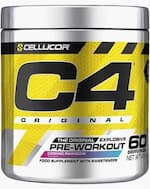
There’s a pattern almost every regular pre-workout user goes through. In the beginning, a single scoop produces a noticeable effect — heightened focus, better energy, stronger motivation to train hard. A few months later, the same scoop barely registers. So you increase the dose. Then you increase it again. Eventually you’re taking amounts that would have floored you six months ago, feeling roughly the same as you did before you started, and wondering why you’re spending this much money on something that no longer seems to work.
This is caffeine tolerance, and it’s not a personal failing or a sign of a weak constitution. It’s a predictable, well-documented neurological adaptation that happens to everyone who consumes caffeine regularly. The good news is that it’s completely reversible. The process of reversing it — cycling off pre-workout — is straightforward in principle and genuinely uncomfortable in practice, which is why most people avoid it until the situation becomes untenable.
The how to cycle off pre-workout guide covers why tolerance develops, how to cycle off effectively, what to expect while you do, and how to manage your pre-workout use going forward to avoid ending up back in the same position.
Why Tolerance Develops
Caffeine works primarily by blocking adenosine receptors. Adenosine is a neurotransmitter that accumulates in the brain throughout the day and progressively increases the drive to sleep — it’s the chemical mechanism behind the feeling of tiredness that builds as the day goes on. By occupying adenosine receptors, caffeine prevents adenosine from binding, which blocks the tiredness signal and produces alertness, focus, and the reduced perception of effort that makes training feel more manageable.
The brain’s response to having its adenosine receptors chronically blocked is to produce more of them. Over days and weeks of regular caffeine use, the brain upregulates adenosine receptor density — it grows more receptors to compensate for the ones being blocked. The result is that the same dose of caffeine, blocking the same number of receptors, is now blocking a smaller proportion of a larger total. The effect diminishes. You need more caffeine to achieve the same receptor blockade and the same subjective effect.
This is tolerance, and it develops faster than most people expect. Meaningful tolerance to caffeine’s alertness effects can develop within a week of regular daily use. Full tolerance — where the effects are significantly blunted — is typically established within two to three weeks of consistent use. This is why a pre-workout that felt powerful when you started feels routine within a month.
The adenosine receptor upregulation also explains the withdrawal symptoms that occur when caffeine is stopped abruptly. With caffeine removed, all those extra adenosine receptors are suddenly unblocked and flooded with adenosine. The result is a pronounced tiredness, headaches, low mood, and difficulty concentrating that last until the brain downregulates its receptor density back to baseline — which takes several days to two weeks.
What’s In Pre-Workout Beyond Caffeine
Understanding what you’re cycling off matters before deciding how to do it. Most pre-workout supplements are primarily caffeine delivery systems, but better-formulated products include additional ingredients that have their own tolerance profiles and considerations.
Caffeine is the primary active ingredient in virtually all pre-workouts and the main driver of both the performance benefits and the tolerance development. Doses typically range from 150mg to 400mg per serving — the lower end equivalent to a strong coffee, the upper end a dose that would cause significant side effects in caffeine-naive individuals.
Beta-alanine causes the characteristic tingling sensation (paraesthesia) and buffers lactic acid during intense efforts. It doesn’t produce meaningful tolerance in the same way caffeine does — the tingling diminishes with regular use as the body’s carnosine stores saturate, but the performance benefit remains. Beta-alanine doesn’t require cycling.
Citrulline malate improves blood flow and reduces post-exercise soreness. No significant tolerance development with regular use. Doesn’t require cycling.
Creatine, when included in pre-workout formulas, works through a different mechanism entirely and doesn’t require cycling — consistency of use is actually what the creatine evidence supports. If you’re cycling off pre-workout, consider supplementing creatine separately so you don’t interrupt creatine use unnecessarily.
Stimulants beyond caffeine — some products include compounds like synephrine, theobromine, or various plant extracts with stimulant properties. These vary in their tolerance profiles and are worth being aware of in whatever product you’re using.
The practical implication: when you cycle off pre-workout, you’re primarily managing caffeine withdrawal. The other ingredients are largely incidental to the cycling decision.
When to Cycle Off
There’s no single answer to how long you should use pre-workout before cycling off, but a few signals indicate it’s time:
The effect has significantly diminished. If your current dose produces a fraction of the effect your starting dose did, you’re deep into tolerance territory and cycling off will restore sensitivity faster than continuing to increase the dose.
You’re taking very high doses. Above 400mg of caffeine per serving, you’re in a range where cardiovascular strain and side effects become a real consideration — jitteriness, elevated heart rate, impaired sleep even when taken early in the day, and anxiety. High doses also mean a harder withdrawal when you eventually stop.
Your sleep is being affected. Caffeine has a half-life of five to six hours, meaning half the caffeine from a 300mg pre-workout is still circulating six hours after you took it. For someone who trains at 6pm and takes 300mg of caffeine, that’s 150mg still active at midnight. If sleep quality has declined since you started pre-workout use, this is the most likely cause — and poor sleep undermines training adaptation far more than any pre-workout improves it.
You feel dependent. If you can’t train without pre-workout, or if a morning without caffeine produces a genuinely difficult day, the dependency has become a problem worth addressing.
A reasonable schedule for most people: use pre-workout for eight to twelve weeks, cycle off for two to four weeks, then return. Some people prefer a simpler approach — two days on, one day off, or use it only for the most demanding sessions of the week and train without it on lighter days. The latter strategy slows tolerance development significantly and may make a full cycle unnecessary for occasional users.
How to Cycle Off Pre-Workout: Two Approaches
Option 1 — Abrupt cessation (cold turkey) Stop completely on a planned date and ride out the withdrawal. The symptoms are worst in the first two to four days — headaches, fatigue, low mood, difficulty concentrating — and gradually resolve over one to two weeks as adenosine receptor density normalizes. This approach gets it over with faster but requires timing it carefully. Don’t go cold turkey the week before a competition, a major work deadline, or any period when you need to be functioning at full capacity.
The headaches are the most reliable symptom and the most uncomfortable. Staying well hydrated reduces their severity. Over-the-counter pain relief manages them when needed without meaningfully slowing the process. Expect to feel genuinely tired for the first three to five days — plan your training accordingly, reduce intensity, and treat this as a deload period rather than fighting to maintain performance through it.
Option 2 — Gradual taper Reduce the dose progressively over two to three weeks rather than stopping abruptly. If you’ve been taking a full scoop (say, 300mg caffeine), move to three-quarters of a scoop for a week, then half, then a quarter, then stop. This approach produces milder withdrawal symptoms at the cost of a longer process. It’s the better choice for people who can’t afford several bad days, who have a history of severe withdrawal, or who are consuming very high doses and want to avoid an abrupt drop.
The taper also works well as a switch to black coffee — replacing pre-workout with a known, controlled caffeine dose (a standard 240ml cup of coffee contains roughly 80–100mg) and then gradually reducing coffee intake. This gives more precision over the dose reduction than adjusting scoop sizes.
Which approach is better? For most people with moderate pre-workout use, cold turkey is faster and equally effective. For heavy users — two scoops or more, daily use over a long period — the taper reduces the risk of severe withdrawal and is worth the longer timeline.
What to Expect During the Cycle
Being specific about the experience helps — knowing what’s coming makes it considerably easier to get through.
Days 1–3: The hardest stretch. Headaches are common, often beginning within 12–24 hours of the last dose. Energy is noticeably lower. Motivation to train drops — this is normal and not a sign that you need pre-workout to function. Mood may be lower than usual. Sleep is often actually better during this period, which is a useful upside to focus on.
Days 4–7: Headaches typically resolve or become infrequent. Energy begins to recover. The low-motivation feeling persists but is less acute. Training feels harder than it did on pre-workout, but this is the new baseline, not a permanent deficit.
Days 8–14: Most people feel largely normal by this point. The adenosine receptor density is downregulating and the exaggerated fatigue signal that drove the withdrawal symptoms is fading. Natural energy levels — which were always there, just masked by caffeine — start to feel more accessible.
After two weeks: Caffeine sensitivity is substantially restored. Many people notice during this period that they feel more even-keeled energy-wise than they did during heavy pre-workout use — fewer peaks and crashes, more consistent baseline alertness. This is worth noticing, because it’s what normal, un-caffeinated neurological function feels like, and it’s the reference point you want to protect when you return to pre-workout use.
Training During the Cycle
Training performance will take a hit, and the honest thing to do is accept that rather than fight it. This is not the time to test maxes, push for personal records, or maintain peak training volume. Treat the cycle-off period as a functional deload — maintain movement and some training stress, reduce intensity and volume, and focus on technique work and mobility rather than loading.
The physical adaptations you’ve built don’t disappear in two weeks. Muscle, strength, and fitness have their own timelines and are not significantly affected by a brief reduction in caffeine-driven training intensity. What you lose temporarily in performance you gain in restored caffeine sensitivity, which more than compensates when you return.
This is also a useful period to assess your actual, un-supplemented baseline. How do you perform without stimulants? What does your energy actually look like without caffeine management? The answers are informative and help you calibrate how much pre-workout is genuinely adding versus how much of your “normal” performance it has become.
Returning to Pre-Workout
When you return after a successful cycle, sensitivity is restored and even a modest dose will feel effective again. This is the point where the habits that led to high tolerance can reset.
A few principles worth applying on the return:
Start lower than you left off. If you were taking a full scoop before cycling, start with half. Your restored sensitivity means you don’t need the dose you were taking before, and starting low keeps you in a range where the supplement is doing its job without immediately beginning the tolerance climb again.
Don’t use it every session. Reserve pre-workout for the sessions that genuinely benefit from it — the heaviest training days, the sessions where performance really matters. Train without it on lighter days, technique sessions, and lower-intensity work. This slows tolerance development dramatically and makes the pre-workout more effective when you do use it.
Consider your caffeine environment. If you’re also drinking coffee daily and taking pre-workout, your total caffeine intake is higher than the supplement alone suggests. Total daily caffeine — from all sources — is what determines tolerance and withdrawal severity. Managing this total, rather than just the pre-workout dose, is a more accurate way to stay in a range where the benefits are real.
Cycle again before you have to. The ideal is to cycle off before tolerance has fully developed and doses have escalated — not after. A planned eight to twelve week on, two to four week off schedule maintains sensitivity better than waiting until the supplement stops working.
How to Cycle Off Pre-Workout – The Bigger Picture
Pre-workout supplements are a tool, and like all tools they work best when used appropriately and rested periodically. The performance benefits of caffeine at the right dose — improved focus, reduced perceived effort, better power output — are well-evidenced and genuinely useful. The benefits of unlimited, unmanaged daily use are not.
The dependency pattern that develops with uncycled pre-workout use is worth taking seriously — not because caffeine is dangerous, but because needing a stimulant to function normally in training is a signal that the supplement has stopped enhancing performance and started compensating for its own withdrawal. Cycling off resets that relationship and restores the supplement to its proper role.
Two weeks of discomfort twice a year is a reasonable price for a supplement that works properly for the other ten months. Most people who do a proper cycle-off come out the other side glad they did it, and surprised by how quickly the sensitivity returned.
How to Cycle Off Pre-Workout – The Bottom Line
Cycling off pre-workout is uncomfortable, predictable, manageable, and worth it. The tolerance that builds with regular use is not a permanent state — it reverses in one to two weeks of abstinence, and the caffeine sensitivity that returns is the same sensitivity that made the supplement feel effective when you first started. Cold turkey works for most people; a gradual taper is the better choice for heavy users or those who can’t afford several impaired days. Train lighter during the cycle, stay hydrated, manage the headaches, and remember that what you’re feeling is withdrawal from a dependency the supplement created — not evidence that you need it to function. You don’t. You’re just temporarily readjusting to your baseline, which was always there.