

Citrulline: The Complete Guide to the Pump Ingredient
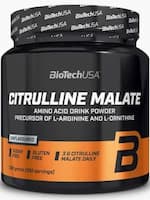
If caffeine is the engine of a pre-workout supplement and beta-alanine is the endurance component, citrulline is the blood flow ingredient — the compound responsible for the skin-splitting muscle pump that many lifters chase in the gym. But citrulline’s benefits go well beyond aesthetics. The increased blood flow it produces has genuine performance implications — more oxygen and nutrients delivered to working muscles, faster removal of metabolic waste products, and measurable improvements in both strength endurance and aerobic performance.
It’s one of the most consistently effective and well-tolerated pre-workout ingredients available — and one that is chronically underdosed in many commercial products.
This page covers everything you need to know about citrulline — what it is, how it works, what the research shows, how to dose it correctly, and how it fits into a complete pre-workout strategy.
What Is Citrulline?
Citrulline is a non-essential amino acid named after the Latin word for watermelon — citrullus — the fruit in which it was first identified. It’s found naturally in watermelon (particularly the rind), cucumber, squash, and some other foods, though dietary amounts are insufficient to produce meaningful performance benefits.
Unlike most amino acids, citrulline is not incorporated into proteins. Instead it serves primarily as an intermediate in the urea cycle — the metabolic pathway that removes ammonia from the body — and as a precursor to arginine and subsequently nitric oxide in the endothelium (the inner lining of blood vessels).
Citrulline supplements come in two main forms:
L-citrulline — the pure amino acid form. Highly bioavailable and directly enters the citrulline-arginine-nitric oxide pathway.
Citrulline malate — citrulline bound to malate (malic acid). The malate component is an intermediate in the citric acid cycle (energy production) and may contribute additional ergogenic effects beyond nitric oxide production. Most of the research on citrulline for exercise performance has used citrulline malate, though more recent research suggests L-citrulline is equally effective when dose-matched for citrulline content.
How Citrulline Works
The Citrulline-Arginine-Nitric Oxide Pathway
Citrulline’s primary performance mechanism operates through a well-understood biochemical pathway:
- Citrulline is absorbed from the small intestine and enters circulation
- In the kidneys, citrulline is converted to arginine — another amino acid
- In the endothelium (blood vessel inner lining), arginine is converted to nitric oxide (NO) by the enzyme nitric oxide synthase (eNOS)
- Nitric oxide causes smooth muscle in blood vessel walls to relax — a process called vasodilation — widening the vessels and increasing blood flow
The result is increased blood flow throughout the body — and particularly to exercising muscles where blood flow demand is highest.
Why Citrulline Is Better Than Arginine
You might wonder: if the goal is to raise arginine levels and produce nitric oxide, why not supplement arginine directly? This is a reasonable question — and the answer reveals one of the more interesting aspects of citrulline pharmacology.
Supplemental arginine has two significant problems:
Poor oral bioavailability — arginine taken orally is extensively broken down in the gut and liver before it reaches circulation. A large proportion of supplemental arginine never makes it to the endothelium where nitric oxide is produced.
First-pass metabolism — the gut contains high concentrations of arginase, an enzyme that breaks down arginine. Oral arginine supplementation is therefore largely ineffective at raising blood arginine levels.
Citrulline bypasses both problems. It is not metabolized in the gut and has excellent bioavailability — virtually all consumed citrulline reaches circulation intact. It’s then converted to arginine in the kidneys — a more direct route that effectively bypasses gut arginase. Research consistently shows that oral citrulline raises blood arginine levels more effectively than oral arginine itself.
Ammonia Buffering
Beyond nitric oxide production, citrulline plays a role in the urea cycle — converting toxic ammonia (produced during amino acid metabolism and intense exercise) to urea for safe excretion. Ammonia accumulation during intense exercise contributes to central fatigue and reduced exercise performance. Citrulline’s enhancement of ammonia clearance may contribute to its fatigue-reducing effects beyond the nitric oxide mechanism.
What the Research Shows
Resistance Training Performance
The most impressive single finding on citrulline and resistance training performance comes from a 2010 study by Pérez-Guisado and Jakeman. Recreational athletes performing a chest training protocol (flat barbell bench press) who consumed 8g of citrulline malate before training completed:
- 52% more reps on the second half of the workout compared to placebo
- 40% reduction in muscle soreness at 24 hours and 48 hours post-training
- Significantly better maintenance of performance across later sets
This performance improvement in the latter part of training is particularly meaningful — it reflects citrulline’s ability to sustain performance as local muscular fatigue accumulates, which is exactly when most training sets become limited.
Subsequent research has confirmed and extended these findings — multiple studies show improvements in total rep volume, reduced fatigue during later sets, and better maintenance of performance across successive sets in resistance training protocols.
Aerobic and Endurance Performance
Citrulline improves endurance performance through enhanced oxygen delivery to working muscles — the vasodilation-mediated increase in blood flow means more oxygen reaches muscle mitochondria per unit time, improving aerobic energy production.
Research has shown:
- Improved time to exhaustion during cycling protocols
- Reduced oxygen cost at submaximal intensities — the same workload requires less cardiovascular effort
- Improved time trial performance in cycling and running
Muscle Pump and Cell Swelling
The visible muscle pump produced by citrulline-induced vasodilation is not purely cosmetic. Cell swelling — the increase in muscle cell volume from increased blood flow and plasma fluid entry — triggers anabolic signalling pathways within muscle cells. The same cell volumisation mechanism that makes creatine effective for muscle building may contribute to citrulline’s long-term effects on body composition when used consistently.
Muscle Soreness Reduction
The 40% reduction in muscle soreness found in the Pérez-Guisado study has been replicated in subsequent research. The proposed mechanism is improved clearance of metabolic byproducts — lactate, hydrogen ions, ammonia — from muscle tissue during and after training, reducing the inflammatory cascade that contributes to delayed onset muscle soreness (DOMS).
For lifters who train frequently with high volume, reduced soreness between sessions has direct practical value — it means you can return to training sooner and at higher quality.
Blood Pressure
Citrulline’s vasodilatory effects produce modest reductions in resting blood pressure — research has found reductions of approximately 4–8mmHg in systolic blood pressure with regular citrulline supplementation. This is a meaningful effect size for blood pressure management and represents a genuine cardiovascular health benefit beyond performance.
Dosing Citrulline
Effective Doses
L-citrulline: 6–8g per dose, taken 30–60 minutes before exercise Citrulline malate: 8–10g per dose (providing approximately 5–6.5g of citrulline)
These are the doses used in the research showing significant performance benefits. The dose-response relationship for citrulline is reasonably well characterised — below 6g of L-citrulline, blood arginine elevation and nitric oxide production are meaningfully reduced.
The Underdosing Problem
This is the most important practical consideration when evaluating pre-workout products. The majority of commercial pre-workout supplements contain 1–3g of citrulline per serving — well below the effective dose of 6–8g.
At these doses, citrulline contributes little beyond its presence on the ingredient label. The pump-focused marketing of products containing inadequate citrulline doses is one of the most widespread misleading practices in the supplement industry.
Always check the citrulline dose on any pre-workout label. If it contains less than 6g of L-citrulline (or 8g of citrulline malate), the product is underdosed for this ingredient.
Timing
Unlike beta-alanine — which requires chronic daily dosing to work through carnosine elevation — citrulline produces acute performance effects from each dose. Blood arginine and nitric oxide levels rise meaningfully within 60–90 minutes of consumption and remain elevated for several hours.
Take citrulline 30–60 minutes before training for peak nitric oxide availability during your session. Unlike creatine and beta-alanine, timing relative to exercise matters for citrulline’s acute performance benefits.
Daily vs. Pre-Workout Only
Citrulline can be taken daily or only before training — both approaches produce benefits. Pre-workout timing is most directly relevant for the performance and pump effects. Daily supplementation also contributes to cardiovascular health benefits (blood pressure reduction) through sustained elevation of nitric oxide production.
Citrulline and the Pre-Workout Stack
Citrulline complements the other major pre-workout ingredients well — each addresses a different aspect of performance with minimal overlap:
Citrulline + caffeine — caffeine reduces perceived effort and enhances power output through central nervous system stimulation; citrulline improves blood flow, oxygen delivery, and fatigue resistance through peripheral vasodilation. Together they address both central and peripheral performance limitations.
Citrulline + beta-alanine — beta-alanine buffers intramuscular acid; citrulline improves blood flow and waste product clearance. Both extend exercise performance before fatigue — through complementary mechanisms.
Citrulline + creatine — creatine supports the phosphocreatine energy system for short, maximal efforts; citrulline supports oxygen delivery and endurance for longer efforts. Research examining the combination has found additive benefits for training volume and recovery.
The combination of all four — caffeine, beta-alanine, citrulline, and creatine — represents the most evidence-backed pre-workout stack available, with each ingredient addressing a distinct performance mechanism.
Citrulline vs. Arginine: A Direct Comparison
Given that arginine is the direct precursor to nitric oxide, many older pre-workout products used arginine rather than citrulline. Modern formulations have largely shifted to citrulline — and the evidence clearly supports this transition:
| Citrulline | Arginine | |
|---|---|---|
| Oral bioavailability | High (~80%) | Poor (~20–30%) |
| Blood arginine elevation | More effective | Less effective |
| Nitric oxide production | Consistent | Inconsistent |
| Gut breakdown | Minimal | Significant |
| GI tolerance | Good | Often poor at high doses |
| Research support | Strong | Mixed |
| Effective dose | 6–8g | 3–6g (inconsistent results) |
Citrulline is the superior choice for nitric oxide production and blood flow enhancement in virtually every meaningful metric. Arginine-based products are largely obsolete from an evidence standpoint.
Food Sources of Citrulline
While supplemental doses are required for performance benefits, citrulline is found in several foods:
| Food | Citrulline per 100g |
|---|---|
| Watermelon rind | 3.0–3.5g |
| Watermelon flesh | 0.7–1.0g |
| Cucumber | 0.3–0.9g |
| Yellow squash | 0.2–0.6g |
| Pumpkin | 0.2–0.5g |
| Bitter melon | 0.1–0.4g |
Dietary sources provide meaningful citrulline for general health but fall well short of the 6–8g required for acute exercise performance benefits — which is why supplementation is necessary for athletes seeking the performance effects.
Side Effects and Safety
Citrulline has an excellent safety profile — it’s a naturally occurring amino acid with no documented serious adverse effects at recommended doses. The most common reported side effect is mild gastrointestinal discomfort at very high doses (above 15g) — well above the performance-relevant dosing range.
Blood pressure considerations: Citrulline’s blood pressure-lowering effects are generally beneficial for most people. However individuals taking nitrate medications (nitroglycerin, isosorbide) or PDE-5 inhibitors (sildenafil, tadalafil) should consult a doctor before supplementing with citrulline — the combination may produce excessive blood pressure reduction.
Long-term safety: No adverse effects have been found in long-term supplementation studies. Citrulline is present naturally in the diet and is produced endogenously — supplemental doses simply elevate what is already a normal physiological molecule.
How to Choose a Citrulline Supplement
Standalone citrulline: If your pre-workout is underdosed for citrulline (below 6g), adding standalone L-citrulline powder is the most cost-effective way to reach the effective dose. L-citrulline powder is inexpensive, tasteless, and mixes easily in any liquid.
L-citrulline vs. citrulline malate: Both are effective. L-citrulline is more concentrated — you need less powder to reach the effective citrulline dose. Citrulline malate requires a larger serving (8–10g) to deliver equivalent citrulline content. The malate component may provide additional benefits through the citric acid cycle but evidence for this specific addition is limited.
Check the label carefully: Products listing “citrulline” without specifying the form may be using citrulline malate — which means the effective citrulline content is approximately 60–65% of the total weight listed. A product listing 6g of “citrulline malate” provides approximately 3.6–4g of actual citrulline — below the effective dose threshold.
Common Questions About Citrulline
Does citrulline work immediately? Yes — citrulline produces acute performance effects from each dose through the same-day elevation of blood arginine and nitric oxide. Unlike beta-alanine which requires weeks of loading, citrulline works on the day you take it when dosed appropriately.
Will citrulline make me look more muscular? The pump from citrulline is temporary — it reflects increased blood volume in muscle tissue during and after training. It doesn’t produce permanent changes in muscle appearance. However the training volume benefits from consistent citrulline use may contribute to long-term muscle development.
Can I take citrulline every day? Yes — daily citrulline supplementation is safe and provides continuous cardiovascular benefits from sustained nitric oxide elevation. For performance purposes, pre-workout timing is most relevant.
Is citrulline appropriate for women? Absolutely — the performance and blood flow benefits of citrulline are identical for women as for men. See our pre-workout for women page for more gender-specific guidance.
Related Pages
- Pre-Workout — complete pre-workout supplement guide
- Best Pre-Workout Supplements — products reviewed for effective citrulline doses
- Muscle Building Techniques — advanced training methods to maximize the benefits