

Spirulina: Nutrition Facts, Health Benefits, and the Honest Guide to What Those Extraordinary Numbers Actually Mean
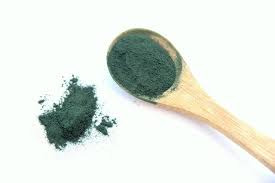
Table of Contents
Spirulina produces some of the most striking nutritional figures in this entire collection — per 100g, 678% of daily copper, 282% of riboflavin, 198% of thiamine, 158% of iron, 83% of manganese, and 57.5g of protein. If you encountered these numbers without context you might expect it to be the single most nutritious food available from any source.
The context is critical: spirulina is a cyanobacterium — a type of blue-green algae — sold as a dried powder or tablet and consumed in doses of roughly 3–10g per day. At a typical 7g serving (about a tablespoon of powder), those extraordinary per-100g figures become genuinely meaningful but far more modest contributions. Spirulina is a legitimately interesting functional food and one of the most protein-dense natural foods in existence. It is not a miracle cure, it cannot replace a balanced diet, and one of its most heavily marketed nutritional claims — that it’s a plant-based B12 source — is false. This page covers all three realities honestly.
Spirulina Nutrition Facts (per 100g, dried)
| Nutrient | Amount |
|---|---|
| Calories | 290 kcal |
| Protein | 57.5g |
| Fat | 7.7g |
| — Saturated Fat | 2.7g |
| — Monounsaturated Fat | 0.7g |
| — Polyunsaturated Fat | 2.1g |
| Carbohydrates | 23.9g |
| — Sugars | 3.1g |
| — Fiber | 3.6g |
| Cholesterol | 0mg |
| Sodium | 1,048mg |
USDA’s figures for dried spirulina. Its polyunsaturated fat is mostly linoleic acid and gamma-linolenic acid (GLA) — both omega-6 fats — so despite occasional marketing claims, spirulina is not a meaningful omega-3 source.
Spirulina Nutrition Facts (per 7g serving — about one tablespoon of powder)
A tablespoon of spirulina powder weighs about 7g (a teaspoon is closer to 2–3g) — a common daily amount:
| Nutrient | Per 7g Serving |
|---|---|
| Calories | 20 kcal |
| Protein | 4.0g |
| Fat | 0.5g |
| Carbohydrates | 1.7g |
| — Fiber | 0.3g |
| Sodium | 73mg |
| Copper | 0.43mg (47% DV) |
| Riboflavin | 0.26mg (20% DV) |
| Thiamine | 0.17mg (14% DV) |
| Iron | 2.0mg (11% DV) |
| Niacin | 0.9mg (6% DV) |
| Manganese | 0.13mg (6% DV) |
| Magnesium | 14mg (3% DV) |
At the realistic 7g serving, spirulina provides 4g of protein and genuinely meaningful copper (47% DV) and riboflavin (20% DV) — impressive for a single tablespoon in a smoothie.
Vitamins in Spirulina (per 100g, dried)
| Vitamin | Amount | % Daily Value |
|---|---|---|
| Vitamin A (RAE) | 29µg | 3% |
| Vitamin B1 (Thiamine) | 2.38mg | 198% |
| Vitamin B2 (Riboflavin) | 3.67mg | 282% |
| Vitamin B3 (Niacin) | 12.82mg | 80% |
| Vitamin B5 (Pantothenic Acid) | 3.48mg | 70% |
| Vitamin B6 | 0.36mg | 21% |
| Vitamin B9 (Folate) | 94µg | 24% |
| Vitamin B12 | 0µg | 0% — see below |
| Vitamin C | 10.1mg | 11% |
| Vitamin D | 0µg | 0% |
| Vitamin E | 5.0mg | 33% |
| Vitamin K | 25.5µg | 21% |
Multiple standouts: Spirulina’s B vitamin density per 100g is genuinely extraordinary — riboflavin at 282% DV and thiamine at 198% DV are around two to three times the daily requirement. Niacin (80% DV), pantothenic acid (70% DV), and Vitamin E (33% DV) also register strongly.
A note on Vitamin A: spirulina is often marketed as extraordinarily rich in beta-carotene, and some product labels and analyses report far higher carotenoid levels than USDA’s — carotenoids vary widely between products and break down with drying, light, and storage. USDA’s analysis of dried spirulina found just 29µg of Vitamin A (RAE) per 100g, or about 2µg in a 7g serving, so this page doesn’t count spirulina as a meaningful Vitamin A source.
Minerals in Spirulina (per 100g, dried)
| Mineral | Amount | % Daily Value |
|---|---|---|
| Calcium | 120mg | 9% |
| Phosphorus | 118mg | 9% |
| Magnesium | 195mg | 46% |
| Potassium | 1,363mg | 29% |
| Iron | 28.5mg | 158% |
| Zinc | 2.0mg | 18% |
| Selenium | 7.2µg | 13% |
| Copper | 6.1mg | 678% |
| Manganese | 1.9mg | 83% |
Multiple extraordinary standouts: Spirulina’s mineral profile per 100g rivals or exceeds any food in this collection. Copper at 678% DV is the highest copper figure of any food covered on this site so far — nearly seven times the daily requirement. Iron at 158% DV, manganese at 83% DV, magnesium at 46% DV, and potassium at 29% DV round out a remarkable mineral profile — though, as the serving section below shows, the amounts in a realistic daily dose are much smaller.
What Spirulina Actually Is: The Biology Behind the Numbers
Understanding its biology explains why its nutrient concentration looks so extreme.
Spirulina refers to a few species of cyanobacteria — primarily Arthrospira platensis and Arthrospira maxima — commonly called blue-green algae, though technically cyanobacteria are bacteria (lacking a cell nucleus) rather than true algae. Cyanobacteria are among the oldest life forms on earth, with evidence of their activity going back billions of years.
Why the density: much of it is simply because spirulina is sold dried. Its per-100g figures describe a dry powder with almost no water, which makes them look enormous next to foods like fish, beans, or vegetables that are mostly water. On top of that, spirulina cells are unusually rich in protein, pigments, and B vitamins, so the dried biomass is genuinely concentrated.
Natural habitat: spirulina grows naturally in warm, alkaline lakes in tropical and subtropical regions — including Lake Chad in Central Africa, where it is still harvested and dried into cakes called dihé, the soda lakes of East Africa’s Rift Valley, and Lake Texcoco in Mexico, where the Aztecs harvested it as a food called tecuitlatl. Commercial production takes place in large outdoor ponds and controlled systems in countries including the United States, China, and India.
The B12 Myth: The Most Important Nutritional Clarification About Spirulina
This must be stated clearly and prominently because it is one of the most persistent and most consequential nutritional misconceptions in the supplement industry.
Spirulina does not provide usable Vitamin B12.
Spirulina contains compounds that chemically resemble Vitamin B12 and register as B12 in older microbiological food assays — which is where decades of marketing spirulina as a plant-based B12 source came from. Studies using methods that distinguish genuine B12 from look-alike compounds have found that most of spirulina’s “B12” is pseudovitamin B12 — a related compound that is biologically inactive in humans and is poorly recognized by intrinsic factor, the protein needed to absorb B12. Some researchers have also raised the possibility that such inactive analogues could interfere with genuine B12, though that remains uncertain. USDA’s own data lists spirulina’s B12 as zero.
The practical consequence: any plant-based eater — vegan, vegetarian, or flexitarian — relying on spirulina as a B12 source is not meeting their B12 requirements and risks deficiency, which can cause anaemia and lasting nerve damage.
The correct guidance: plant-based eaters need a B12 supplement (cyanocobalamin or methylcobalamin) or reliably fortified foods. Spirulina is not a substitute for either — on this point, the evidence is clear.
The Serving Size Reality: What a 7g Dose Actually Delivers
This is the most important practical context for any spirulina discussion. Almost nobody eats spirulina at 100g — it would mean taking around 14 typical servings at once, which would be prohibitively expensive and unpleasant. Typical daily use is roughly 3–10g as a smoothie addition or supplement dose.
At 7g — a typical daily amount:
| Nutrient | Per-100g % DV | Per 7g % DV | Practical significance |
|---|---|---|---|
| Copper | 678% | 47% | Genuinely meaningful |
| Riboflavin | 282% | 20% | Meaningful |
| Thiamine | 198% | 14% | Meaningful |
| Iron | 158% | 11% | Meaningful with Vitamin C |
| Manganese | 83% | 6% | Modest |
| Magnesium | 46% | 3% | Modest |
| Protein | 57.5g/100g | 4.0g | Modest contribution |
| Potassium | 29% | 2% | Minimal |
The practical picture: at realistic amounts, spirulina’s most genuinely valuable contributions are copper (47% DV), riboflavin (20% DV), thiamine (14% DV), and iron (11% DV) per tablespoon. These are useful contributions from a small daily addition. The protein (4g per tablespoon) and other nutrients at this serving size are modest bonuses rather than primary contributions.
Phycocyanin: Spirulina’s Most Distinctive Bioactive Compound
This is the compound responsible for spirulina’s vivid blue-green color and the focus of some of the most interesting research into spirulina’s health properties.
Phycocyanin is a pigment-protein complex found almost exclusively in cyanobacteria, where it harvests light for photosynthesis. In laboratory and animal research it has shown several biological activities — though because it’s a protein, much of it is broken down during digestion, and how much of its activity survives when eaten is still uncertain:
Anti-inflammatory — phycocyanin inhibits cyclooxygenase-2 (COX-2), the same enzyme targeted by anti-inflammatory drugs like ibuprofen, and reduces production of pro-inflammatory cytokines in cell and animal studies. Human research is more limited.
Antioxidant — phycocyanin’s pigment component can neutralize free radicals in laboratory tests.
Neuroprotective — early research has found phycocyanin reduces oxidative damage and nerve cell death in animal models, with possible relevance to neurodegenerative disease that is still being studied.
The honest qualification: the vast majority of phycocyanin research is in cell culture and animal models. Human clinical trials are few and small. Phycocyanin is genuinely interesting frontier science rather than established clinical benefit — worth knowing about, not worth overstating.
Health Benefits of Spirulina
Exceptional Copper From a Small Daily Dose
At 47% DV copper per 7g serving, spirulina is one of the most concentrated dietary copper sources available. Copper is essential for ceruloplasmin-mediated iron metabolism, lysyl oxidase-driven collagen crosslinking, cytochrome c oxidase in mitochondrial energy production, and the Cu/Zn superoxide dismutase antioxidant enzyme. A tablespoon of spirulina in a daily smoothie covers nearly half the daily copper requirement.
Strong Riboflavin and Thiamine for Energy Metabolism
At 20% DV riboflavin and 14% DV thiamine per 7g serving, spirulina contributes to the FAD/FMN and pyruvate dehydrogenase coenzyme systems central to cellular energy production — meaningful contributions from a small daily addition that requires no cooking and adds minimal calories.
Iron Contribution for Plant-Based Eaters
At 11% DV per 7g serving in non-haem form, spirulina contributes to iron intake for plant-based eaters. As with all non-haem iron, pairing with Vitamin C (standard in most fruit smoothies) enhances absorption, and some research suggests spirulina’s iron is relatively well absorbed for a non-meat source.
Anti-Inflammatory Potential Through Phycocyanin
The phycocyanin content provides anti-inflammatory and antioxidant activity at the compound level, with a plausible mechanism for relevance to chronic inflammatory conditions — while acknowledging that human clinical evidence is still developing.
Cardiovascular Support
Several small randomized controlled trials — pooled in meta-analyses — have found spirulina supplementation (typically 1–8g per day for 4–12 weeks) associated with modest reductions in total cholesterol, LDL cholesterol, and triglycerides, alongside modest HDL increases. The mechanisms aren’t fully understood, and the trials are generally small and short, but the direction of the findings has been fairly consistent.
Antioxidant Capacity
Spirulina combines Vitamin E (33% DV per 100g), phycocyanin and other pigments, and copper (a component of the Cu/Zn superoxide dismutase antioxidant enzyme), giving it antioxidant activity across several mechanisms — though at a 7g serving, the Vitamin E contribution is small.
Spirulina for Athletes and Active People
A Copper-Dense Smoothie Addition
For athletes, the 47% DV copper per 7g serving is the single most practically useful contribution. Copper is needed for ceruloplasmin to handle iron properly, supporting haemoglobin synthesis and oxygen-carrying capacity — so spirulina fits naturally alongside an athlete’s broader iron strategy.
Possible Recovery Support
A few small studies of spirulina in exercising people have found improvements in antioxidant status and reductions in markers of exercise-induced oxidative damage. The research is limited, but spirulina may make a modest contribution to recovery alongside the basics of training, sleep, and diet.
Protein as a Cumulative Contribution
At 4g of protein per 7g serving, spirulina doesn’t meaningfully change a day’s protein total by itself — but as a daily smoothie addition alongside other protein sources, it adds a small, consistent increment with very few calories.
Spirulina vs Chlorella
Spirulina is frequently compared to — and sometimes confused with — chlorella, another microalgae supplement:
| Property | Spirulina | Chlorella |
|---|---|---|
| Type | Cyanobacterium (no cell nucleus) | True green alga (has a cell nucleus) |
| Protein per 100g | 57.5g | Roughly 45–60g, depending on product |
| Distinctive pigment | Phycocyanin (blue) | Chlorophyll (green) |
| B12 | Mostly inactive pseudovitamin B12 | Some products contain active B12, but amounts vary widely |
| Cell wall | No rigid cell wall | Tough cell wall (usually processed to break it) |
| Digestibility | High | Depends on whether the cell wall is broken |
Both are legitimate supplements with overlapping benefits. Spirulina’s advantages are its easy digestibility (no tough cell wall) and its very high copper, iron, and B vitamin density. Chlorella is often marketed for “detox”, but human evidence for that is limited. Neither should be relied on for B12 — spirulina’s is inactive, and chlorella’s is too variable.
Practical Ways to Include Spirulina in Your Diet
In a morning smoothie — 5–7g of spirulina powder blended with banana, frozen mango, pineapple, and water or plant milk masks its strong flavor effectively; the fruit’s sweetness overrides spirulina’s earthy, marine taste.
In a post-workout green smoothie — combined with spinach (dietary nitrates), banana (potassium, carbohydrates), and protein powder for a comprehensive post-training combination.
In energy balls or bars — mixing spirulina powder into homemade energy balls with dates, nut butter, oats, and chia seeds adds a concentrated micronutrient boost to a portable snack.
In savory dishes — spirulina can be stirred into guacamole, hummus, or salad dressings, where its color adds visual interest and stronger ingredients mask its flavor.
As a tablet supplement — for people who find the taste off-putting, spirulina tablets provide the same nutrition in a tasteless, convenient format.
Starting dose — if you’re new to spirulina, start with 1–2g and increase gradually to let your gut adjust. Some people experience mild digestive discomfort at first with larger doses.
Potential Considerations
B12 — not a source — as stated prominently above, spirulina’s “B12” is mostly inactive pseudovitamin B12. Plant-based eaters should not rely on spirulina for B12 under any circumstances.
Heavy metal contamination risk — cyanobacteria readily absorb heavy metals from their growing environment, and spirulina from contaminated water can contain elevated lead, mercury, arsenic, or cadmium. Buying from reputable suppliers with third-party testing is essential — look for certifications such as NSF or Informed Sport.
Cyanotoxin risk from poorly controlled sources — some other cyanobacteria produce liver-damaging toxins called microcystins, which can contaminate spirulina grown in uncontrolled conditions. Wild-harvested or poorly quality-controlled spirulina carries a real contamination risk; reputable producers grow tested Arthrospira strains in controlled environments to avoid it.
Autoimmune conditions and medications — spirulina may stimulate immune activity, which could theoretically worsen autoimmune conditions such as lupus, multiple sclerosis, or rheumatoid arthritis, and could reduce the effect of immunosuppressant drugs. It may also slow blood clotting. Anyone with an autoimmune condition, or taking immunosuppressants or blood thinners, should talk to their doctor before using it.
Phenylketonuria (PKU) — spirulina contains phenylalanine and must be avoided by people with PKU.
Sodium content — at 1,048mg of sodium per 100g, spirulina is surprisingly salty, but a 7g serving contains just 73mg — worth noting only for anyone on a strict sodium restriction or taking large doses.
Pregnancy and children — pregnant women should consult their healthcare provider before using spirulina, particularly given the heavy metal and contamination considerations, and supplements like spirulina aren’t recommended for young children without medical advice.
Nutrient data: USDA FoodData Central, SR Legacy — seaweed, spirulina, dried (FDC ID 170495). % Daily Values use the FDA’s current Daily Values.