

Low Cable Crossover: How To, Muscles Worked & Common Mistakes
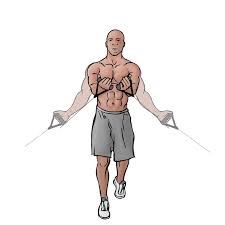
If you want to develop the lower portion of your chest, the low cable crossover is one of the best tools for the job. By setting the pulleys at the lowest position, the upward pulling angle targets the lower pecs in a way that most pressing movements simply can’t replicate.
It’s also a great finishing exercise — the constant cable tension keeps your chest working throughout the entire range of motion, giving you a deep burn and pump right where you want it.
How It Differs from the Regular Cable Crossover
The key difference is the pulley position and the direction of the movement:
- In the regular cable crossover, pulleys are set high and you pull downward — emphasizing the mid and lower chest
- In the low cable crossover, pulleys are set at the bottom and you pull upward — emphasizing the lower and inner chest with a different angle of resistance
Both are great exercises, but the low-to-high variation gives you a longer stretch at the bottom and places peak tension on the lower chest at the top of the movement. Check out our Cable Crossover page if you want to compare the two.
Low Cable Crossover – Muscles Worked
- Pectoralis major (lower portion) — the primary target, especially the sternal head of the chest
- Anterior deltoid — the front shoulder assists throughout
- Serratus anterior — stabilizes the shoulder blade during the movement
How to Perform the Low Cable Crossover
- Set both pulleys to the lowest position on the cable machine.
- Stand in the center, grab a handle in each hand, and step one foot slightly forward for balance.
- Start with your arms extended down and slightly back — you should feel a stretch across your lower chest at the bottom.
- With a soft bend in your elbows, bring both handles upward and together in a wide arc, aiming for around chest height or slightly above.
- Squeeze your chest hard at the top when the handles meet.
- Slowly lower back to the starting position, controlling the descent.
- Repeat for your desired reps.
Pro tip: Lean forward ever so slightly from the hips — just enough to keep the tension focused on your chest rather than your shoulders. Don’t overdo it though, a small lean is enough.
Low Cable Crossover – Sets & Reps
| Goal | Sets | Reps | Rest |
|---|---|---|---|
| Muscle building | 3–4 | 10–15 | 60–90 sec |
| Definition / pump | 3–4 | 15–20 | 30–60 sec |
| Superset finisher | 2–3 | 15–20 | Minimal |
Low Cable Crossover – Common Mistakes to Avoid
1. Setting the pulleys too high If the pulleys aren’t at the lowest setting, you lose the specific angle that targets the lower chest. Double check they’re all the way down before you start.
2. Pulling too high Bringing the handles up above your head turns this into more of a shoulder exercise. Stop the movement around chest height — that’s where your lower pecs are doing the most work.
3. Bending your elbows too much Like all cable crossover variations, your elbows should have a soft, consistent bend — not a dramatic one. If you’re bending them significantly to lift the weight, it’s too heavy.
4. Rushing the return The stretch on the way back down is where a lot of the muscle building happens. Let the cables pull your arms back slowly and feel that stretch across your chest before starting the next rep.
Where Does The Low Cable Crossover Fit in Your Workout
The low cable crossover is an isolation exercise, so place it toward the end of your chest session after your compound lifts. It works especially well as a finishing movement or as part of a superset with dumbbell flys or chest dips for an intense lower chest pump.