
Arnold press: How To, Muscles Worked & Common Mistakes
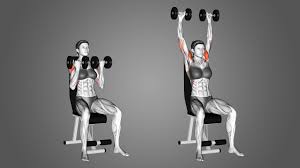
The Arnold press is one of the most iconic exercises in bodybuilding — named after Arnold Schwarzenegger himself, who used it as a key part of his legendary shoulder training. What makes it special is the rotational component: unlike a standard dumbbell shoulder press, the Arnold press takes your shoulders through a wider range of motion and hits all three heads of the deltoid in a single movement.
If you want rounder, more complete shoulder development, this is one of the best exercises you can add to your routine.
Arnold Press – Muscles Worked
One of the Arnold press’s biggest advantages is how comprehensively it hits the shoulders:
- Anterior deltoid (front) — heavily loaded at the bottom of the movement where the palms face you
- Lateral deltoid (side) — engaged through the mid-range as the dumbbells rotate outward
- Posterior deltoid (rear) — activated during the rotational phase of the press
- Triceps brachii — kicks in to extend the arms at the top of the press
- Upper trapezius — assists with overhead stability
- Serratus anterior — stabilizes the shoulder blade throughout
Compare this to a regular dumbbell press which primarily hits the anterior deltoid — the Arnold press’s rotation is what makes the difference.
How to Perform the Arnold Press
- Sit on a bench set to 90 degrees, holding a dumbbell in each hand at shoulder height. Your palms should be facing toward you (like the top of a bicep curl) and elbows pointing forward — this is your starting position.
- As you begin to press the dumbbells upward, rotate your wrists outward so that your palms gradually turn to face forward.
- By the time the dumbbells reach the top, your palms should be fully facing forward — just like the top position of a standard shoulder press.
- Lower the dumbbells back down, reversing the rotation — palms turning back toward you as they return to shoulder height.
- Repeat for your desired reps.
Pro tip: The rotation should happen gradually and smoothly throughout the entire pressing motion — not as a separate action at the start. Think of it as one continuous, flowing movement from bottom to top. The smoother the rotation, the more evenly your shoulder muscles are loaded throughout the rep.
Arnold Press – Sets & Reps
| Goal | Sets | Reps | Rest |
|---|---|---|---|
| Muscle building | 3–4 | 8–12 | 60–90 sec |
| Strength | 4 | 6–8 | 2 min |
| Endurance / pump | 3 | 15–20 | 45–60 sec |
Note: Because of the rotational component, the Arnold press is slightly more technically demanding than a standard press. Use a slightly lighter weight than you would for regular dumbbell shoulder presses, especially when learning the movement.
Arnold Press – Common Mistakes to Avoid
1. Rotating too fast at the bottom Some people spin their wrists through the rotation before they’ve even started pressing. The rotation should happen gradually as the dumbbells travel upward — not all at once at the start of the rep.
2. Going too heavy The Arnold press is not an exercise to ego-lift. The rotational mechanics require control and stability throughout — too much weight breaks down the technique and removes the benefit of the rotation entirely. Use a moderate weight and focus on the quality of the movement.
3. Arching your lower back As with any overhead pressing movement, bracing your core is essential. If your lower back is arching excessively, the weight is too heavy or your core isn’t engaged. Keep your back flat against the bench throughout.
4. Rushing the lowering phase The reverse rotation on the way down is just as important as the press up. Lowering slowly and reversing the wrist rotation under control keeps constant tension on all three delt heads throughout the full range of motion.
5. Elbows flaring too wide at the bottom At the starting position your elbows should be pointing forward, roughly in line with your torso. If they flare out to the sides right from the start, you lose the natural rotational path of the exercise.
Arnold Press vs. Standard Dumbbell Shoulder Press
Both are excellent shoulder exercises but they have different strengths:
- Arnold press — hits all three deltoid heads, greater range of motion, more technically demanding, slightly lower weight
- Standard dumbbell press — simpler movement, allows heavier loading, more anterior deltoid focused
Many lifters use both — the standard press for heavier strength work and the Arnold press for hypertrophy and complete shoulder development. They complement each other well. Check out our Barbell Shoulder Press page for the barbell overhead pressing variation.
Where It Fits in Your Workout
The Arnold press is a compound pressing movement so it belongs near the beginning of your shoulder session, either as your primary pressing exercise or right after barbell shoulder press work. Follow it up with isolation exercises like lateral raises, front raises, and rear delt work for complete shoulder development.