

Quinoa: Nutrition Facts, Health Benefits, and the Ancient Seed That’s Not Actually a Grain
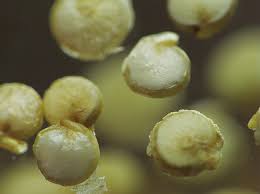
Table of Contents
Quinoa is one of the most nutritionally distinctive foods in the grain category — and it’s not technically a grain at all. It’s a seed from a plant in the same family as beets and spinach, not a true cereal grass like wheat, rice, or corn. That biological distinction explains several of its unusual nutritional properties, including a protein that contains all nine essential amino acids with more lysine than true cereal grains — which is why quinoa is so often described as a complete plant protein.
At 120 calories and 4.4g of protein per 100g cooked, alongside 27% of daily manganese, 21% of copper, 15% of magnesium, 12% of phosphorus, 11% of folate, and 2.8g of fiber — all naturally gluten-free — quinoa earns its position as a premium whole-food carbohydrate for plant-based eaters and anyone seeking a more nutritious grain alternative.
Quinoa Nutrition Facts (per 100g, cooked)
| Nutrient | Amount |
|---|---|
| Calories | 120 kcal |
| Protein | 4.4g |
| Fat | 1.9g |
| — Saturated Fat | 0.2g |
| — Monounsaturated Fat | 0.5g |
| — Polyunsaturated Fat | 1.1g |
| Carbohydrates | 21.3g |
| — Sugars | 0.9g |
| — Fiber | 2.8g |
| Cholesterol | 0mg |
| Sodium | 7mg |
USDA’s figures for quinoa cooked in water without salt.
Quinoa Nutrition Facts (per 185g serving — approximately one cup cooked)
| Nutrient | Per Cup (185g) |
|---|---|
| Calories | 222 kcal |
| Protein | 8.1g |
| Fat | 3.6g |
| Carbohydrates | 39.4g |
| — Fibre | 5.2g |
| Sodium | 13mg |
| Manganese | 1.17mg (51% DV) |
| Copper | 0.35mg (39% DV) |
| Magnesium | 118mg (28% DV) |
| Phosphorus | 281mg (22% DV) |
| Folate | 78µg (19% DV) |
| Zinc | 2.0mg (18% DV) |
| Iron | 2.8mg (15% DV) |
A single cup of cooked quinoa provides about half of daily manganese, 39% of copper, 28% of magnesium, and 8g of protein at 222 calories — making it one of the most nutritious grain alternatives available.
Vitamins in Quinoa (per 100g, cooked)
| Vitamin | Amount | % Daily Value |
|---|---|---|
| Vitamin A (RAE) | 0µg | 0% |
| Vitamin B1 (Thiamine) | 0.11mg | 9% |
| Vitamin B2 (Riboflavin) | 0.11mg | 8% |
| Vitamin B3 (Niacin) | 0.41mg | 3% |
| Vitamin B6 | 0.12mg | 7% |
| Vitamin B9 (Folate) | 42µg | 11% |
| Vitamin B12 | 0µg | 0% |
| Vitamin C | 0mg | 0% |
| Vitamin D | 0µg | 0% |
| Vitamin E | 0.63mg | 4% |
| Vitamin K | 0µg | 0% |
USDA’s data for cooked quinoa doesn’t include pantothenic acid.
Worth noting: Quinoa’s vitamin profile per 100g cooked is modest — reflecting the water it absorbs during cooking — but meaningful for a food eaten in substantial portions. Folate at 11% DV per 100g (19% per cup) is the strongest individual vitamin contribution, supporting DNA synthesis and red blood cell formation. Thiamine (9% DV) and riboflavin (8% DV) contribute to energy metabolism.
Minerals in Quinoa (per 100g, cooked)
| Mineral | Amount | % Daily Value |
|---|---|---|
| Calcium | 17mg | 1% |
| Phosphorus | 152mg | 12% |
| Magnesium | 64mg | 15% |
| Potassium | 172mg | 4% |
| Iron | 1.49mg | 8% |
| Zinc | 1.09mg | 10% |
| Selenium | 2.8µg | 5% |
| Copper | 0.19mg | 21% |
| Manganese | 0.63mg | 27% |
Standout: Manganese (27% DV per 100g, 51% per cup) is quinoa’s most impressive single mineral contribution, followed by copper (21% DV). Its magnesium (15% DV) and phosphorus (12% DV) are genuinely meaningful contributions from a grain-alternative carbohydrate, supporting bone mineralization, ATP energy production, and the 300+ enzymatic reactions that magnesium enables. Per cup, these scale to 28% and 22% DV respectively — making quinoa one of the more mineral-rich carbohydrate staples available.
Quinoa Is Not a Grain: The Biology That Explains the Nutrition
This is the single most important contextual fact about quinoa, and it explains why its nutritional profile differs from true cereal grains.
What Quinoa Actually Is
Quinoa (Chenopodium quinoa) is a flowering plant native to the Andean highlands of South America. It belongs to the family Amaranthaceae — the same botanical family as beets, spinach, and amaranth — not the Poaceae family (true grasses) that includes wheat, rice, corn, oats, and barley. The edible portion is the seed of this plant, not a kernel of a cereal grass.
Foods like quinoa, amaranth, and buckwheat — which are used and eaten like grains but do not come from cereal grasses — are called pseudo-cereals. They share the culinary uses of grains without the botanical classification.
Why This Matters Nutritionally
Better-balanced protein — true cereal grains are generally low in lysine (and sometimes threonine), which is why they’re traditionally combined with legumes. Quinoa, coming from a different plant family, has a more balanced amino acid profile with considerably more lysine — putting it, alongside soy foods such as edamame and fellow pseudo-cereals such as buckwheat and amaranth, among the plant foods most often described as complete proteins.
A moderate glycaemic index — quinoa’s GI of around 53 in published testing is moderate and lower than white rice or white bread, reflecting its fiber, protein, and fat content, which slow digestion compared with refined grains.
Naturally gluten-free — because it’s not a cereal grass, quinoa contains no gluten. Unlike oats, which are often contaminated with wheat during growing and processing, quinoa has no inherent gluten content from the plant itself.
The Complete Protein Story
This is quinoa’s most famous nutritional distinction from other grain-alternatives, and it’s worth explaining precisely what “complete protein” means and why it matters.
What Complete Protein Means
A complete protein provides all nine essential amino acids — the amino acids the body cannot make and must obtain from food — in proportions sufficient to meet human requirements. Animal proteins (meat, fish, eggs, dairy) are complete. Most plant proteins contain all nine but are relatively low in one or more of them.
Quinoa’s protein contains all nine essential amino acids, and crucially has much more lysine than wheat, rice, or corn. Lysine is the amino acid that most grains fall short on, and quinoa’s better lysine content is what earns it the complete protein reputation.
The Practical Implication
For plant-based eaters, quinoa relies less on combining than other grain carbohydrates — rice (low in lysine) and corn (low in lysine and tryptophan) benefit far more from being paired with legumes. That makes quinoa a convenient foundation for plant-based grain bowls and salads, though eating a variety of protein sources across the day is still the best strategy.
The Honest Nuance
Quinoa’s total protein content (4.4g per 100g cooked, 8.1g per cup) is modest compared to legumes, meat, or dairy, and like most plant proteins its digestibility-adjusted quality score is below that of animal proteins. Quinoa is best understood as a nutritionally superior carbohydrate with a good-quality but modest protein contribution, rather than as a primary protein source. For plant-based athletes, it works best as a protein-contributing carbohydrate base rather than a standalone protein food.
Saponins: Why You Should Rinse Quinoa Before Cooking
This is an important practical preparation fact that most quinoa cooking instructions mention without fully explaining why.
What Saponins Are
Quinoa seeds are naturally coated with saponins — a class of bitter, soap-like compounds (they literally foam when agitated in water) that the plant produces as a natural deterrent against birds and pests. Saponins have both water-attracting and fat-attracting parts, which is why they form a stable foam when quinoa is rinsed under running water.
Why They Matter for Cooking
Saponins are intensely bitter. Cooking un-rinsed quinoa can produce a noticeably unpleasant, soapy, bitter flavor that has been the source of many disappointing first quinoa experiences. The bitterness is a preparation issue, not an inherent property of the cooked seed.
Effective Rinsing Method
Place dry quinoa in a fine-mesh sieve and run cold water over it while stirring or agitating the seeds with your hand for 30–60 seconds, until the water runs clear and produces little foam. This removes most of the remaining saponin coating. Thoroughly rinsed quinoa, cooked in stock rather than water, has a pleasantly nutty, slightly earthy flavor with no bitterness.
Note on pre-rinsed quinoa: much commercial quinoa is labelled “pre-rinsed” or “pre-washed” — most of the saponins have been removed during processing, so it generally doesn’t need additional rinsing, though a quick rinse never hurts.
The Ancient History: Quinoa and the Andean Civilizations
Quinoa has been cultivated in the Andean highlands of South America — particularly in what is now Bolivia, Peru, and Ecuador — for at least 5,000 years. It was a staple food of the Inca Empire, where it is often said to have been called “chisaya mama” (mother of all grains) and held sacred; according to tradition, the Inca emperor sowed the first seeds of the season using golden tools.
Quinoa thrives in conditions that defeat most other crops — high altitude (up to around 4,000 metres above sea level), extreme temperature swings, poor soils, drought, and frost — which made it a uniquely reliable food in the challenging Andean environment. That resilience continues to drive research into quinoa as a crop for food security and climate change adaptation.
The United Nations designated 2013 as the International Year of Quinoa to highlight its nutritional properties and the traditional knowledge of the Andean farmers who preserved its cultivation over millennia.
Health Benefits of Quinoa
A Higher-Quality Protein Carbohydrate for Plant-Based Eaters
As detailed above, quinoa’s better amino acid balance makes it one of the best grain alternatives for anyone prioritizing protein quality — particularly plant-based athletes and vegetarians.
Moderate Glycaemic Index for Steadier Blood Sugar
Quinoa’s glycaemic index of around 53 — moderate, and meaningfully lower than white rice (~70–80) or white bread (~70–75) — produces a steadier blood sugar response, thanks to its fiber and the slowing effect of its protein and fat on digestion. Regular whole grain consumption is associated with better long-term blood sugar control and reduced type 2 diabetes risk in large prospective studies.
Strong Manganese and Copper
At 51% DV of manganese and 39% DV of copper per cup, quinoa is one of the more concentrated sources of both among grain alternatives. Manganese is a cofactor for bone matrix enzymes involved in collagen and cartilage synthesis, and a component of MnSOD — the mitochondrial antioxidant enzyme that protects cells from the free radicals produced by normal energy metabolism. Copper supports iron metabolism, connective tissue formation, and energy production.
Meaningful Magnesium and Phosphorus
At 28% DV magnesium and 22% DV phosphorus per cup, quinoa’s mineral profile is genuinely strong for a carbohydrate staple. Magnesium supports ATP production, muscle function, and the stress response, while phosphorus serves as both a structural bone mineral and a component of every ATP molecule in the body.
Naturally Gluten-Free
Quinoa is naturally gluten-free, making it a valuable staple for people with coeliac disease — and considerably richer in protein and minerals than rice or corn-based gluten-free staples. In USDA’s data, cooked quinoa has 4.4g of protein and 64mg of magnesium per 100g, compared with 2.7g and 12mg for cooked white rice.
Fiber for Gut Health
At 2.8g per 100g cooked (5.2g per cup), quinoa provides meaningful fiber for digestive regularity and for feeding beneficial gut bacteria, alongside the blood sugar benefits of slower starch digestion.
Antioxidant Phytochemicals
Quinoa contains the flavonoids quercetin and kaempferol, which have antioxidant and anti-inflammatory properties in laboratory research, at levels that make it one of the more antioxidant-rich grain alternatives. These compounds are concentrated in the seed’s outer layers and retained in whole quinoa, though how much benefit they provide when eaten is still being studied.
Quinoa for Athletes and Active People
A Nutrient-Dense Carbohydrate Base
For athletes who eat grain-based carbohydrates as part of their training diet, quinoa provides a similar carbohydrate energy base to rice or pasta with more protein, a better amino acid balance, far more magnesium, and a moderate GI that gives steadier energy. Per 100g cooked, quinoa has about 1.6 times the protein and more than five times the magnesium of white rice — though at 8g of protein per cup, it’s still a carbohydrate first and a protein source second.
Magnesium for Training Demands
At 28% DV magnesium per cup, quinoa contributes meaningfully to the magnesium that athletes lose through sweat, supporting ATP production, muscle function, and the nervous system regulation that recovery depends on.
Gluten-Free Athletes
For athletes with coeliac disease or confirmed gluten sensitivity who need a carbohydrate staple without gluten, quinoa is one of the most nutritious options available — considerably richer in minerals and protein than plain white rice or corn-based gluten-free alternatives.
Iron for Oxygen Transport
At 8% DV per 100g (15% per cup) in non-haem form, quinoa contributes to iron intake for plant-based athletes, particularly when eaten alongside Vitamin C-rich foods at the same meal.
Different Quinoa Varieties
Quinoa is sold in several color varieties with subtle differences:
White quinoa — the most widely available. Mildest flavor, lightest texture. The nutritional data on this page is for quinoa in general, which is most often white.
Red quinoa — slightly firmer texture that holds its structure better in salads and cold dishes. Its color comes from betalains — the same family of pigments that colors beetroot — which have antioxidant activity. Nuttier, slightly more complex flavor.
Black quinoa — earthier, more robust flavor and firmer texture. Studies comparing varieties have generally found darker quinoa to be richer in pigments and other polyphenols. Slightly longer cooking time.
Tri-color quinoa — a commercial blend of all three varieties, providing visual variety and a combination of their respective flavor and texture profiles.
All varieties share the same fundamental nutritional profile — the differences are primarily texture, flavor, and pigment content rather than major differences in nutrition.
Cooking Quinoa Properly
Properly prepared quinoa has a pleasant nutty flavor and a distinctive texture — each seed shows a tiny white “tail” (the germ, which separates and curls out during cooking). Poorly prepared quinoa is bland, soggy, or bitter.
The basic method:
- Rinse thoroughly in a fine-mesh sieve (see the saponin section above)
- Combine 1 cup dry quinoa with 1.75–2 cups liquid (stock produces far better flavor than plain water)
- Bring to a boil, then reduce to a low simmer
- Cover and cook for 12–15 minutes until the liquid is absorbed and the germ has curled out
- Remove from heat and rest covered for 5 minutes
- Fluff with a fork
Common mistakes:
- Not rinsing (produces bitter flavor)
- Using plain water instead of stock (produces bland flavor)
- Overcooking (produces mushy texture)
- Not resting after cooking (reduces fluffiness)
Cooked quinoa keeps in the refrigerator for 3–5 days, making it an excellent meal prep base that can be quickly reheated or used cold across multiple meals through the week.
Practical Ways to Include Quinoa in Your Diet
As a grain bowl base — cold or warm quinoa as the foundation for bowls with vegetables, a protein source, and a dressing; its extra protein and fiber make it more filling than white rice in this role.
In salads — cooled quinoa holds its texture well in salads, adding substance and protein alongside the vegetables. Works particularly well in Mediterranean-style salads with cucumber, tomato, and lemon dressing.
As a rice substitute — in most dishes where rice would be used, quinoa can substitute directly, adding more protein and minerals to stir-fries, curries, and soups.
Breakfast porridge — cooked in milk with cinnamon, fruit, and a small amount of honey; a slightly higher-protein alternative to oatmeal.
Stuffed vegetables — quinoa mixed with vegetables and herbs as a filling for bell peppers, tomatoes, or courgettes; add beans, cheese, or another protein source for a complete one-dish meal.
Added to soups and stews — quinoa absorbs liquid and adds body to soups, while increasing their protein and mineral content.
Potential Considerations
Rinse before cooking — as detailed above, this removes bitter saponins and transforms the eating experience; essential for unwashed quinoa.
Saponin sensitivity — a small number of people find quinoa causes digestive discomfort even after rinsing. Pre-rinsed commercial products, or soaking before cooking, may help.
Phytic acid — quinoa contains phytic acid, which reduces mineral absorption somewhat. Soaking for a while before cooking (and discarding the soaking water before rinsing) modestly reduces it beyond what rinsing alone achieves.
Coeliac disease and cross-contamination — while quinoa is naturally gluten-free, some processing facilities also handle gluten-containing grains. People with coeliac disease should choose products certified gluten-free to rule out cross-contamination.
Higher cost than rice or pasta — quinoa typically costs significantly more than conventional grain carbohydrates, which may make it more of an occasional premium choice than an everyday staple for some budgets.
Nutrient data: USDA FoodData Central, SR Legacy — quinoa, cooked (FDC ID 168917); white rice comparison from FDC ID 168878. % Daily Values use the FDA’s current Daily Values.