

Lysine
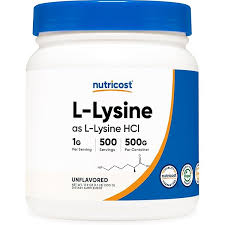
Table of Contents
Lysine is an essential amino acid with an unusual side chain: a long carbon chain ending in a second amino group (the epsilon-amino group). Lysine isn’t broken down by the standard route most amino acids use, and — along with leucine — it’s one of only two amino acids that are purely ketogenic, meaning it can’t be used to make glucose. Lysine’s most distinctive roles are structural: its side chains form the cross-links that give collagen its strength, and it provides the backbone, together with methionine, for the body’s own production of carnitine. Lysine is also the amino acid most often in short supply in cereal grains, which is why it matters for diets built mainly on wheat, maize, and similar grains — and why combining grains with legumes has such a solid nutritional basis.
Classification
- Type: Essential amino acid (EAA) — can’t be made by the body; must come from the diet
- Side chain: A long chain ending in an epsilon-amino group, positively charged at physiological pH — one of the three basic amino acids, along with arginine and histidine
- Metabolism: Purely ketogenic — instead of the usual transamination, lysine is broken down mainly through the saccharopine pathway into acetyl-CoA, which can be used for energy or ketones but not to make glucose. Leucine is the only other purely ketogenic amino acid.
- Limiting amino acid: The first limiting amino acid in wheat, maize, and many other cereals — making it the main factor in the protein quality of grain-based diets
Key Mechanisms
Collagen cross-linking:
Collagen is the most abundant protein in the body, and its remarkable strength depends not just on its triple-helix structure but on covalent cross-links between neighboring collagen molecules — which are built from lysine.
The process:
- Lysyl hydroxylase, which needs vitamin C and iron, converts some lysine units in newly made collagen chains into hydroxylysine. A related enzyme, prolyl hydroxylase, does the same for proline — and when vitamin C is lacking, the failure of these hydroxylation steps, especially proline’s, produces the weak collagen of scurvy.
- Glycosylation: some hydroxylysine units have sugar groups attached, which helps organize collagen outside the cell.
- Lysyl oxidase, which needs copper, converts lysine and hydroxylysine units at the ends of collagen molecules into reactive aldehyde forms.
- These aldehydes react with neighboring lysine and hydroxylysine units to form stable cross-links, such as pyridinoline and deoxypyridinoline, that lock collagen molecules together into strong fibers.
These cross-links give tendons, ligaments, bone, cartilage, and skin their mechanical strength. Without them, collagen molecules still form, but they can’t bond into load-bearing fibers. That’s why vitamin C and copper — as well as protein — are needed for strong connective tissue. (Fragments of these cross-links released when bone is broken down are measured in urine as markers of bone turnover.)
Carnitine production:
The body makes its own carnitine from lysine and methionine:
- Lysine units within certain proteins receive three methyl groups from S-adenosylmethionine (SAM, made from methionine), forming trimethyllysine, which is released when those proteins are broken down
- Four further steps — which need vitamin C, iron, vitamin B6, and NAD⁺ (made from vitamin B3) — convert trimethyllysine into L-carnitine
- Carnitine carries long-chain fatty acids into the mitochondria to be burned for energy
Most dietary carnitine comes from red meat, so people who eat little or no meat rely more on making their own. Vegetarians tend to have somewhat lower carnitine levels, but the body’s own production normally meets its needs, and there’s no clear evidence that this affects fat burning or performance in healthy people.
Calcium absorption — limited evidence:
Two small studies from the early 1990s found that lysine supplements slightly increased calcium absorption and reduced calcium loss in urine. These findings are interesting, but they haven’t been followed by trials on bone density or fractures, so lysine can’t be considered a bone-health supplement.
Histone modification — an epigenetic role:
Histones are the proteins that DNA wraps around in the nucleus. Lysine units in histones are key sites for chemical tags — acetyl groups, methyl groups, and others — that help switch genes on or off. Adding acetyl groups to histone lysines generally loosens DNA packaging and activates genes, while methyl groups can activate or silence genes depending on their position. This role uses lysine units already built into histone proteins, so it doesn’t depend on how much lysine you eat.
Lysine, arginine, and herpes simplex:
Lysine and arginine share transporters for absorption from the gut and entry into cells. In laboratory studies, the herpes simplex virus (HSV) depends on arginine to replicate, and lysine interferes with this — the basis for using lysine to prevent cold sores.
The clinical evidence is limited and inconsistent. Some small trials from the 1980s found fewer outbreaks with about 1–3g of lysine a day, while doses below about 1g a day showed no benefit, and other trials found no effect. Reviews, including a Cochrane review on preventing cold sores, have rated the evidence as low quality. Lysine is safe to try at these doses, but antiviral medicines are the proven treatment for frequent or severe outbreaks. Cutting back on arginine-rich foods, such as nuts, seeds, and chocolate, during outbreaks is often suggested, but this hasn’t been properly tested.
The limiting amino acid in grains:
Measured against the World Health Organization’s reference for adults (45mg of lysine per gram of protein), USDA data show that the protein in white wheat flour and pasta provides only about half the lysine needed, whole wheat and cornmeal about 60%, and millet and sorghum less than half. Rice and barley do better, at about 80%, while oats, buckwheat, and quinoa meet or exceed the reference. When lysine is the limiting amino acid, the body can only use the protein to the extent that lysine allows — which is why protein quality scores such as PDCAAS and DIAAS, which compare a food’s amino acids against human requirements, rate wheat and maize protein relatively low, with lysine as the limiting factor.
This is the basis of protein complementation: legumes (lentils, chickpeas, beans, soy) are rich in lysine — about 1.5 times the reference — but relatively low in the sulfur amino acids, while grains are the reverse. Together, they provide a complete amino acid profile. They don’t need to be eaten at the same meal; eating both over the course of the day works.
Recommended Intake
| Group | Estimated Requirement |
|---|---|
| Adults — US recommendation (RDA) | 38mg per kg of body weight per day (about 2.7g a day for a 70kg person) |
| Adults — World Health Organization estimate | 30mg per kg per day (about 2.1g a day for a 70kg person) |
| Children | Higher relative to body weight; important for growth |
| Athletes eating 1.6–2.2g of protein per kg from varied sources | Roughly 8–14g a day from food — several times the requirement |
| Cold sore prevention (supplements) | About 1–3g a day of L-lysine has been studied, with mixed results |
Lysine has one of the higher requirements of the essential amino acids (second only to leucine), and it’s the one most likely to fall short in diets built mainly on cereals.
Found In (per 100g)
| Food | Lysine | Lysine (% of protein) |
|---|---|---|
| Parmesan cheese (hard) | 3.31g | 9.2% |
| Turkey breast (roasted) | 3.04g | 10.3% |
| Chicken breast (roasted) | 2.64g | 8.5% |
| Tuna, yellowfin (fresh, cooked) | 2.57g | 8.8% |
| Pork chop (broiled) | 2.47g | 9.3% |
| Sardines (canned in oil) | 2.26g | 9.2% |
| Beef (ground, 80% lean, cooked) | 2.13g | 8.3% |
| Salmon (Atlantic, farmed, cooked) | 2.03g | 9.2% |
| Tuna (light, canned in water)* | 1.71g | 8.8% |
| Pumpkin seeds* | 1.24g | 4.1% |
| Peanuts (raw)* | 0.93g | 3.6% |
| Egg (hard-boiled) | 0.90g | 7.2% |
| Tofu (firm) | 0.88g | 5.1% |
| Cottage cheese (low-fat)* | 0.88g | 8.4% |
| Edamame (cooked) | 0.75g | 6.3% |
| Oats (dry) | 0.64g | 4.8% |
| Lentils (cooked) | 0.63g | 7.0% |
| Black beans (cooked) | 0.61g | 6.9% |
| Chickpeas (cooked) | 0.59g | 6.7% |
| Quinoa (cooked) | 0.24g | 5.4% |
| White rice (cooked) | 0.10g | 3.6% |
The “% of protein” column shows lysine’s pattern clearly: meat, fish, and dairy proteins are about 8–10% lysine, and legumes about 7%, while nuts, seeds, and most grains are much lower — peanuts and pumpkin seeds provide only about 4%. Soy foods sit in between. So legumes, not nuts and seeds, are the key lysine sources in plant-based diets.
Processing matters too: lysine is the amino acid most damaged by heat processing. Its free epsilon-amino group reacts with sugars during heating and browning (the Maillard reaction), which locks up some of the lysine so the body can’t use it. This happens in toasted breakfast cereals, baked goods, and heated milk powders, for example — another reason grain-based processed foods are relatively poor lysine sources.
Helps With
- Collagen cross-linking and connective tissue strength, via lysyl hydroxylase and lysyl oxidase
- Making carnitine, which carries fatty acids into the mitochondria to be burned for energy
- Gene regulation, through chemical tags on lysine units in histone proteins
- Immune function and antibody production, as a building block of immune proteins
- Growth and development — lysine is especially important in childhood
- Wound healing, through collagen formation
- Protein quality in plant-based and grain-heavy diets — the key limiting factor
- Possibly reducing cold sore outbreaks, although the evidence is mixed
Lysine for Athletes and Active People
Lysine’s relevance to athletes is mainly structural rather than signalling — it doesn’t trigger muscle protein synthesis the way leucine does, but it’s essential for building the tissues that handle mechanical load. Like the other essential amino acids, it’s covered by eating enough varied protein.
Tendons and ligaments: the strength of tendons and ligaments depends on lysine-based collagen cross-links, and tendon collagen turns over far more slowly than muscle protein. Adequate protein — along with vitamin C and copper for the hydroxylation and cross-linking steps — supports the slow remodeling that lets connective tissue adapt to training. Dietary lysine is rarely the limiting factor for athletes eating varied protein.
Gelatin and vitamin C before training: in a well-known study, taking about 15g of gelatin with about 50mg of vitamin C an hour before a short bout of exercise doubled a blood marker of collagen production. Gelatin and collagen supplements are rich in glycine, proline, and hydroxyproline, with smaller amounts of lysine. The approach is promising for tendon and ligament health, but long-term evidence on injury rates and tendon strength is still limited. See our vitamin C page for details.
Plant-based athletes: the main lysine consideration for athletes is diet composition. Athletes who eat little animal protein and rely heavily on bread, pasta, and other wheat- or corn-based foods can end up short of lysine even when total protein looks adequate. Including legumes or soy foods daily — chickpeas with pasta, lentils with rice, beans in a wrap — fixes this easily. Athletes eating meat, fish, eggs, or dairy get plenty of lysine.
Carnitine: athletes who eat little meat get less carnitine from food and rely on making it from lysine and methionine. This normally works well, and there’s no evidence that plant-based athletes need lysine or carnitine supplements for fat burning or performance.
Lysine Deficiency
Low lysine intake is more likely in:
- People eating mostly cereal-based diets with few legumes or animal foods — the main global cause, in populations that rely heavily on wheat, maize, millet, or sorghum
- Vegans eating diets high in grains and low in legumes and soy
- Children in low-income settings — some trials have found that adding lysine to wheat flour improved growth or other health markers in children eating wheat-based diets, though results have been mixed
- People with malabsorption conditions
- People with lysinuric protein intolerance — a rare inherited disorder in which lysine, arginine, and ornithine are poorly absorbed from the gut and lost in the urine, causing low lysine levels and high ammonia after protein-rich meals
Signs of inadequate lysine (and protein) intake:
- Poor growth in children
- Muscle loss and negative nitrogen balance
- Poor wound healing
- Weakened immunity
- Fatigue
An isolated lysine deficiency with its own specific symptoms is rarely seen; in practice, low lysine intake shows up as the effects of poor-quality protein, especially on growth.
Excessive Doses of Lysine
No Tolerable Upper Intake Level has been established. L-lysine is generally well tolerated at the doses used for cold sores (1–3g a day), and a 2019 review of safety data concluded that intakes up to about 6g a day appear safe for adults.
Possible effects of high supplemental doses:
- Digestive discomfort: nausea, stomach cramps, and diarrhea, particularly at doses well above 6g a day
- Competition with arginine: very high lysine intakes can reduce arginine uptake through the shared transporters — the same mechanism proposed for cold sores. At typical doses, this isn’t a concern for healthy people, and its effect on nitric oxide production is theoretical.
Lysinuric protein intolerance: people with this rare disorder need specialist management — usually a protein-restricted diet with citrulline supplements, and sometimes carefully controlled lysine supplements. General supplement advice doesn’t apply.
Types and Forms
- L-Lysine HCl (hydrochloride): the most common supplement form — stable, well absorbed, and inexpensive. About 80% lysine by weight.
- L-Lysine (free base): less common; equally well absorbed.
- Other lysine salts (acetate, aspartate): used in some pharmaceutical products.
- Lysine-enriched plant protein: some manufacturers add L-lysine to grain-based protein powders (such as rice or wheat protein) to improve their amino acid profile. Soy and pea protein are naturally higher in lysine.
- Carnitine supplements: not lysine itself, but the end product of the lysine–methionine pathway. Carnitine supplements haven’t shown consistent performance benefits in healthy athletes, and gut bacteria can convert carnitine into TMAO, a compound that has been linked with heart disease risk in some studies.
Which form for your goal:
| Goal | Best form |
|---|---|
| Cold sore prevention | L-lysine HCl, about 1–3g a day (mixed evidence) — antivirals are the proven treatment |
| Collagen and connective tissue | Adequate protein, vitamin C, and copper; gelatin with vitamin C before training is an option |
| Plant-based diet protein quality | Legumes or soy foods daily |
| Carnitine | No supplement needed — the body makes its own from lysine and methionine |
| General needs | Varied protein foods, easily reaching the daily requirement |
How to Take Lysine
Through food: any diet with adequate animal protein, or plant proteins that include legumes or soy, provides more than enough lysine. For plant-based diets, the simple rule is to include at least one legume or soy food every day.
For cold sores: if you want to try lysine, studies have used about 1–3g of L-lysine a day, with doses below 1g a day showing no benefit. Take it with food. If outbreaks are frequent or severe, talk to a doctor about antiviral medicines, which are much better proven.
For connective tissue: focus on adequate protein, vitamin C, and copper. If you use gelatin or collagen before training, it supplies lysine along with glycine and proline, so a separate lysine supplement isn’t needed.
If you also take arginine: lysine and arginine compete for absorption, so if you take both as supplements, take them at different times.
Interactions
Vitamin C is needed for lysyl hydroxylase (and prolyl hydroxylase) in collagen formation. Copper is needed for lysyl oxidase, which starts the cross-linking reaction. Methionine provides the methyl groups (via SAM) for carnitine production, and vitamin C, iron, vitamin B6, and niacin are needed for the later steps. Lysine and arginine compete for absorption and cell uptake through shared transporters, so very high intakes of one reduce uptake of the other.
Synergy
- Works with vitamin C and copper in collagen cross-linking — vitamin C for hydroxylation, copper for oxidation, and lysine as the raw material for both.
- Works with methionine and several B vitamins, vitamin C, and iron to make carnitine.
- Works with proline and glycine in collagen — glycine and proline form the triple helix, while lysine provides the cross-linking sites.
- Complements cereal proteins — the lysine in legumes makes up for the lysine shortfall in grains.
Antagonistic Interactions
Cereal-heavy diets with few legumes or animal foods can leave lysine short, even when total protein intake looks adequate.
Arginine competes with lysine at shared transporters in the gut and cells — the basis of the cold sore strategy, and a reason to separate supplements of the two.
Heat processing and browning reduce the amount of usable lysine in foods, through the Maillard reaction.
In lysinuric protein intolerance, lysine absorption is impaired and protein intake must be managed by specialists.
Food values: USDA FoodData Central, SR Legacy — parmesan, hard (FDC ID 170848); turkey breast, roasted (174516); chicken breast, roasted (171477); yellowfin tuna, cooked (172006); pork top loin chop, broiled (167841); sardines, canned in oil (175139); ground beef, 80% lean, cooked (171797); Atlantic salmon, farmed, cooked (175168); light tuna, canned in water (173709)*; pumpkin and squash seed kernels, dried (170556)*; peanuts, raw (172430)*; egg, hard-boiled (173424); tofu, firm, calcium-set (172475); cottage cheese, low-fat, 2% (172182)*; edamame, frozen, prepared (168411); oats, dry (173904); lentils, cooked (172421); black beans, cooked (173735); chickpeas, cooked (173757); quinoa, cooked (168917); white rice, cooked (168878). * SR Legacy values used as fill-ins for the Foundation Foods entries for canned light tuna (334194), pumpkin seeds (2515380), peanuts (2515376), and cottage cheese (328841), whose amino acid data aren’t included in our tracker. Cereal comparisons use SR Legacy data for wheat flours, pasta, cornmeal, millet, sorghum, rice, barley, oats, buckwheat, and quinoa. Lysine as % of protein is calculated from the same USDA records. Requirements from the US National Academies and the World Health Organization (2007).