

Chin-Ups: How To, Muscles Worked & Common Mistakes
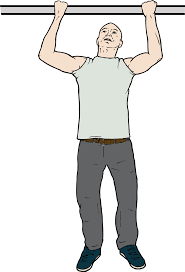
Table of Contents
Chin-ups are one of the best compound exercises you can do for building your back and your biceps at the same time — and unlike most biceps exercises, they let you work with your full body weight, making them a highly effective upper-body builder. The underhand grip is what makes chin-ups special: it puts your biceps in a mechanically strong position throughout the movement, giving them more work than pull-ups do.
If you want bigger biceps and a stronger back at the same time, chin-ups are one of the most efficient exercises you can do.
Chin-Ups vs. Pull-Ups
These two exercises look almost identical, but the grip makes a real difference:
- Chin-ups — underhand grip (palms facing you), shoulder-width or slightly narrower, with more biceps involvement; many people find them slightly easier
- Pull-ups — overhand grip (palms facing away), usually a little wider, with less biceps involvement and a little more work for the lower traps
Studies comparing the two find your lats work about equally hard in both, so both are excellent exercises that complement each other well. The chin-up lives in the biceps section because of the extra biceps work it provides — but it’s equally at home on back day. Check out our Pull-Ups page for the overhand version.
Muscles Worked
Primary muscles:
- Biceps brachii — more involved than in pull-ups, thanks to the underhand grip, making chin-ups one of the best compound biceps exercises
- Latissimus dorsi — the large back muscle that drives the pulling motion, worked hard throughout
Secondary muscles:
- Teres major — assists the lats throughout the pull
- Rhomboids — squeezed together at the top of each rep
- Trapezius (middle and lower) — stabilize your shoulder blades and pull them down and back
- Rear deltoids — assist throughout the pull
- Core — works continuously to keep your body stable and stop it swinging
How to Perform Chin-Ups
- Grab a pull-up bar with an underhand grip (palms facing toward you), hands roughly shoulder-width apart or slightly narrower.
- Hang at full arm extension — a dead hang. Let your shoulder blades spread and your lats stretch at the bottom.
- Before pulling, draw your shoulder blades down and slightly back. This gets your lats working from the start and puts your shoulders in a strong, stable position.
- Pull yourself up by driving your elbows down toward your hips, keeping them fairly close to your body throughout.
- Keep pulling until your chin clears the bar. If you’re strong enough, you can pull higher — until your upper chest reaches the bar — for an extra-long range of motion.
- Lower yourself slowly and under complete control back to the dead hang position, fully straightening your arms at the bottom.
- Repeat for your desired number of reps.
Pro tip: Think about pulling your elbows toward your hips rather than pulling your hands toward your shoulders. This cue gets your lats and biceps working together and stops you from turning the movement into a pure arms exercise.
Sets & Reps
| Level | Sets | Reps | Rest |
|---|---|---|---|
| Beginner | 2–3 | 1–5 | 2–3 min |
| Intermediate | 3–4 | 6–10 | 2–3 min |
| Advanced | 4–5 | 12–15+ | 2–3 min |
Can’t do a chin-up yet? The progressions section below will get you there.
Common Mistakes to Avoid
1. Not starting from a dead hang Every rep should start from full arm extension. Cutting the range of motion short at the bottom reduces the lat stretch and biceps work that make chin-ups so effective. Always start from a full dead hang.
2. Grip too wide Unlike pull-ups, where a wider grip is common, chin-ups work best at shoulder width or slightly narrower. Going too wide with an underhand grip twists your wrists into an awkward position that causes discomfort and puts your biceps in a weaker position.
3. Swinging your body Using momentum to swing yourself up takes work away from your back and biceps. Keep your body as still as possible — if you’re swinging, slow down or do fewer reps per set.
4. Cutting reps short at the top Getting your chin over the bar is a complete rep — but stopping short of that means you’re missing part of the movement. As you get stronger, pulling higher, until your upper chest reaches the bar, adds range of motion and makes each rep more challenging.
5. Dropping too fast The lowering phase matters — your biceps and lats are working hard all the way down. Lower yourself over 2–3 seconds on every rep rather than dropping back to the bottom.
Progressions for Beginners
Can’t do a chin-up yet? Here’s how to build up to one:
- Dead hangs — hang from the bar for time to build grip strength and shoulder stability
- Scapular pulls — from a dead hang, draw your shoulder blades down and back without bending your elbows. This builds the first part of the pull
- Resistance band assisted chin-ups — loop a band around the bar and under your knees or feet to reduce the load
- Assisted chin-up machine — a counterweighted machine that lets you practice the full movement with less than your full body weight
- Negative chin-ups — jump or step up to the top position and lower yourself as slowly as you can. One of the most effective ways to build chin-up strength
The reverse grip lat pulldown — essentially a chin-up on a cable machine — is another great way to build the strength you need, since it lets you choose exactly how much weight you lift.
Making Chin-Ups Harder
Once bodyweight chin-ups feel manageable, here’s how to keep progressing:
- Weighted chin-ups — add a weight plate using a dip belt, or hold a dumbbell between your feet
- Slow negatives — take 5–10 seconds to lower yourself on every rep for a much tougher lowering phase
- L-sit chin-ups — your legs are held out straight in front of you throughout, which massively increases the demand on your core
Where it Fits in Your Workout
Chin-ups are a compound movement and fit comfortably on both back day and arm day. On back day, they complement pull-ups and rowing movements perfectly. On arm day, they make a powerful compound opener before your isolation curls — just expect your curl weights to drop a little afterward, since your biceps will already have done a lot of work. Either way, do them early in the session, when you’re fresh. For complete plans, see our guides to the best biceps exercises and back exercises.