

Ingredients to Avoid: What to Watch Out For on the Label
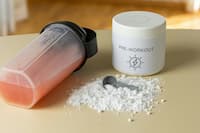
Ingredients to Avoid
The pre-workout supplement market is one of the most aggressively marketed categories in sports nutrition — and unfortunately one of the least regulated. While many products are formulated responsibly with evidence-backed ingredients at effective doses, others contain compounds that are ineffective, overhyped, potentially harmful, or outright dangerous.
Knowing what to avoid is just as important as knowing what to look for. This page covers the ingredients, formulation practices, and label red flags that should make you put a pre-workout product back on the shelf.
For a complete overview of what makes a good pre-workout including effective ingredients and doses, visit our pre-workout hub.
The Biggest Red Flag: Proprietary Blends
Before looking at individual ingredients, the single most important thing to check on any pre-workout label is whether the product uses a proprietary blend.
A proprietary blend lists multiple ingredients grouped under a single combined weight — for example “Performance Matrix: 8,000mg” — with the individual doses of each ingredient not disclosed. This practice is legal but deeply problematic for consumers:
You cannot verify whether any ingredient is dosed effectively. A product could list 10 impressive ingredients under a 5,000mg blend — with each ingredient present at only 500mg or less — and look comprehensive on paper while delivering virtually nothing of value.
Manufacturers exploit consumer ingredient recognition. Seeing caffeine, beta-alanine, and citrulline on a label creates the impression of a well-formulated product — even if each is present at a fraction of its effective dose.
You cannot make informed decisions about stacking. If you’re taking separate supplements, you can’t know whether you’re duplicating ingredients or reaching effective doses.
The rule is simple: Never buy a pre-workout that uses proprietary blends. Full transparency — every ingredient listed with its individual dose — is the minimum standard for a product worth your money.
Dangerous Ingredients to Avoid Completely
DMAA (1,3-Dimethylamylamine)
DMAA is a powerful stimulant that was widely used in pre-workout supplements in the late 2000s and early 2010s — often marketed under names like geranium extract, geranamine, or methylhexanamine to obscure its identity.
It has since been banned by the FDA, Health Canada, the European Food Safety Authority, and multiple other regulatory bodies after being linked to serious adverse cardiovascular events including heart attacks, strokes, haemorrhagic stroke, and deaths. Several military personnel and civilian athletes died following DMAA use.
Despite its banned status, DMAA still appears in some products — particularly those sold through less regulated online channels. Avoid any product containing DMAA, 1,3-DMAA, geranium extract, geranamine, or methylhexanamine in any amount.
DMHA (2-Aminoisoheptane / Octodrine)
DMHA is effectively DMAA’s replacement — a structurally similar stimulant that emerged after DMAA was banned. Like DMAA it produces powerful stimulant effects but carries significant cardiovascular risks. It has been banned or restricted in several countries including Australia and Canada and is considered an adulterated ingredient by the FDA.
Look out for it listed as: 2-aminoisoheptane, octodrine, 2-amino-6-methylheptane, DMHA, or juglans regia extract (walnut extract). Avoid completely.
DMBA (1,3-Dimethylbutylamine / AMP Citrate)
Another DMAA analogue — DMBA appeared in products after regulatory crackdowns on DMAA and DMHA. It carries similar cardiovascular risks and has been flagged by the FDA as an adulterated supplement ingredient. Listed as: DMBA, AMP citrate, 4-amino-2-methylpentane citrate, or pouchong tea extract. Avoid completely.
Ephedrine and Ephedra
Ephedrine — the active compound in ephedra — was one of the most effective fat-burning and performance-enhancing compounds ever used in supplements. It was also linked to numerous deaths and serious cardiovascular events, leading to an FDA ban on ephedrine-containing dietary supplements in 2004.
Legitimate ephedrine is unavailable in most dietary supplements in regulated markets, but some products marketed as “ephedra” may still contain ephedra alkaloids. Avoid any product claiming to contain ephedrine or ephedra alkaloids.
Synephrine at Very High Doses
Synephrine is a stimulant derived from bitter orange (Citrus aurantium) that was widely used as an ephedrine replacement after the ephedra ban. At moderate doses (10–20mg) synephrine has a modest fat-burning effect with an acceptable safety profile. At very high doses (above 50mg) or in combination with caffeine and other stimulants, synephrine has been associated with cardiovascular adverse events.
Many pre-workout products stack synephrine with caffeine and other stimulants at doses that push into the concerning range. Check the synephrine dose — avoid products with more than 20–30mg of synephrine, particularly when combined with high caffeine doses.
Yohimbine at High Doses
Yohimbine is an alpha-2 adrenergic receptor antagonist derived from the bark of the yohimbe tree. At low doses (2–5mg) it has modest evidence for fat loss and some evidence for performance enhancement. At higher doses — which many pre-workouts contain — yohimbine commonly causes anxiety, elevated heart rate, elevated blood pressure, panic attacks, and gastrointestinal distress.
People with anxiety disorders are particularly sensitive to yohimbine’s anxiogenic effects. If yohimbine is present in a pre-workout, verify the dose is below 5mg. Avoid products that don’t disclose the yohimbine dose due to proprietary blend usage.
Ineffective Ingredients Used for Marketing
These ingredients aren’t necessarily dangerous but have insufficient evidence to justify their inclusion — and their presence is often used to justify premium pricing without delivering additional performance benefit.
Proprietary “Energy Blends” and “Focus Matrices”
Vague blend names like “Neuro Ignition Complex,” “Cognitive Performance Matrix,” or “Energy Amplification System” are marketing constructs rather than evidence-based formulations. They typically contain a collection of ingredients in undisclosed doses — often including one or two legitimate compounds like tyrosine alongside several less-evidenced additions.
The issue: These blend names cannot be evaluated. Without individual doses, you cannot determine whether the legitimate ingredients are present at effective amounts or whether the exotic-sounding additions do anything at all.
Arginine (Standard Forms)
As covered in our citrulline page, standard arginine has poor oral bioavailability — it’s extensively broken down in the gut before reaching circulation. L-arginine in pre-workout formulations is largely ineffective at raising blood arginine or nitric oxide levels.
Citrulline is the evidence-backed alternative that actually delivers the intended nitric oxide production. Products still using standard arginine as their primary pump ingredient are behind the evidence by over a decade.
Exception: Inositol-stabilised arginine silicate (Nitrosigine) is a patented arginine form with significantly better bioavailability and evidence of performance benefit at 1.5g — a legitimate arginine-based ingredient. Standard L-arginine is not equivalent.
Proprietary Amino Acid Blends
Many pre-workouts contain a “BCAA complex” or “amino acid matrix” — typically providing a gram or two of combined branched-chain amino acids. While BCAAs have some utility in specific contexts (fasted training, extremely high training volumes), the doses found in pre-workout products are generally too small to be meaningful and their inclusion is primarily cosmetic.
Raspberry Ketones
Raspberry ketones became popular in fat-burning supplements after being featured on television programmes as a fat loss solution. The evidence base consists primarily of animal and in vitro studies — controlled human trials showing meaningful fat loss effects do not exist. Raspberry ketones in pre-workout are essentially flavour marketing.
African Mango Extract
Another weight loss ingredient popularised by television promotion rather than evidence. Human trials show modest and inconsistent effects on body weight — far too small to meaningfully contribute to a pre-workout’s performance profile. Present for label appeal rather than performance benefit.
CLA (Conjugated Linoleic Acid)
CLA has some evidence for modest effects on body composition in longer-term supplementation studies — but these effects take weeks to months to manifest and are not relevant to acute pre-workout performance. Including CLA in a pre-workout product is a category error — it has no acute ergogenic effect.
Exotic Herb and Botanical Extracts at Undisclosed Doses
The trend of including obscure plant extracts — ashwagandha root extract at 50mg, lion’s mane mushroom at 100mg, rhodiola rosea at 75mg — is a double problem. First, most of these adaptogens have some evidence for beneficial effects but require significantly higher doses than typically found in pre-workouts (ashwagandha requires 300–600mg daily for stress reduction effects; 50mg is essentially homeopathic). Second, their inclusion is rarely disclosed with individual doses — they appear in proprietary blends where their actual presence cannot be verified.
The distinction: Some adaptogens like ashwagandha have genuine evidence for performance benefits at effective doses — but those doses are rarely found in pre-workout products. Seeing an exotic plant extract on a label is not a quality signal unless the dose is disclosed and evidence-based.
Problematic Formulation Practices
Beyond specific ingredients, certain formulation approaches are worth avoiding regardless of the individual ingredients involved.
Excessive Total Stimulant Load
Some pre-workout products combine caffeine with multiple other stimulants — synephrine, yohimbine, DMHA, theacrine, hordenine — creating a total stimulant load that can be genuinely dangerous regardless of whether each individual stimulant is technically within a safe dose range.
The cardiovascular effects of stimulants are additive — combining caffeine with synephrine and yohimbine at moderate individual doses can produce heart rate and blood pressure elevations that exceed what any single stimulant at the same dose would cause.
Check the total stimulant count. More than two stimulants in a single product is a yellow flag. Three or more — particularly when doses are hidden in a proprietary blend — is a red flag.
Megadose Formulations
Products containing 400mg+ of caffeine per serving, 8g+ of beta-alanine per serving, or other ingredients at extreme doses carry unnecessary risk for most users. While some experienced athletes may tolerate higher doses, products designed around extreme doses rather than effective doses prioritise marketing (stronger = better in consumer perception) over user safety.
The effective dose is what matters — not the highest tolerable dose. Products that market “ultra-strong” formulations with extreme doses of stimulants are not more effective within the evidence-based dosing range and carry meaningfully greater risk of adverse effects.
Excessive Artificial Additives
While not dangerous, products with extremely long additive lists — multiple artificial dyes, synthetic flavour compounds, emulsifiers, thickeners, anti-caking agents, and preservatives — contain significantly more non-performance-relevant chemistry than necessary. Cleaner formulations with fewer additives are preferable from a minimal unnecessary exposure standpoint.
Label Red Flags: A Quick Checklist
Use this checklist when evaluating any pre-workout product:
❌ Proprietary blend — individual doses not disclosed
❌ DMAA, DMHA, DMBA — dangerous stimulants
❌ Ephedrine or ephedra alkaloids — banned and dangerous
❌ Synephrine above 30mg — particularly in combination with other stimulants
❌ Yohimbine without disclosed dose — risk of anxiety and cardiovascular effects
❌ More than two stimulants combined — additive cardiovascular risk
❌ Caffeine above 400mg per serving — beyond the effective performance range, increases adverse effect risk
❌ Standard L-arginine as primary pump ingredient — poor bioavailability, citrulline is evidence-based alternative
❌ Vague blend names — “Energy Matrix,” “Cognitive Complex” — marketing language rather than transparent formulation
❌ No third-party testing certification — for competitive athletes, particularly important; Informed Sport or NSF certification is the standard
What Good Labels Look Like
For contrast, here’s what a well-formulated, transparently labelled pre-workout should look like:
✅ Every ingredient listed with individual dose
✅ Caffeine anhydrous: 150–300mg — within the effective and well-tolerated range
✅ Beta-alanine: 3.2g+ — effective dose for carnosine elevation
✅ L-citrulline: 6g+ or citrulline malate: 8g+ — effective dose for nitric oxide production
✅ L-theanine: 200–400mg — smooths caffeine effect, improves focus quality
✅ Betaine: 2.5g — evidence-backed ergogenic at this dose
✅ Third-party testing certification — Informed Sport or NSF Certified for Sport
✅ Minimal artificial additives
✅ No exotic underdosed ingredients used for label appeal
For honest reviews of specific products evaluated against these criteria, see our best pre-workout supplements roundup.
A Note on Regulatory Oversight
The supplement industry in most countries — including the United States — operates under significantly less regulatory scrutiny than pharmaceuticals. In the US, the FDA does not approve dietary supplements before they go to market. Manufacturers are responsible for ensuring their products are safe — but enforcement is reactive rather than proactive.
This regulatory gap means dangerous ingredients periodically appear in products until adverse events trigger investigation and action. The banned stimulants covered above — DMAA, DMHA, DMBA — were all available for years before regulatory action caught up with them.
Third-party testing certifications — Informed Sport, NSF Certified for Sport, Labdoor — exist precisely to fill this regulatory gap. Products with these certifications have been independently tested for safety, label accuracy, and the absence of banned substances. For serious athletes — particularly those subject to drug testing — and for anyone who wants assurance about what they’re consuming, third-party certification is worth prioritising.
Related Pages
- Pre-Workout — complete pre-workout supplement guide
- Caffeine and Exercise Performance — how caffeine works and effective doses
- Beta-Alanine — the endurance ingredient explained
- Citrulline — the pump ingredient explained
- Best Pre-Workout Supplements — products evaluated for label transparency and ingredient quality
- Natural Pre-Workout Alternatives — stimulant-free options for those avoiding these ingredients