

Phenylalanine
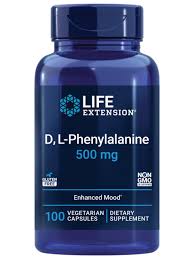
Table of Contents
Phenylalanine is an essential aromatic amino acid and the upstream precursor to one of the most consequential metabolic pathways in the body — the catecholamine cascade. Every molecule of dopamine, noradrenaline, and adrenaline that the brain and adrenal glands produce traces back to phenylalanine, via its conversion to tyrosine and the downstream synthesis chain that follows. Phenylalanine also connects, through tyrosine, to thyroid hormone production, melanin synthesis, and a trace amine called phenylethylamine (PEA) — the structural template for the amphetamine family of compounds. The most significant clinical story around phenylalanine is phenylketonuria (PKU) — one of the most studied and best-managed inborn errors of metabolism, in which the enzyme that converts phenylalanine to tyrosine is absent, causing neurotoxic phenylalanine accumulation and intellectual disability if untreated. Understanding phenylalanine’s normal biochemistry makes PKU’s pathology intuitive: the entire catecholamine and melanin system fails not because it is directly targeted but because its first substrate is blocked at entry.
Classification
- Type: Essential amino acid (EAA) — cannot be synthesized by the body; must come from diet
- Side chain: Phenyl group — a benzene ring attached to the amino acid backbone; the largest purely hydrophobic aromatic side chain; one of three aromatic amino acids alongside tryptophan and tyrosine
- Metabolism: Both glucogenic and ketogenic — phenylalanine is catabolised via conversion to tyrosine, whose breakdown products include fumarate (glucogenic) and acetoacetate (ketogenic)
- Precursor relationship: Phenylalanine is the dietary precursor to tyrosine — the conversion is irreversible (tyrosine cannot be reconverted to phenylalanine)
- LAT1 transport: shares the large neutral amino acid transporter with BCAAs, tyrosine, and tryptophan — competes for brain entry at this transporter
Key Mechanisms
Phenylalanine to tyrosine — the gateway reaction:
The primary metabolic fate of phenylalanine beyond protein synthesis is conversion to tyrosine, catalyzed by phenylalanine hydroxylase (PAH):
Phenylalanine + O₂ + NADPH + BH4 → Tyrosine + BH2 + NADP⁺
This reaction requires:
- Tetrahydrobiopterin (BH4) as the essential cofactor — BH4 is oxidized to BH2 in each reaction cycle and must be regenerated by dihydropteridine reductase (DHPR) using NADH
- Molecular oxygen and NADPH
The conversion is irreversible — making dietary phenylalanine the only route to tyrosine when tyrosine itself is not consumed in the diet. This is why tyrosine is classified as conditionally essential: it can be made from phenylalanine, but only if PAH is functional and phenylalanine is adequate.
The catecholamine pathway — from phenylalanine to adrenaline:
Through tyrosine, phenylalanine is the upstream origin of all three primary catecholamines:
- Tyrosine → L-DOPA: tyrosine hydroxylase (TH; requires BH4 and Fe²⁺) — the rate-limiting step for catecholamine synthesis
- L-DOPA → Dopamine: DOPA decarboxylase (AADC; requires PLP/vitamin B6)
- Dopamine → Noradrenaline: dopamine β-hydroxylase (DBH; requires vitamin C and copper)
- Noradrenaline → Adrenaline: phenylethanolamine N-methyltransferase (PNMT; requires SAM from methionine)
Each downstream molecule has distinct and critical functions:
- Dopamine: motivation, reward, movement initiation, working memory, and the drive to pursue goals
- Noradrenaline: arousal, focused attention, sympathetic nervous system activation, blood pressure regulation
- Adrenaline: the acute stress and exercise response — glycogen mobilization, fatty acid release, elevated heart rate and cardiac output, bronchodilation
Thyroid hormone synthesis (via tyrosine):
Tyrosine is the structural backbone of thyroid hormones — iodine atoms are attached to tyrosine residues in the thyroglobulin protein within the thyroid gland to form T3 and T4. Since phenylalanine is the dietary precursor to tyrosine, phenylalanine adequacy is upstream of thyroid hormone production. This connection links phenylalanine to basal metabolic rate, thermogenesis, and the metabolic consequences of hypothyroidism — though in practice, iodine and selenium are the more directly rate-limiting factors for thyroid function.
Melanin synthesis (via tyrosine):
Tyrosine is converted to melanin — the pigment responsible for skin, hair, and eye color — by the copper-dependent enzyme tyrosinase:
Tyrosine → L-DOPA → dopaquinone → eumelanin (brown/black) or phaeomelanin (red/yellow)
The same L-DOPA intermediate appears here as in the catecholamine pathway, which is why dopamine and melanin synthesis are both tyrosine-dependent and why L-DOPA (used for Parkinson’s disease) can cause skin darkening as a side effect.
Phenylethylamine (PEA) — the trace amine:
Phenylalanine can also be directly decarboxylated (bypassing tyrosine) by aromatic amino acid decarboxylase to produce phenylethylamine (PEA):
Phenylalanine + AADC → Phenylethylamine + CO₂
PEA is a trace amine — present in tiny concentrations in the brain — that stimulates dopamine and noradrenaline release, producing brief mood elevation, increased energy, and heightened focus. It is structurally identical to the core of amphetamine and methamphetamine (which are synthetic phenylethylamine derivatives). PEA is found naturally in chocolate and is one proposed contributor to chocolate’s mood-elevating effect. However, PEA has a very short half-life (it is rapidly degraded by MAO-B) and extremely poor oral bioavailability — it is almost entirely broken down in the gut and liver before reaching the brain. Only when combined with an MAO-B inhibitor does supplemental PEA produce meaningful CNS effects.
D-Phenylalanine and enkephalinase inhibition:
The D-form of phenylalanine (mirror-image isomer, not found in proteins or food) inhibits enkephalinase — the enzyme that degrades enkephalins, which are endogenous opioid peptides. By slowing enkephalin breakdown, D-phenylalanine prolongs the action of the body’s natural pain-relieving peptides. This mechanism is the basis of DLPA (D,L-phenylalanine) supplementation for chronic pain and mood support. Evidence is modest but mechanistically plausible; DLPA is not a replacement for evidence-based pain management but is sometimes used as an adjunct.
Structural role of the phenyl group:
Phenylalanine’s benzene ring is one of the most commonly found side chains in protein hydrophobic cores — it contributes heavily to protein folding stability, enzyme active sites, protein-protein interaction surfaces, and transmembrane domain structure in G protein-coupled receptors (GPCRs). Many drug interactions involve phenylalanine residues in receptor binding pockets.
Recommended Intake
| Group | Estimated Requirement |
|---|---|
| Adults (phenylalanine + tyrosine combined) | ~33mg/kg/day (~2.3g/day for 70kg person) |
| Adults (phenylalanine alone, without dietary tyrosine) | ~14-15mg/kg/day |
| Athletes | Met comfortably with adequate dietary protein; no specific athletic target established |
Requirements are expressed as combined phenylalanine + tyrosine because dietary tyrosine partially spares the need to convert phenylalanine — eating tyrosine-rich foods reduces the demand placed on PAH.
Found In (per 100g)
| Food | Phenylalanine |
|---|---|
| Pumpkin seeds | ~1.75g |
| Parmesan | ~1.74g |
| Almonds | ~1.12g |
| Chicken breast | ~0.86g |
| Beef (ground) | ~0.83g |
| Salmon | ~0.77g |
| Egg | ~0.68g |
| Soybeans (cooked) | ~0.55g |
| Lentils (cooked) | ~0.49g |
| Rice (whole grain) | ~0.43g |
Phenylalanine is widely distributed across plant and animal proteins. Pumpkin seeds and hard cheeses are notable plant and animal standouts respectively. Unlike some amino acids, there is no single dramatic outlier — phenylalanine is consistently present across diverse whole food sources.
Aspartame and phenylalanine: aspartame (the artificial sweetener found in diet drinks, sugar-free gum, and many processed foods) is metabolized to phenylalanine, aspartate, and methanol. The PKU warning “contains phenylalanine” on aspartame-containing products exists because people with PKU cannot safely metabolize phenylalanine and must avoid any source. For healthy individuals without PKU, the phenylalanine from typical aspartame intake at normal dietary amounts is nutritionally inconsequential.
Helps With
- Providing the precursor for tyrosine and the complete catecholamine pathway
- Dopamine synthesis for motivation, reward, and motor function
- Noradrenaline synthesis for arousal, focus, and sympathetic nervous system function
- Adrenaline synthesis for the acute exercise and stress response
- Thyroid hormone production via tyrosine
- Melanin synthesis for skin, hair, and eye pigmentation
- Phenylethylamine (PEA) as a trace mood and focus neuromodulator
- Protein structural integrity through the hydrophobic phenyl group
- Pain modulation via D-form enkephalinase inhibition (DLPA)
Phenylalanine for Athletes and Active People
Phenylalanine’s performance relevance is primarily indirect — operating through the catecholamine pathway that it initiates.
Catecholamines and exercise performance: during training, catecholamines are central to the acute performance response. Noradrenaline raises arousal and focus; adrenaline mobilizes fuel (glycogen and fatty acids), elevates heart rate, and dilates airways; dopamine sustains motivation and the will to continue at high intensity. The synthesis of all three traces back to phenylalanine via tyrosine. In athletes eating adequate protein, dietary phenylalanine is not rate-limiting for catecholamine synthesis (tyrosine hydroxylase and the downstream enzymes are the rate-limiting factors). However, the connection establishes phenylalanine as part of the nutritional substrate for the entire adrenergic exercise response.
Dopamine and training motivation: training consistently at high intensity and volume requires sustained dopaminergic motivation. Overtraining syndrome is associated with reduced dopaminergic tone — reduced drive to train, reduced enjoyment of activity, and motivational anhedonia. While not a direct supplement intervention, ensuring adequate phenylalanine and tyrosine intake as catecholamine precursors is part of the nutritional environment that supports dopamine synthesis.
Tyrosine as the more proximate intervention: for athletes seeking direct catecholamine precursor support (focus for competition, stress tolerance, working in demanding conditions), supplemental L-tyrosine — one step downstream from phenylalanine and the direct precursor to dopamine — is a more targeted and better-evidenced approach than L-phenylalanine. Tyrosine supplementation has shown benefits for cognitive performance under stress, sleep deprivation, and extreme cold — contexts relevant to military personnel, endurance athletes, and those training in demanding environments.
LAT1 competition: phenylalanine competes with tryptophan, tyrosine, and BCAAs at the LAT1 transporter for brain entry. This means high phenylalanine alongside adequate BCAAs may reduce the relative brain entry of tryptophan (mildly anti-fatigue during endurance) and vice versa — a secondary consideration in the LAT1 dynamics already described for tryptophan and valine.
DLPA for athletes with chronic pain: for athletes managing chronic musculoskeletal pain (tendinopathy, overuse injuries), D-phenylalanine’s enkephalinase inhibition mechanism provides some theoretical rationale for DLPA as an adjunctive analgesic — prolonging endogenous opioid activity without the risks of exogenous opioid use. The evidence is modest and not specific to athletic populations, but the mechanism is legitimate.
Phenylalanine Deficiency
True deficiency is extremely rare in any protein-sufficient diet. Risk scenarios:
- Severe protein malnutrition
- Very restricted diets eliminating all protein
- PKU dietary protocols — therapeutic phenylalanine restriction sometimes inadvertently restricts beyond requirements and must be carefully monitored to ensure adequacy for normal protein synthesis
Consequences of phenylalanine deficiency:
- Reduced tyrosine production → impaired catecholamine synthesis → reduced dopamine, noradrenaline, adrenaline → fatigue, low mood, reduced stress resilience
- Reduced melanin → hypopigmentation (pale skin, hair, eyes)
- Impaired protein synthesis — phenylalanine is present in virtually all proteins
- Growth retardation in children
Phenylketonuria (PKU) — Excess Phenylalanine as the Clinical Story
While phenylalanine deficiency is essentially non-existent in practice, phenylalanine excess (from PAH enzyme deficiency) is among the most important inborn errors of metabolism.
PKU is an autosomal recessive condition in which PAH enzyme is absent or severely deficient. Without PAH:
- Phenylalanine cannot be converted to tyrosine and accumulates to 20-60x normal blood concentrations
- Phenylalanine and its metabolites (phenylpyruvate, phenyllactate, phenylacetate) are neurotoxic — causing severe intellectual disability, seizures, and behavioral problems if untreated from birth
- Tyrosine becomes deficient — causing pale skin and hair from reduced melanin, and impaired catecholamine synthesis
- Urine and sweat develop a characteristic musty odor from phenylacetic acid
- PKU is one of the most common disorders in newborn screening programs (heel prick/Guthrie test); incidence approximately 1 in 10,000 births in Northern European populations
- Management: lifelong phenylalanine-restricted diet (avoiding all high-protein foods; using phenylalanine-free amino acid formulas for protein needs); strict avoidance of aspartame
- Sapropterin (synthetic BH4): can restore partial PAH function in responsive PKU variants
- Pegvaliase (PEGylated phenylalanine ammonia lyase): newer enzyme substitution therapy that degrades phenylalanine via an alternative pathway
PKU is a model for how a single blocked enzymatic step — the conversion of phenylalanine to tyrosine — cascades into neurological catastrophe by blocking the entire downstream pathway while simultaneously accumulating a toxic precursor.
Excessive Doses of Phenylalanine
No established UL for dietary phenylalanine. High supplemental doses carry specific concerns:
- Hypertension: elevated phenylalanine → elevated tyrosine → elevated catecholamine synthesis → increased noradrenaline → vasoconstriction and raised blood pressure. Clinically relevant at supplemental doses above 2-3g/day.
- Headache and anxiety: from catecholamine excess at high doses
- MAOI interaction — hypertensive crisis risk: MAO enzymes degrade catecholamines; MAOIs block this degradation. Combining DLPA or high-dose L-phenylalanine with MAOIs can cause catecholamine accumulation and hypertensive crisis — a potentially life-threatening interaction.
- Nausea and GI discomfort at high doses
- PKU patients: any supplemental phenylalanine is contraindicated
Types and Forms
- L-Phenylalanine: the natural, biologically active form; incorporated into proteins; the PAH substrate for tyrosine production; the catecholamine precursor chain begins here.
- D-Phenylalanine: the mirror-image isomer; not incorporated into proteins; an enkephalinase inhibitor — prolongs endogenous opioid (enkephalin) activity; proposed for chronic pain and mood support.
- DL-Phenylalanine (DLPA): the racemic mixture (50:50 L and D); combines L’s catecholamine precursor effect with D’s enkephalinase inhibition; marketed for depression, chronic pain, and mood enhancement. Evidence is modest — some positive trials for chronic pain and depression exist but the field is not robustly established.
- L-Tyrosine: one metabolic step downstream from phenylalanine; bypasses PAH; the more direct catecholamine precursor supplement; better-evidenced for cognitive performance under stress than L-phenylalanine.
- Phenylethylamine (PEA): the decarboxylation product of phenylalanine; available as a supplement but has essentially no standalone oral bioavailability due to rapid MAO-B degradation; requires pairing with an MAO-B inhibitor (such as hordenamine or selegiline) to produce central effects — raising significant safety concerns.
Which form for your goal:
| Goal | Best form |
|---|---|
| Catecholamine precursor support | L-Tyrosine (more direct; see tyrosine page) |
| General phenylalanine provision | Dietary protein |
| Chronic pain support | DLPA (modest evidence) |
| Mood and depression support | DLPA or SAMe (both have some evidence) |
| Avoid with MAOIs | All phenylalanine/tyrosine supplements |
| PKU management | Phenylalanine-free amino acid formula |
How to Take Phenylalanine
Through diet: any varied diet providing adequate total protein delivers phenylalanine well above requirements. There is no scenario in which a person eating enough protein needs to supplement L-phenylalanine for adequacy.
DLPA supplementation: standard supplemental doses are 375-2250mg/day, typically split across 2-3 doses with meals. The L-form contributes catecholamine precursor effects; the D-form contributes enkephalinase inhibition. Allow several weeks of consistent use before assessing effect. Do not use with MAOIs (contraindicated — hypertensive crisis risk), and use with caution in people taking antidepressants or with a history of hypertension.
L-Tyrosine as the practical alternative: for athletes seeking catecholamine precursor support (cognitive performance under stress, competition focus, cold tolerance), supplemental L-tyrosine (500-2000mg taken 30-60 minutes before demands) is more directly targeted and has stronger evidence than L-phenylalanine. It bypasses the PAH step and enters the catecholamine pathway immediately.
PKU: dietary management requires specialist dietitian supervision from birth. Phenylalanine intake must be precisely titrated to allow growth (which requires some phenylalanine for protein synthesis) while preventing toxic accumulation. The permitted intake varies by PAH residual activity and is monitored through regular blood phenylalanine measurements.
Interactions
Tetrahydrobiopterin (BH4): required cofactor for PAH; BH4 deficiency impairs phenylalanine hydroxylation even when PAH protein is intact. Vitamin B6 (PLP): required for AADC (L-DOPA → dopamine and phenylalanine → PEA). Vitamin C: required for DBH (dopamine → noradrenaline). Copper: also required for DBH. SAM (from methionine): required for PNMT (noradrenaline → adrenaline). Tyrosine: dietary tyrosine spares phenylalanine by reducing PAH demand. MAOIs: block catecholamine breakdown; combining with high-dose phenylalanine or tyrosine can cause hypertensive crisis.
Synergy
- Works with tyrosine — phenylalanine is the essential dietary precursor; together they ensure catecholamine synthesis capacity is met even when one dietary source is low.
- Works with vitamin B6, vitamin C, copper, and methionine/SAM as sequential cofactors in the catecholamine synthesis pathway — all four must be adequate for the full dopamine → noradrenaline → adrenaline chain to function.
- Works with iodine and selenium for thyroid hormone synthesis (through tyrosine).
- Structural phenyl group contributes to hydrophobic protein cores alongside leucine, valine, isoleucine, tryptophan, and methionine.
Antagonistic Interactions
- MAOIs combined with supplemental phenylalanine or tyrosine — hypertensive crisis risk; a clinically serious contraindication.
- Aspartame provides phenylalanine — a genuine concern only for people with PKU.
- BCAAs, tryptophan, and tyrosine compete with phenylalanine at LAT1 for brain entry — a minor dietary consideration at normal intake levels.
- PAH deficiency (PKU) converts phenylalanine’s normal metabolic fate into toxicity — the entire catecholamine and melanin pathway fails downstream while phenylalanine accumulates upstream.