

Aspartic acid
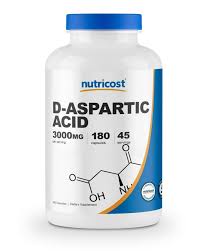
Table of Contents
Aspartic acid — which exists in the body as its ionized form, aspartate — is a non-essential acidic amino acid that converts directly into oxaloacetate, one of the central intermediates of the Krebs cycle. That single connection makes aspartate one of the most metabolically embedded amino acids in the body. It’s a key part of the malate–aspartate shuttle, which moves energy-carrying electrons from glycolysis into the mitochondria for aerobic ATP production. It supplies nitrogen to the urea cycle, linking it to the Krebs cycle. It provides atoms for building DNA and RNA. And it may act alongside glutamate in excitatory brain signalling. Aspartate is also processed by aspartate aminotransferase (AST), one of the most commonly measured enzymes in routine blood tests. Its mirror-image form, D-aspartate, acts as a signalling molecule in the brain and testes, and is sold as a testosterone booster — though the human evidence for that use is weak.
Classification
- Type: Non-essential amino acid — made from oxaloacetate by aspartate aminotransferase (AST); no dietary deficiency occurs in normal conditions
- Side chain: A short side chain ending in a carboxyl group (pKa about 3.9), so it’s almost entirely negatively charged at the body’s pH. Aspartate is one of the two acidic amino acids, along with glutamate
- Metabolism: Glucogenic — aspartate converts to oxaloacetate, which enters the Krebs cycle and can be used to make glucose
- Naming: “Aspartic acid” is the uncharged form; “aspartate” is the ionized form found in the body. The two terms are used interchangeably
Key Mechanisms
The malate–aspartate shuttle:
Glycolysis produces NADH — an electron carrier — in the cell’s cytoplasm, but NADH can’t cross the inner membrane of the mitochondria, where it’s needed for aerobic energy production. The malate–aspartate shuttle solves this by passing the electrons across indirectly, with aspartate as an essential carrier:
In the cytoplasm:
- NADH reduces oxaloacetate to malate (via cytoplasmic malate dehydrogenase), freeing NAD⁺ for glycolysis to continue
- Malate enters the mitochondria in exchange for alpha-ketoglutarate
In the mitochondria:
- Malate is converted back to oxaloacetate (via mitochondrial malate dehydrogenase), regenerating NADH inside the mitochondria, where it feeds the electron transport chain
- Mitochondrial AST converts oxaloacetate + glutamate into aspartate + alpha-ketoglutarate
- Aspartate leaves the mitochondria through the aspartate–glutamate carrier
Back in the cytoplasm:
- Cytoplasmic AST converts aspartate + alpha-ketoglutarate back into oxaloacetate + glutamate, resetting the cycle
The result: each NADH from glycolysis yields about 2.5 ATP in the mitochondria — more than the alternative glycerol-phosphate shuttle, which yields about 1.5. The malate–aspartate shuttle is the main route in the heart, liver, brain, and oxidative muscle fibers.
Topping up the Krebs cycle:
The Krebs cycle needs oxaloacetate to accept each incoming acetyl group. When cycle intermediates are drawn off to build other molecules, they have to be replaced, and converting aspartate into oxaloacetate is one direct way to do that.
The urea cycle — linked to the Krebs cycle:
Aspartate supplies one of the two nitrogen atoms in urea:
- Citrulline + aspartate → argininosuccinate (argininosuccinate synthetase, using ATP)
- Argininosuccinate → arginine + fumarate (argininosuccinate lyase)
- Arginine is split to release urea, carrying aspartate’s nitrogen out of the body
The fumarate released in step 2 can be converted back, via malate and oxaloacetate, into aspartate — linking the urea cycle and the Krebs cycle in a loop sometimes called the “Krebs bicycle.” This lets the liver handle nitrogen disposal and energy metabolism in an integrated way.
Building purines:
Aspartate provides nitrogen at two steps in building purines — the adenine and guanine used in ATP, NAD⁺, DNA, and RNA:
- During construction of the purine ring, aspartate contributes one of its nitrogen atoms
- To make AMP, aspartate combines with inosine monophosphate (IMP) to form adenylosuccinate, which then releases fumarate, leaving aspartate’s nitrogen behind as part of AMP
Building pyrimidines:
Aspartate forms much of the pyrimidine ring itself. It combines with carbamoyl phosphate to form carbamoyl aspartate, which is then closed into a ring and converted into UMP — the precursor of the cytosine, uracil, and thymine used in DNA and RNA. In humans, the first three steps are carried out by a single large enzyme called CAD, and the main control point is its first step, carbamoyl phosphate synthetase II.
Brain signalling:
Aspartate can activate NMDA receptors, one of the main types of glutamate receptor, and has long been considered an excitatory neurotransmitter alongside glutamate. However, whether neurons actually release it as a signal is debated, and its role is much smaller than glutamate’s. The NMDA receptor itself is named after N-methyl-D-aspartate, a synthetic relative of aspartate that researchers used to identify the receptor.
D-aspartate — a signalling molecule:
D-aspartate, the mirror-image form of aspartate, isn’t used to build proteins. It’s found in the brain, pituitary gland, and testes, where it acts as a signalling molecule. In animal studies, it stimulates the release of gonadotropin-releasing hormone (GnRH) from the hypothalamus and luteinizing hormone (LH) from the pituitary, and increases testosterone production in the testes — partly by boosting StAR, a protein that moves cholesterol into the mitochondria, where testosterone production begins.
The human evidence is much weaker. A 2009 study found that 3g a day raised testosterone by about 42% in untrained men after 12 days. But in men who already trained, 3g a day had no effect after 14 or 28 days; 6g a day actually lowered testosterone by about 12% within two weeks; and in a 12-week trial, 6g a day didn’t change testosterone at all. A 2017 systematic review found only four human studies and concluded that much better trials are needed.
Aspartate aminotransferase (AST) — a key blood test enzyme:
AST (also called SGOT) carries out the reaction: aspartate + alpha-ketoglutarate ↔ oxaloacetate + glutamate, which needs vitamin B6 (as PLP).
AST is found in the liver, heart, skeletal muscle, kidneys, brain, and red blood cells, and leaks into the blood when these tissues are damaged:
- Liver disease: hepatitis, fatty liver disease, alcohol-related liver disease, and cirrhosis all raise AST, usually alongside ALT
- Heart attack: in the 1950s, AST became the first blood enzyme used to diagnose heart attacks; it has long since been replaced by troponin
- Muscle damage: hard exercise, injury, or muscle disease
- Blood sample handling: if red blood cells break down in the sample, AST can read falsely high
The AST:ALT (De Ritis) ratio: comparing AST with ALT helps doctors narrow down the cause of raised liver enzymes. A ratio above 2 suggests alcohol-related liver disease, and a ratio above 1 is also common in cirrhosis from other causes. A ratio below 1 is typical of fatty liver disease and viral hepatitis, because ALT is more specific to the liver. Muscle damage also raises AST more than ALT at first, so a high ratio isn’t always about the liver — checking creatine kinase (CK) and asking about recent exercise helps.
Dietary Intake
There’s no Recommended Dietary Allowance — aspartate is non-essential and made from oxaloacetate. Aspartate from food adds to the body’s supply but isn’t needed.
A note on food data: standard food analysis converts asparagine into aspartic acid, so USDA reports the two together. The table shows these combined values.
| Food | Aspartic acid + asparagine (per 100g) | (% of protein) |
|---|---|---|
| Peanuts (raw)* | 3.15g | 12.2% |
| Pumpkin seeds* | 2.96g | 9.8% |
| Turkey breast (roasted) | 2.79g | 9.4% |
| Chicken breast (roasted) | 2.76g | 8.9% |
| Almonds* | 2.64g | 12.5% |
| Beef (ground, 80% lean, cooked) | 2.32g | 9.0% |
| Salmon (Atlantic, farmed, cooked) | 2.26g | 10.2% |
| Parmesan cheese (hard) | 2.24g | 6.3% |
| Tofu (firm) | 2.04g | 11.8% |
| Egg (hard-boiled) | 1.26g | 10.0% |
| Oats (dry) | 1.22g | 9.3% |
| Black beans (cooked) | 1.07g | 12.1% |
| Chickpeas (cooked) | 1.04g | 11.8% |
| Lentils (cooked) | 1.00g | 11.1% |
| Potato (cooked in skin) | 0.60g | 24.5% |
| Asparagus (boiled) | 0.56g | 23.1% |
| White rice (cooked) | 0.25g | 9.4% |
Aspartic acid (with asparagine) is one of the most abundant amino acids in food, typically about 9–12% of protein, with dairy at the lower end. Potatoes and asparagus stand out by percentage, at nearly a quarter of their protein, because they store nitrogen as free asparagine — but because they contain little protein overall, they provide relatively small amounts per 100g.
Aspartame: the sweetener aspartame is broken down into aspartic acid, phenylalanine, and methanol, and about 45% of it by weight becomes aspartic acid. A can of diet soda sweetened with aspartame provides around 90mg — tiny compared with the roughly 2.8g in 100g of chicken breast.
Helps With
- Aerobic energy production, through the malate–aspartate shuttle
- Keeping the Krebs cycle topped up, through conversion to oxaloacetate
- Building purines (adenine and guanine) for ATP, NAD⁺, DNA, and RNA
- Building pyrimidines (cytosine, uracil, and thymine) for DNA and RNA
- Removing nitrogen through the urea cycle, linked to energy metabolism through fumarate
- Possibly excitatory brain signalling, alongside glutamate
Aspartic Acid for Athletes and Active People
Aerobic energy: during sustained aerobic exercise, the malate–aspartate shuttle helps the heart and oxidative muscle fibers get the most ATP from glycolysis. The body makes all the aspartate it needs for this, so it isn’t a limiting factor in athletes eating enough protein — but it’s a good example of how deeply amino acids are woven into energy production.
The purine nucleotide cycle: during intense exercise, when ATP is used faster than it can be replaced, muscle converts some AMP into IMP and ammonia (via the enzyme AMP deaminase), which helps keep ATP production going. Aspartate is then used to turn IMP back into AMP during recovery. An inherited lack of muscle AMP deaminase is one of the most common genetic muscle enzyme variants; many people with it have no symptoms, while some experience exercise-related cramps, muscle pain, or early fatigue.
High-protein diets: athletes eating 1.6–2.2g of protein per kg have more nitrogen to dispose of, which increases urea cycle activity — including the aspartate step. The body makes plenty of aspartate to support this.
AST after hard training: heavy resistance training, unaccustomed exercise, and long endurance events release AST from muscle, sometimes raising it for a week or more. As covered on our alanine page, this can be mistaken for liver problems. A raised creatine kinase (CK), a high AST:ALT ratio, and a recent hard session point to muscle. After very long endurance events, even troponin can rise briefly in healthy athletes, so test results should always be interpreted alongside training history. If you have routine blood tests, avoid unusually hard training for several days beforehand or tell your doctor about it.
D-aspartic acid and testosterone: despite its popularity as a testosterone booster, the evidence doesn’t support D-aspartic acid for men who train. Controlled trials in resistance-trained men found no increase in testosterone at 3g a day, and a decrease over two weeks at 6g a day. Sleep, adequate energy intake, training load management, and maintaining a healthy body weight are far more reliable ways to support normal testosterone levels.
Aspartic Acid Deficiency
Dietary aspartate deficiency doesn’t occur in healthy people — the body makes it continuously from oxaloacetate in metabolically active cells.
Citrin deficiency: in this inherited disorder, the liver’s aspartate–glutamate carrier — the one used in the malate–aspartate shuttle — doesn’t work properly, leaving liver cells short of aspartate in the cytoplasm. It can cause liver problems in infancy and, in some adults, ammonia build-up. It’s most common in East Asia. Interestingly, many affected people naturally prefer protein- and fat-rich foods and dislike sugary, carbohydrate-rich foods, which are harder for them to process.
Excessive Aspartic Acid
No Tolerable Upper Intake Level has been set. Aspartate from food is well tolerated, and high-dose L-aspartate supplements are rarely used.
Excitotoxicity: very high concentrations of aspartate in the brain, like glutamate, could contribute to nerve cell damage by overstimulating NMDA receptors. This isn’t a dietary concern — aspartate from food doesn’t readily cross the blood-brain barrier, and the brain controls its own levels. It’s relevant only in conditions such as stroke or severe head injury.
D-aspartic acid: at 6g a day, D-aspartic acid lowered testosterone in one trial in trained men, so higher doses aren’t better and may backfire.
Types and Forms
- L-Aspartate (L-aspartic acid): the standard amino acid, found in all protein foods; mainly used in supplements as the partner molecule in mineral salts.
- Mineral aspartates: magnesium aspartate, potassium aspartate, and zinc aspartate. Like other organic mineral salts, such as citrates, they’re generally well absorbed — the mineral is the active ingredient. Potassium-magnesium aspartate products, popular in parts of Central and Eastern Europe, are used to top up these minerals, but claims that the aspartate itself reduces fatigue or boosts performance aren’t well supported.
- D-Aspartic acid (DAA): the mirror-image form, sold as a testosterone booster, typically at 2–3g a day. Human evidence is weak, with no benefit in trained men and lower testosterone at 6g a day.
- Aspartame: a sweetener made of aspartic acid and phenylalanine; the aspartate it provides is nutritionally negligible.
Which form for your goal:
| Goal | Best approach |
|---|---|
| General aspartate needs | Dietary protein |
| Testosterone support | Sleep, energy intake, training load, and body weight — not D-aspartic acid. If you suspect low testosterone, see a doctor for testing |
| Magnesium, potassium, or zinc supplementation | Mineral aspartates are one well-absorbed option among several |
| Aerobic energy | Adequate protein and carbohydrate — no aspartate supplement needed |
How to Ensure Adequacy
No dietary strategy is needed — the body makes plenty of aspartate, and any diet with enough protein provides more.
If you’re considering D-aspartic acid: the evidence doesn’t support it for men who train, and higher doses may lower testosterone. The fundamentals — enough sleep, adequate overall nutrition, sensible training, and stress management — have far more reliable effects on testosterone. If you have symptoms of low testosterone, see a doctor rather than self-treating.
Interactions
Oxaloacetate is aspartate’s direct partner through AST, linking it to the Krebs cycle and glucose production. Vitamin B6 (as PLP) is needed by AST and the other aminotransferases, shared with alanine and glutamate. Malate alternates with aspartate and oxaloacetate in the malate–aspartate shuttle. Glutamate is aspartate’s partner in the AST reaction. In the urea cycle, aspartate combines with citrulline to supply nitrogen, and the resulting fumarate links back to the Krebs cycle.
Synergy
- Works with malate in the malate–aspartate shuttle, enabling efficient aerobic energy production from glycolysis.
- Works with glutamate in AST reactions — the two form a central nitrogen transfer system.
- Works with citrulline and arginine in the urea cycle — aspartate provides nitrogen that leaves the body as urea.
- Links the urea cycle to the Krebs cycle through fumarate.
- Works with glutamine in building DNA and RNA — both supply nitrogen for purine and pyrimidine production.
Antagonistic Interactions
Very high aspartate levels in the brain, alongside glutamate, can contribute to excitotoxicity — a concern in stroke and brain injury, not from diet.
AST released from muscle after hard exercise can mimic liver or heart problems on blood tests — CK and training history help tell them apart.
High-dose D-aspartic acid (6g a day) lowered testosterone in trained men in one trial.
Food values: USDA FoodData Central, SR Legacy, reported as aspartic acid (which includes asparagine) — peanuts, raw (FDC ID 172430)*; pumpkin and squash seed kernels, dried (170556)*; turkey breast, roasted (174516); chicken breast, roasted (171477); almonds (170567)*; ground beef, 80% lean, cooked (171797); Atlantic salmon, farmed, cooked (175168); parmesan, hard (170848); tofu, firm, calcium-set (172475); egg, hard-boiled (173424); oats, dry (173904); black beans, cooked (173735); chickpeas, cooked (173757); lentils, cooked (172421); potato, microwaved, cooked in skin (170094); asparagus, boiled (168390); white rice, cooked (168878). * SR Legacy values used as fill-ins for the Foundation Foods entries for peanuts (2515376), pumpkin seeds (2515380), and almonds (2346393), whose amino acid data aren’t included in our tracker. Percentages of protein are calculated from the same USDA records.