

Asparagine
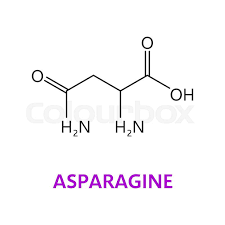
Table of Contents
Asparagine is a non-essential amino acid — the body makes it from aspartate and glutamine using the enzyme asparagine synthetase, so healthy people don’t need to get it from food. What makes asparagine interesting isn’t its place in the diet but its other roles. It’s the anchor point for N-linked glycosylation — the sugar chains attached to most secreted and cell-surface proteins, which help them fold and function. It’s linked to energy production and DNA building blocks through aspartate. When foods rich in free asparagine, such as potatoes, are fried or baked at high temperatures, it reacts with sugars to form acrylamide, a food safety concern. And some leukemia cells can’t make their own asparagine, so removing it from the blood is a cornerstone of childhood leukemia treatment. Asparagine was also the first amino acid ever isolated — from asparagus juice, in 1806.
Classification
- Type: Non-essential amino acid — made in the body from aspartate, using glutamine as the nitrogen donor and ATP for energy; no dietary deficiency occurs in healthy people
- Side chain: An amide — asparagine is the amide form of aspartate, just as glutamine is the amide form of glutamate. The nitrogen of this amide group is where N-linked sugar chains attach
- Metabolism: Glucogenic — asparagine is converted to aspartate, which becomes oxaloacetate and enters the Krebs cycle
- Historical note: The first amino acid isolated from a natural source — extracted from asparagus juice by the French chemists Louis-Nicolas Vauquelin and Pierre Jean Robiquet in 1806, and named after the plant
Key Mechanisms
N-linked glycosylation:
Asparagine units in proteins are the attachment points for N-linked sugar chains. This happens at a specific sequence: asparagine, then any amino acid except proline, then serine or threonine (written Asn-X-Ser/Thr). As a new protein is made in the endoplasmic reticulum, an enzyme called oligosaccharyltransferase transfers a ready-made, 14-sugar tree onto the nitrogen of the asparagine side chain. This differs from O-linked glycosylation, which attaches sugars to the oxygen of serine and threonine — as in the mucins covered on our threonine page.
Most secreted and cell-membrane proteins carry sugar chains, and most of these are N-linked. The sugar chains:
- Help proteins fold correctly: in the endoplasmic reticulum, “chaperone” proteins called calnexin and calreticulin recognize newly attached sugar chains and supervise folding; misfolded proteins are held back, refolded, or destroyed
- Protect proteins: sugar chains shield parts of the protein from protein-digesting enzymes, helping them last longer
- Enable cell recognition: patterns of sugars on cell surfaces help immune cells and other cells recognize each other and stick together
- Shape immune responses: antibodies carry an N-linked sugar chain in their tail region that influences how they activate other parts of the immune system
- Help viruses hide: viruses use the host’s glycosylation machinery too — the SARS-CoV-2 spike protein carries 22 N-linked glycosylation sites, which help shield it from antibodies
The asparagine–aspartate connection:
Asparagine and aspartate are linked by two enzymes:
- Asparagine synthetase: aspartate + glutamine + ATP → asparagine + glutamate (making asparagine)
- Asparaginase: asparagine + water → aspartate + ammonia (breaking it down — the reaction used in leukemia treatment)
Aspartate is itself a metabolic hub:
- Krebs cycle: aspartate aminotransferase (AST — the enzyme measured in liver blood tests) converts aspartate into oxaloacetate, a Krebs cycle intermediate
- DNA building blocks: aspartate provides nitrogen for making purines (the building blocks of adenine and guanine, used in ATP, DNA, and RNA) and forms part of the ring of pyrimidines
- Urea cycle: aspartate provides one of the two nitrogen atoms in urea, helping the body get rid of ammonia
A nitrogen store — in plants:
In plants, asparagine is one of the main forms used to store and transport nitrogen, because it carries two nitrogen atoms in a stable form. That’s why some plant foods — notably potatoes, asparagus, and cereal grains — contain large amounts of free asparagine, which matters for acrylamide formation (see below). In humans, glutamine and alanine do most of the work of carrying nitrogen between tissues.
Asparagine deamidation — a slow chemical clock:
Asparagine units in proteins slowly and spontaneously convert into aspartate over time (a process called deamidation), at rates that depend on temperature, pH, and the neighboring amino acids. This has several consequences:
- Ageing proteins: long-lived proteins, such as the crystallins in the lens of the eye, accumulate deamidation over decades, which contributes to cataracts
- Medicines: deamidation is a major way that protein drugs such as antibodies degrade, so pharmaceutical scientists design and store them to minimize it
- Archaeology: the extent of deamidation in ancient proteins, such as collagen from bones, is used as an indicator of how well they have been preserved
Acrylamide — the high-temperature chemistry:
When foods rich in free asparagine are cooked above about 120°C (250°F) in the presence of reducing sugars such as glucose and fructose, asparagine takes part in the Maillard (browning) reaction and forms acrylamide:
- Asparagine reacts with a reducing sugar
- The product breaks down further through a series of reactions
- Acrylamide is released
This matters most in:
- Fried and roasted potatoes (chips, crisps, French fries), which are rich in both free asparagine and sugars
- Toasted and baked grain products (bread crust, crackers, breakfast cereals, biscuits)
- Coffee, through the roasting of the beans
Acrylamide is classified as a probable human carcinogen (IARC Group 2A), based on animal studies, and it’s a known nerve toxin at high industrial exposures. Whether typical dietary amounts raise cancer risk in people is uncertain — human studies have been inconsistent — but the European Food Safety Authority concluded in 2015 that dietary acrylamide potentially increases cancer risk, and EU regulations have required food businesses to reduce acrylamide since 2018.
Reducing acrylamide at home: cook starchy foods such as potatoes and bread to a golden-yellow color rather than brown; soaking or blanching potato pieces before frying or roasting removes some of the sugars and asparagine; follow cooking instructions for oven chips and other packaged foods; and vary cooking methods, as boiling and steaming don’t produce acrylamide. Food manufacturers can also use the enzyme asparaginase to break down asparagine before cooking. Advice on storing potatoes has changed: the UK Food Standards Agency used to advise against keeping raw potatoes in the fridge, but in 2022, after reviewing new evidence, it concluded that home fridge storage doesn’t materially increase acrylamide formation — so either a cool, dark place or the fridge is fine.
Dietary Intake
Asparagine has no Recommended Dietary Allowance — the body makes what it needs from aspartate and glutamine. Food contributes to the body’s supply, but it isn’t needed to prevent deficiency.
A note on food data: standard food databases, including USDA’s, don’t report asparagine separately. The usual laboratory method breaks proteins down with acid, which converts asparagine into aspartic acid, so the two are measured — and reported — together. The table below shows these combined values.
| Food | Aspartic acid + asparagine (per 100g) | (% of protein) |
|---|---|---|
| Peanuts (raw)* | 3.15g | 12.2% |
| Pumpkin seeds* | 2.96g | 9.8% |
| Turkey breast (roasted) | 2.79g | 9.4% |
| Chicken breast (roasted) | 2.76g | 8.9% |
| Almonds* | 2.64g | 12.5% |
| Beef (ground, 80% lean, cooked) | 2.32g | 9.0% |
| Salmon (Atlantic, farmed, cooked) | 2.26g | 10.2% |
| Parmesan cheese (hard) | 2.24g | 6.3% |
| Tofu (firm) | 2.04g | 11.8% |
| Egg (hard-boiled) | 1.26g | 10.0% |
| Oats (dry) | 1.22g | 9.3% |
| Black beans (cooked) | 1.07g | 12.1% |
| Chickpeas (cooked) | 1.04g | 11.8% |
| Lentils (cooked) | 1.00g | 11.1% |
| Potato (cooked in skin) | 0.60g | 24.5% |
| Asparagus (boiled) | 0.56g | 23.1% |
| White rice (cooked) | 0.25g | 9.4% |
By weight, nuts, seeds, meat, and fish are the richest sources, simply because they contain the most protein. The percentage column tells a different story: in most foods, aspartic acid and asparagine together make up about 9–12% of the protein, but in potatoes and asparagus it’s around a quarter — about twice as much. That’s because these plants store nitrogen as free asparagine. So asparagus, the food asparagine is named after, contains relatively little per 100g (it’s low in protein overall), but its protein is unusually asparagine-rich — and the same is true of potatoes, which is why they’re the classic source of acrylamide.
Helps With
- Protein folding and quality control, through N-linked glycosylation
- Cell recognition, immune function, and receptor signalling, through the sugar chains on glycoproteins
- Energy production, through conversion to aspartate and oxaloacetate
- Making DNA and RNA building blocks, through aspartate
- Removing ammonia through the urea cycle, through aspartate
- Supporting rapidly dividing cells, which need a steady supply of asparagine
Asparagine for Athletes and Active People
As a non-essential amino acid, asparagine isn’t a nutritional concern for athletes — the body makes it from aspartate and glutamine, which any protein-rich diet provides. A few connections are still worth knowing.
Energy production: asparagine can be converted, via aspartate, into oxaloacetate, one of the Krebs cycle intermediates that keep aerobic energy production running. This is one of several routes for topping up the cycle, and it isn’t a limiting factor in athletes eating enough protein.
Receptors and glycosylation: receptors for insulin, IGF-1, and other growth factors carry N-linked sugar chains on asparagine units, which affect how they’re processed and displayed on the cell surface. The body maintains this machinery from its own asparagine production, so there’s nothing to optimize through diet.
Acrylamide and high-carbohydrate diets: athletes who rely heavily on fried or roasted potatoes, crisps, and well-toasted grain products to meet high carbohydrate needs get more acrylamide. It’s easy to reduce: mix in boiled, steamed, or mashed potatoes, rice, pasta, and oats, and cook roasted or fried foods to golden rather than brown.
Asparagine, Leukemia, and Cancer Treatment
The most dramatic medical use of asparagine biology is in treating acute lymphoblastic leukemia (ALL) — the most common childhood cancer.
Most normal cells can make asparagine with asparagine synthetase when blood levels fall. Many ALL cells, however, produce very little of this enzyme, so they depend on asparagine from the blood to make the proteins they need to multiply.
L-asparaginase — an enzyme drug derived from bacteria such as E. coli and Erwinia chrysanthemi — breaks down asparagine in the blood into aspartate and ammonia, rapidly depleting it. Without this supply:
- Leukemia cells can’t make proteins efficiently and die
- Most normal cells make their own asparagine and survive
Asparaginase has been part of ALL treatment since the 1960s and has contributed to cure rates of around 90% for childhood ALL in high-income countries today.
Its side effects show how much some healthy tissues rely on a steady asparagine supply. They include allergic reactions to the bacterial enzyme, pancreatitis, liver problems, raised blood sugar, and both blood clots and bleeding. Many of these reflect reduced protein production in the liver and pancreas — including clotting factors, natural anticoagulants, and insulin — and some asparaginase products also break down glutamine, adding to their effects.
Asparagine and cancer spread: in a 2018 study in mice, limiting dietary asparagine reduced the spread of breast cancer. This is an active area of research, but it hasn’t been shown in people, and low-asparagine diets aren’t a recommended cancer treatment.
Asparagine Deficiency
Healthy people don’t develop dietary asparagine deficiency: the body’s own production from aspartate and glutamine is efficient and continuous.
Asparagine synthetase deficiency: this rare inherited disorder, first described in 2013, prevents the body from making enough asparagine. The brain is especially affected, because little asparagine crosses into it from the blood. Babies are born with a small head and develop seizures and severe developmental delay. Dietary asparagine doesn’t reliably correct it, which highlights how much the brain depends on its own production.
Congenital disorders of glycosylation: a related group of rare genetic disorders affects the machinery that attaches sugar chains to proteins — not asparagine production itself. They can affect many organs, causing neurological problems, liver disease, and blood clotting problems, illustrating how important N-linked glycosylation is throughout the body.
Types and Forms
Asparagine isn’t meaningfully supplemented in human nutrition. Related compounds include:
- L-Asparagine (free form): not sold for performance or health; used in research and in cell culture.
- Aspartate (aspartic acid) salts: aspartate is used as the partner molecule in some mineral supplements, such as magnesium aspartate, potassium aspartate, and zinc aspartate. Claims that aspartate salts reduce fatigue in their own right aren’t well supported.
- L-Asparaginase: a prescription enzyme medicine for treating ALL, not a supplement. It’s also used, separately, by food manufacturers to lower acrylamide.
How to Ensure Adequacy
Healthy people don’t need any specific strategy for asparagine. A diet with enough total protein provides plenty of aspartate and glutamine for the body to make its own. The relevant practical advice:
- Eat enough total protein — about 0.8g per kg of body weight per day for most adults, and roughly 1.2–2.2g per kg for active people and athletes, depending on training
- Include varied protein foods, which provide plenty of glutamine and aspartate
- To limit acrylamide, vary carbohydrate sources and cook potatoes and bread to golden rather than brown
Interactions
Glutamine provides the nitrogen for making asparagine (asparagine synthetase converts glutamine into glutamate as it transfers the nitrogen to aspartate). Aspartate provides the carbon backbone and is asparagine’s breakdown product. ATP provides the energy for asparagine synthesis. Vitamin B6 is needed by aspartate aminotransferase (AST), which converts aspartate into oxaloacetate. Asparaginase medicines deplete blood asparagine and require careful medical monitoring.
Synergy
- Works with glutamine in asparagine synthesis — glutamine provides the amide nitrogen, and aspartate the carbon backbone.
- Links to energy production through aspartate and oxaloacetate.
- Links to DNA and RNA production through aspartate’s role in making purines and pyrimidines.
- Works with serine and threonine in N-glycosylation — the attachment sequence needs serine or threonine two positions after the asparagine (Asn-X-Ser/Thr).
- The asparagine–aspartate pair mirrors the glutamine–glutamate pair — in each, the amide form carries extra nitrogen.
Antagonistic Interactions
- L-asparaginase depletes blood asparagine — a medical treatment, not a dietary concern.
- High-temperature cooking of foods rich in free asparagine and sugars forms acrylamide — the main food safety issue linked to asparagine.
- Asparagine units in proteins slowly deamidate over time, a form of chemical ageing relevant to cataracts and the stability of protein medicines.
Food values: USDA FoodData Central, SR Legacy, reported as aspartic acid (which includes asparagine) — peanuts, raw (FDC ID 172430)*; pumpkin and squash seed kernels, dried (170556)*; turkey breast, roasted (174516); chicken breast, roasted (171477); almonds (170567)*; ground beef, 80% lean, cooked (171797); Atlantic salmon, farmed, cooked (175168); parmesan, hard (170848); tofu, firm, calcium-set (172475); egg, hard-boiled (173424); oats, dry (173904); black beans, cooked (173735); chickpeas, cooked (173757); lentils, cooked (172421); potato, microwaved, cooked in skin (170094); asparagus, boiled (168390); white rice, cooked (168878). * SR Legacy values used as fill-ins for the Foundation Foods entries for peanuts (2515376), pumpkin seeds (2515380), and almonds (2346393), whose amino acid data aren’t included in our tracker. Percentages of protein are calculated from the same USDA records.